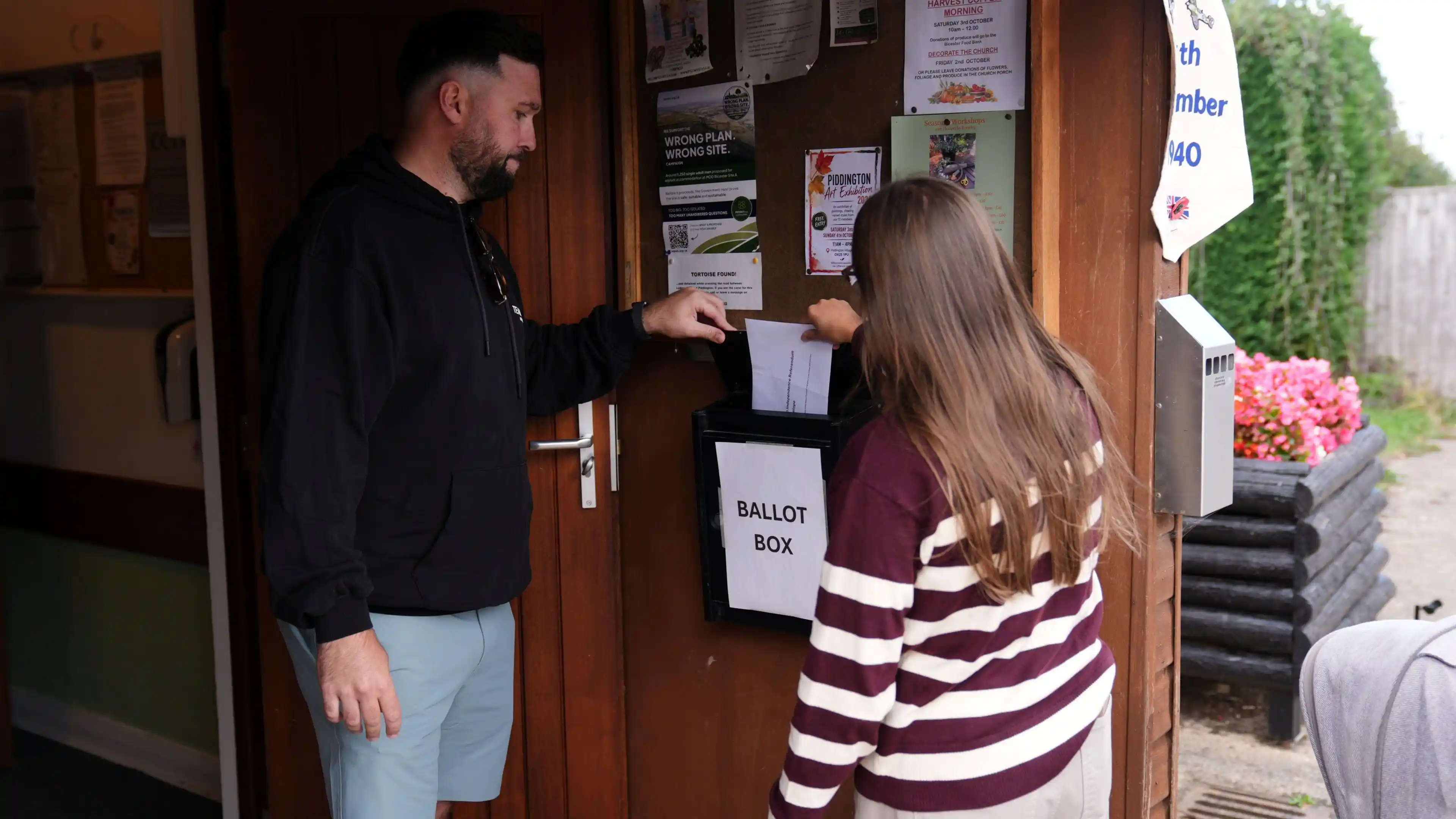
The small English village of Piddington, in Oxfordshire, overwhelmingly voted to “secede” from the United Kingdom, in a symbolic referendum organized as a protest against the British Government's plans to establish an accommodation center for asylum seekers near the locality.
The result was decisive: 285 people voted in favor of secession, 26 against, and there was one null vote. With a turnout of nearly 92%, the “yes” received approximately 91% of the valid votes.
Piddington residents voting in the referendum
The referendum has no legal or constitutional effects. Piddington cannot unilaterally leave the United Kingdom through this vote. The organizers themselves framed it as a form of protest and political pressure against the decisions of the central Government. After the result, local officials even began to symbolically refer to the place as the “Principality of Piddington.”
The origin of the protest lies in the project to use an old Ministry of Defence facility near the village as accommodation for up to 1,256 adult male asylum seekers. The center is expected to last for at least ten years. For a community of around 350 residents, the scale of the project raised significant concerns among the locals.
Residents mainly question the scale of the project and the lack of community involvement in the decision. The chairman of the parish council, Tim McNally, stated that the issue is one of “proportionality”, due to the difference between the size of the local population and the number of people who would be housed in the nearby facilities.
The British Government, for its part, defends the use of former military facilities as part of its strategy to accommodate illegal immigrants. Culture Secretary Lisa Nandy stated that the Government needs to provide accommodation while trying to reduce the backlog in the asylum system.
Illegal immigrants arriving in the United Kingdom
The Piddington vote thus became a local protest with national repercussions. Although it does not change the village's status or produce an effective separation from the United Kingdom, the result exposed the rejection of a significantly larger portion of participating voters towards the planned migration project for the area.
The case also adds to the national debate on how to distribute accommodation for asylum seekers and to what extent local communities should participate in the decisions of the central Government.