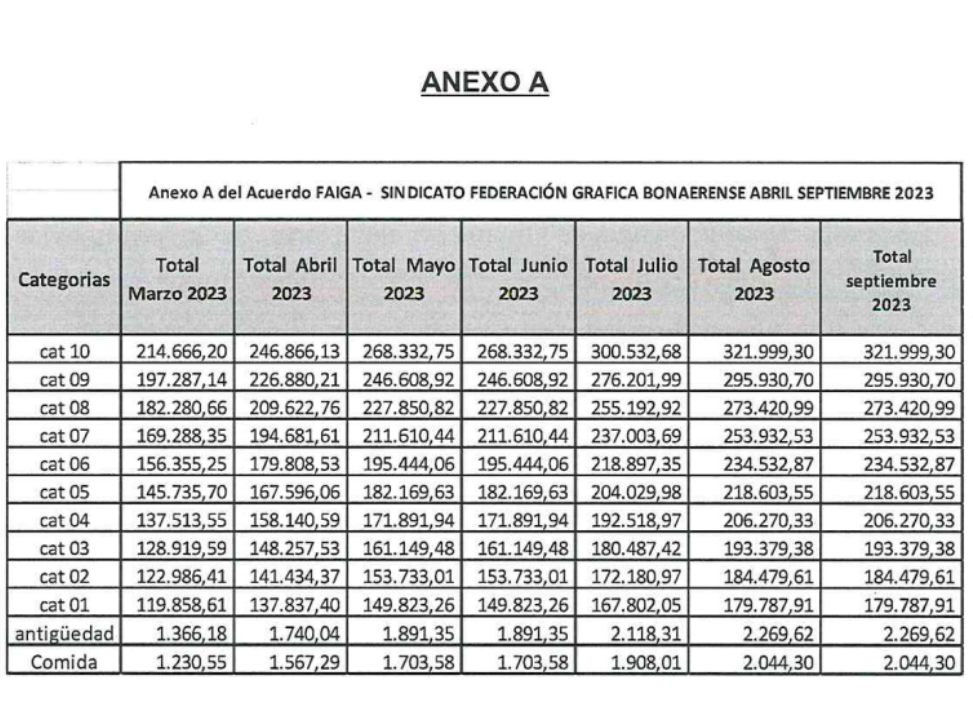

An analysis of the wage scales of the Buenos Aires Graphic Federation (FAIGA) agreement reveals a significant change in the purchasing power of workers measured in dollars.
In August 2023, with an exchange rate close to 750 pesos, the basic wage in the lowest category was around 179,787 pesos, equivalent to approximately USD 238.
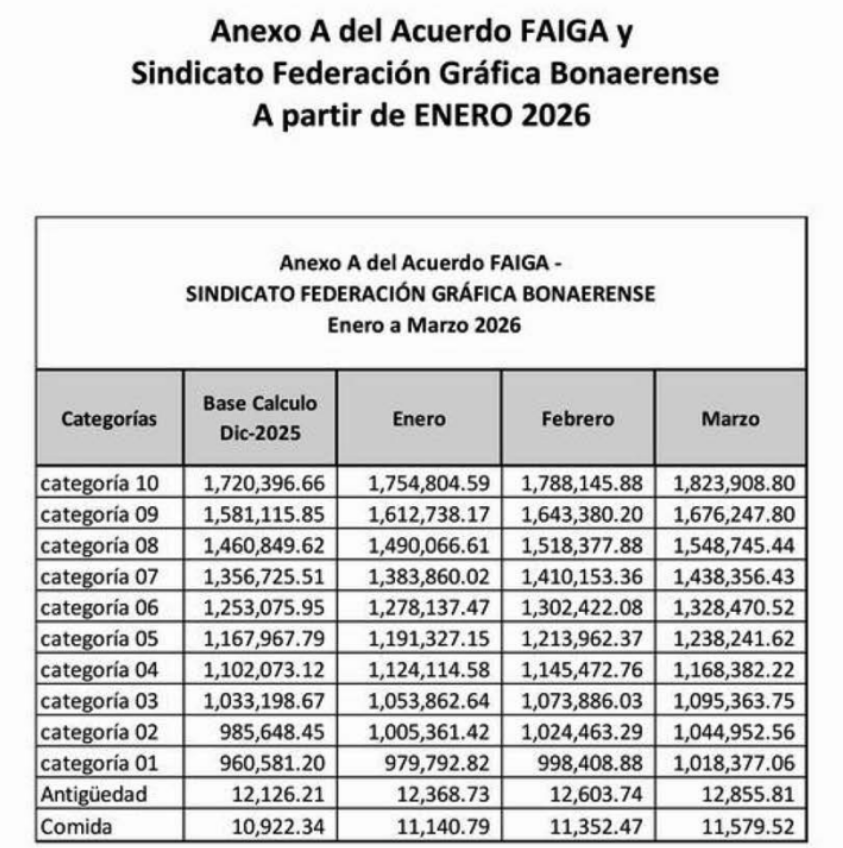
However, starting with the new scales in force in 2026, that same agreement sets starting salaries of around one million pesos, equivalent to about USD 700 at the current exchange rate.
This means that, measured in dollars, income tripled in just two years.
The key fact: stability and real recomposition
The difference is not just nominal. For years, salaries in Argentina grew in pesos but fell systematically in dollars due to inflation and devaluation
.The new economic scenario, with a more stable exchange rate and lower inflation, allowed wage recompositions to have a real impact.
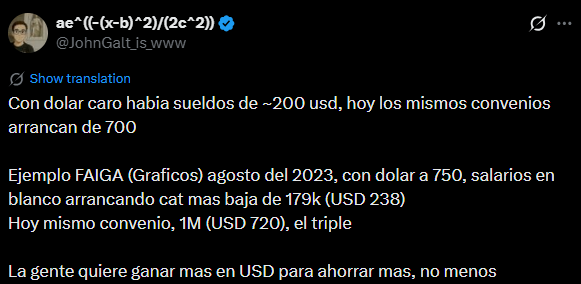
As one network user summarized: “With an expensive dollar there were salaries of ~200 USD, today the same agreements start at 700”
This phenomenon marks a break with respect to the previous model, where the salary in dollars was increasingly low despite constant parity
.
The role of changing the economic model
The improvement in salaries measured in hard currency is directly linked to the shift in economic policy promoted by the government
of Javier Milei.Key factors include:
Exchange rate correction after years of artificial backwardness
Fall in inflation, which allows for more predictable wage agreements