NASA and the United States Department of Energy have confirmed that the reactor's deployment is planned for the year 2030
Nuevo
Agregar La Derecha Diario en
Compartir:
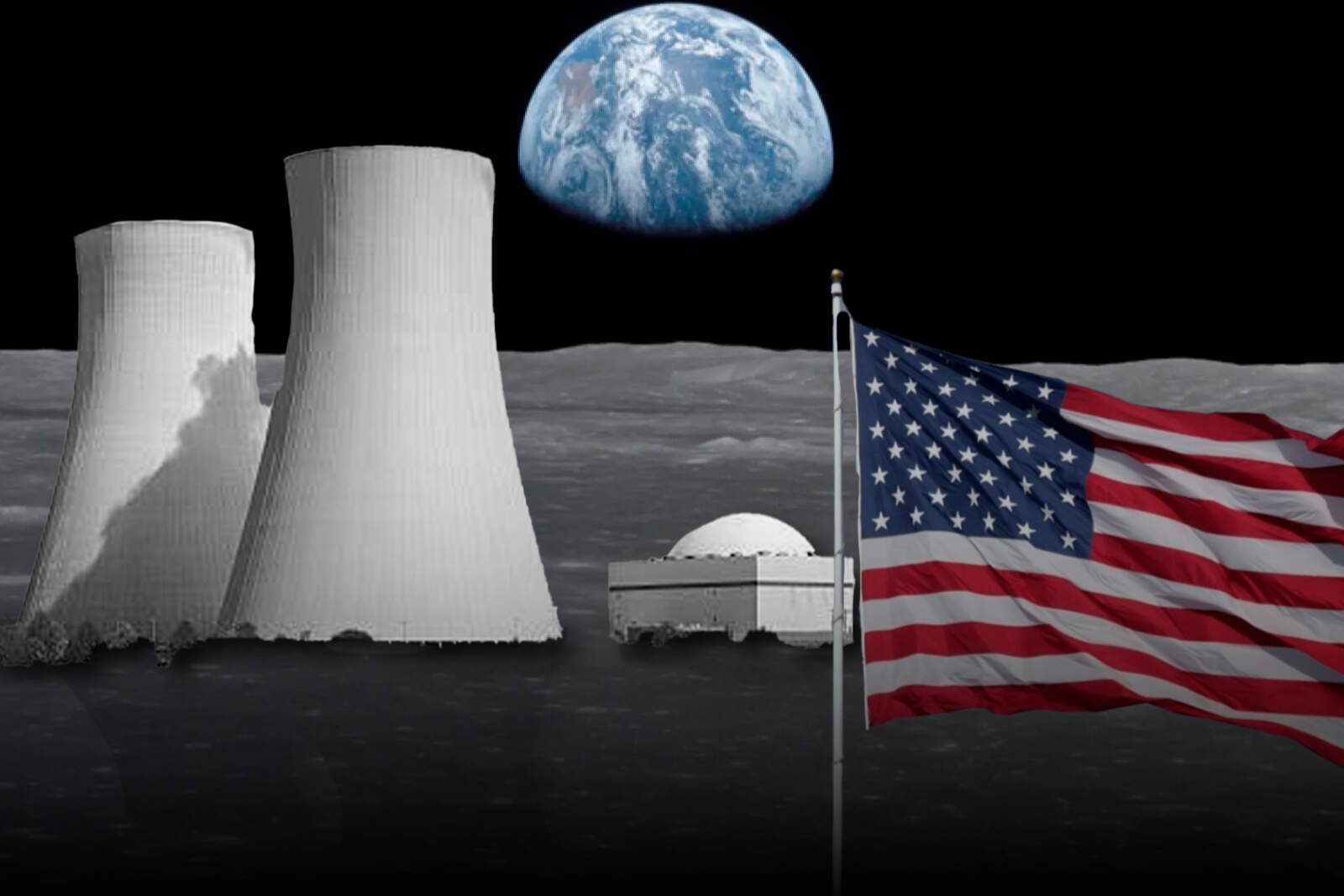
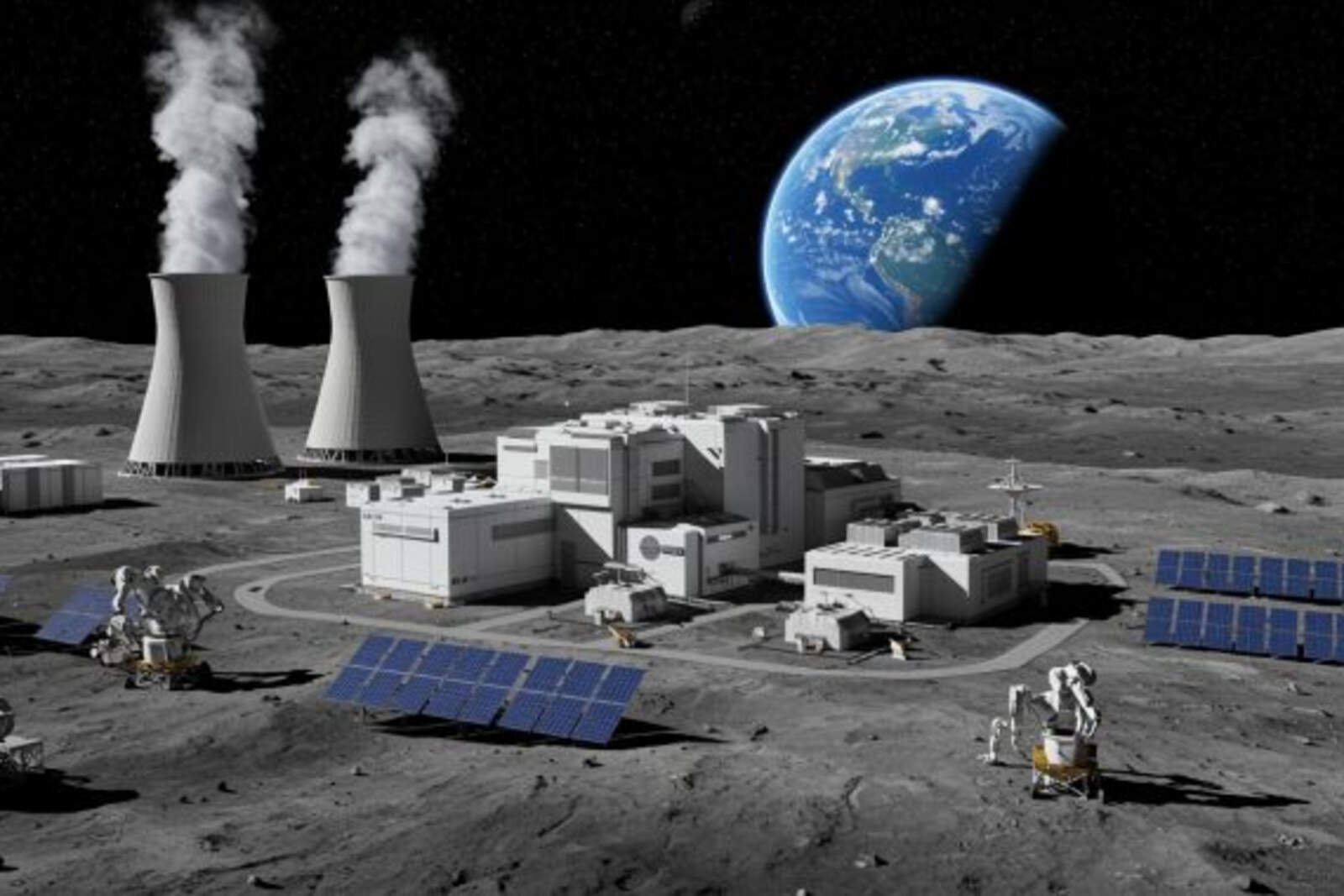
NASA and the United States Department of Energy (DOE) reaffirmed this week their commitment to install a nuclear reactor on the surface of the Moon before the year 2030, a key project to ensure a sustained human presence and strengthen U.S. leadership in space exploration.
The initiative is part of the space policy promoted by President Donald Trump and the Artemis program, whose objective is to establish a permanent lunar base as a preliminary step to future missions to Mars.
Both agencies signed a memorandum of understanding that consolidates their collaboration for the development and deployment of fission power systems capable of operating both on the lunar surface and in space.
La iniciativa continúa con los objetivos de la administración Trump de establecer una base lunar permanente
According to the DOE, these reactors will produce safe, reliable, and abundant electric power, which will make it possible to sustain long-duration missions in an extreme environment characterized by severe temperatures and long periods without sunlight.
NASA Administrator Jared Isaacman emphasized that the return to the Moon is not limited to temporary explorations. "The United States is committed to returning to the Moon, building the infrastructure to stay, and making the investments necessary for the next giant leap to Mars and beyond," he stated.
Isaacman stressed that achieving that future necessarily requires the use of nuclear power, since it provides a constant source of electricity that is indispensable for human life and operations in deep space.
El administrador de la NASA aseguró que el retorno a la Luna forma parte de una estrategia a largo plazo para intensificar la exploración espacial
The project takes on special relevance due to the limitations of other energy sources. On the Moon, nights can last up to 14 Earth days, which significantly reduces the effectiveness of solar panels.
In contrast, nuclear fission systems can generate power continuously for years without the need for recharging, which makes them a strategic solution for inhabited bases, communication systems, scientific laboratories, and possible industrial activities.
The initiative also responds to an executive order issued by President Trump in December, titled "Ensuring United States Space Dominance," which establishes as a priority the construction of a permanent lunar base by 2030 and the deployment of at least one nuclear reactor on the surface of the satellite. The objective, according to the document, is to guarantee the technological and strategic dominance of the United States in space.
El proyecto se erige ante una escasez de otras fuentes de energía en la superficie lunar
Secretary of Energy Chris Wright compared the magnitude of the project with some of the country's greatest scientific achievements. "History shows that when U.S. science and innovation come together, our nation leads advances that once seemed impossible, from the Manhattan Project to the Apollo missions," he stated.
Wright indicated that this agreement continues that tradition and represents one of the greatest technical challenges in the history of nuclear energy and space exploration.
Cooperation between NASA and the DOE is not new. For more than five decades, both institutions have worked together on nuclear systems for space. Landmark missions such as the Cassini probe and the Martian rovers Curiosity and Perseverance have used nuclear generators to operate in environments where other energy sources are not viable, showing the reliability and safety of this technology.
With this project, the United States seeks to lay the foundations for a sustainable human presence beyond Earth. The installation of a nuclear reactor on the Moon will not only ensure stable power for future bases, but it will also pave the way for more ambitious missions to Mars and deep space, consolidating a new stage in space exploration.
Chris Wright aseguró que es uno de los mayores proyectos científicos de la historia estadounidense