Peronist governor Osvaldo Jaldo supports Milei's labor reform and calls for regional agreements to modernize
Compartir:
Within the framework of the new stage of dialogue between Casa Rosada and the governors, the Peronist governor of Tucumán, Osvaldo Jaldo—who ran in the last elections with a list allied to Fuerza Patria—supported the changes promoted by President Javier Milei to modernize the legal labor framework. Jaldo clearly expressed his support for moving toward an "update of labor laws" and highlighted the idea of regionalizing collective bargaining agreements as key.
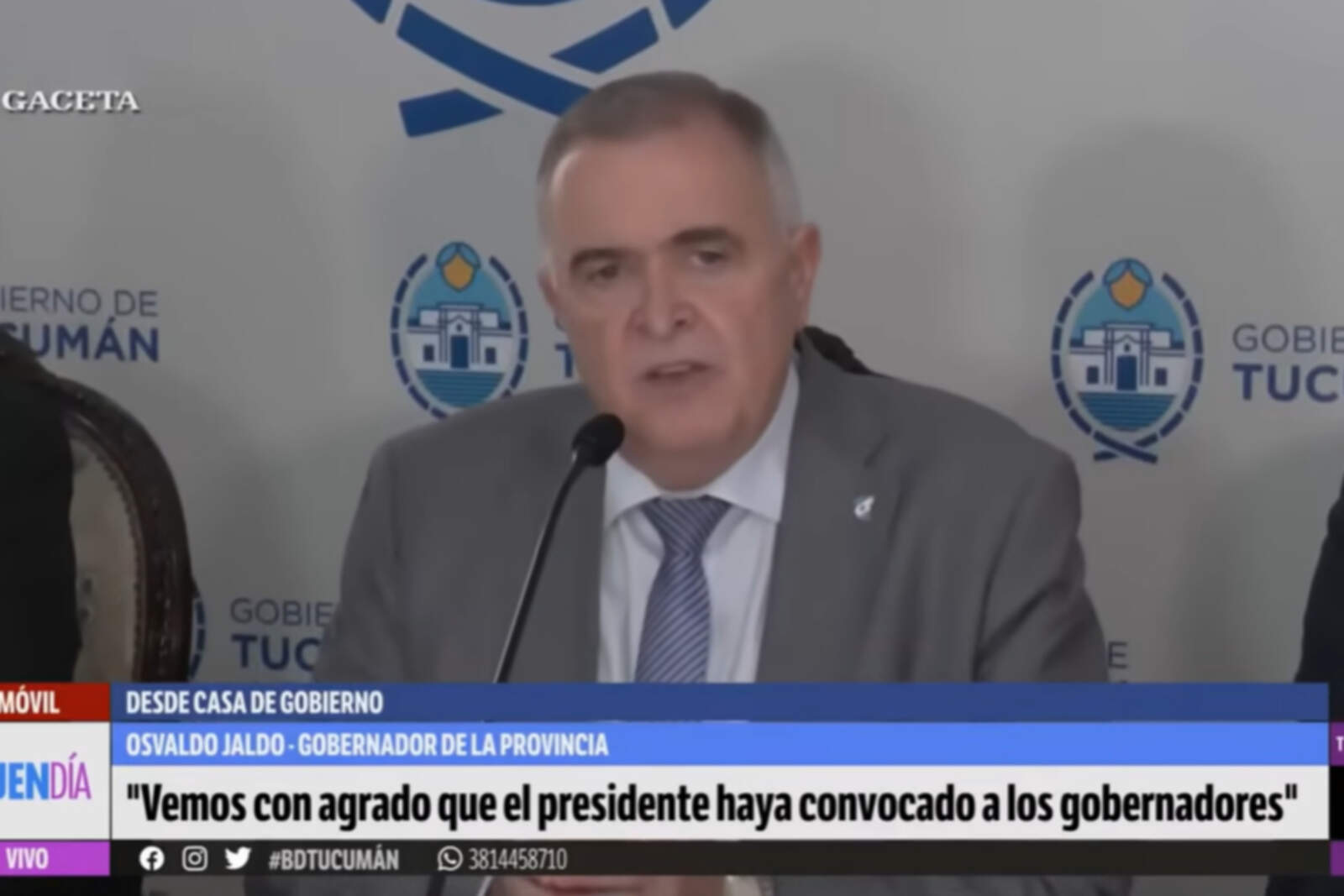
"A modernization of labor laws has been requested. These laws provide certain guarantees to workers, but also opportunities for the private sector to operate. Small and medium-sized enterprises, industries, commerce, and production need labor laws that are updated and modernized because technology has advanced," the Governor stated at a press conference.
Osvaldo Jaldo en Conferencia de Prensa
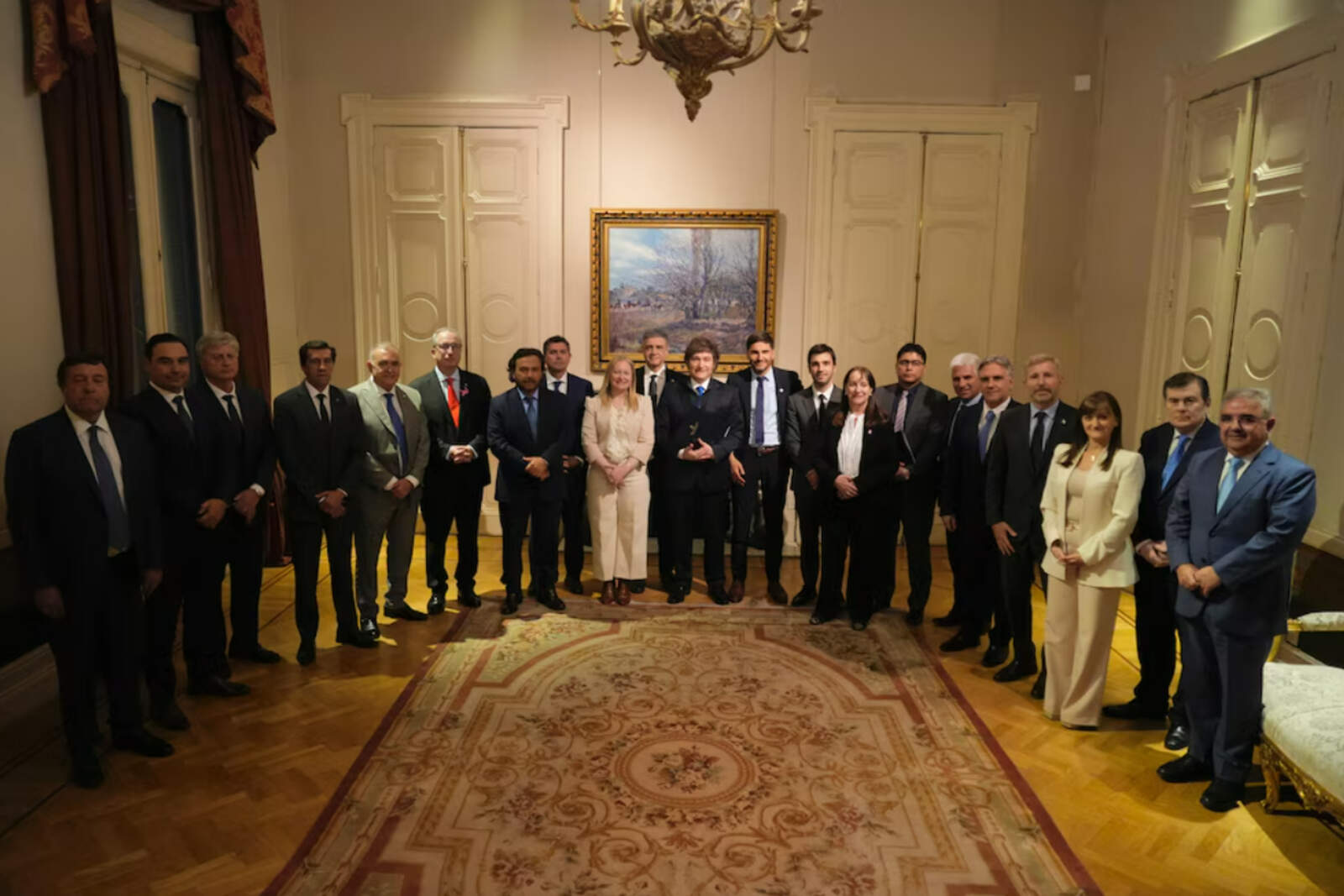
After the officialist victory on October 26, Jaldo once again aligned himself with the changes promoted by Casa Rosada. "We are pleased that the President has restored dialogue with the governors. It was something the country needed," he stated after the meeting with Milei.
Regarding the reform itself, Jaldo was emphatic:
"We can't oppose the updating of labor laws. Today we have technology, information technology, artificial intelligence, robotics that are not contemplated in labor law. However, the modifications do not go backward, because no law is retroactive. With this, we make it clear, with total certainty, that acquired rights will not be affected."
In particular, he considered that an update of the legal framework that is competitive is necessary to maintain and export local production to international markets. "Today the economy is globalized. Tucumán, as a province alone, has almost 160 products in 150 markets around the world, and in the face of a globalized economy, we must have legislation that is competitive and allows us to go out into the world with costs and with reasonableness regarding production systems," he indicated.
What the National Government Proposes
The National Government recognizes that labor reform is necessary for the country to grow and modernize. Minister of Deregulation, Federico Sturzenegger, described labor and tax reforms as the "backbone" of the second stage of management, together with a criminal package and a new Ley Bases.
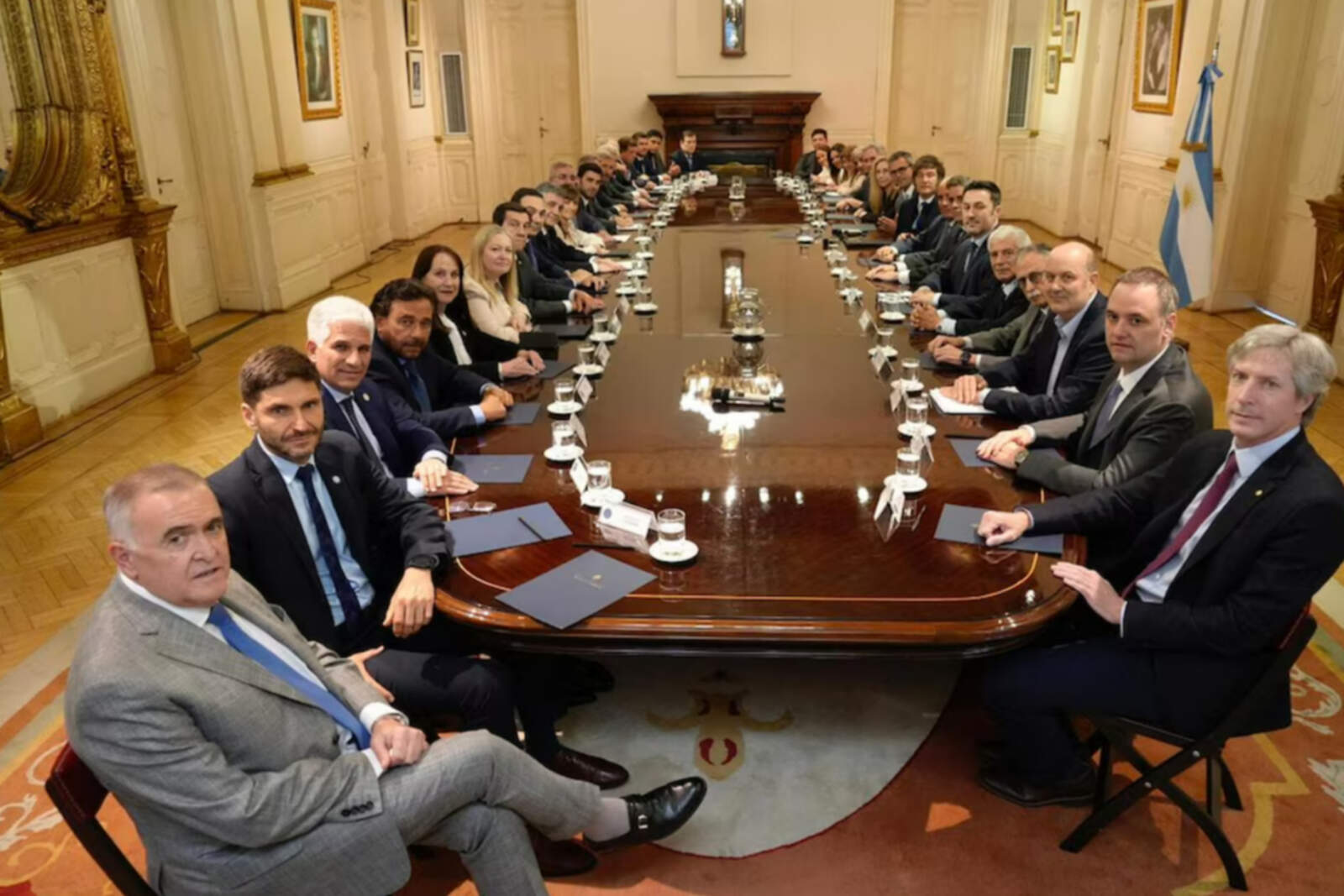
Reunión con gobernadores: Osvaldo Jaldo primero en la foto con traje gris
The official anticipated debates on employment formalization, ultra-activity of agreements, and wage negotiation modalities. In this regard, Sturzenegger proposed reviewing the ultra-activity inherited from agreements of the 1970s and rethinking the negotiation that is currently set by sector and applies to the entire country as a whole, arguing that breaking that unification would allow for increased employment in regions such as NOA. He also emphasized that there are no plans to "increase working hours", as was rumored.
In this context, Jaldo was decisive in his support for the regionalization of collective bargaining agreements (CCT). "For example, the salaries of the Unión Tranviarios Automotor (UTA) are set in Buenos Aires, but they apply and are valid for the entire country. Buenos Aires receives a subsidy that we do not receive in the north, so companies often have to pay salaries even with deficits within their companies.That's why collective bargaining agreements will have to be made by area, by region, so that they truly represent the activities, but in the place where they are carried out," he explained, thus aligning himself with the vision of the national government.
Saludo de Milei con Jaldo durante la reunión con gobernadores
The Alliance with the Provinces Remains in Place
Continúa el plan de federalizar la gestión y llevar adelante negociaciones con los gobernadores
After the summit, spokesperson Manuel Adorni emphasized that the Executive's intention is "to work with everyone to return to the path of growth", with an emphasis on labor and tax reforms as the foundation for the next stage. That message is complemented by the political decision to focus agreements on the commitments of the Pacto de Mayo, which Casa Rosada has once again placed at the center of the stage.
With the realignment of forces in the Chamber of Deputies and Senate after the elections, and the public support of dialogue-oriented governors, including those from the Peronist wing such as Jaldo, the ruling party is betting that labor reform will gain enough support to be carried out as soon as possible. Casa Rosada interprets this scenario as an increasingly clear path to take off.