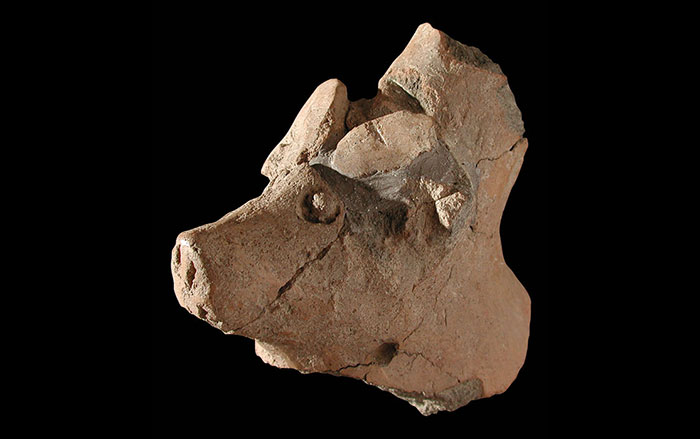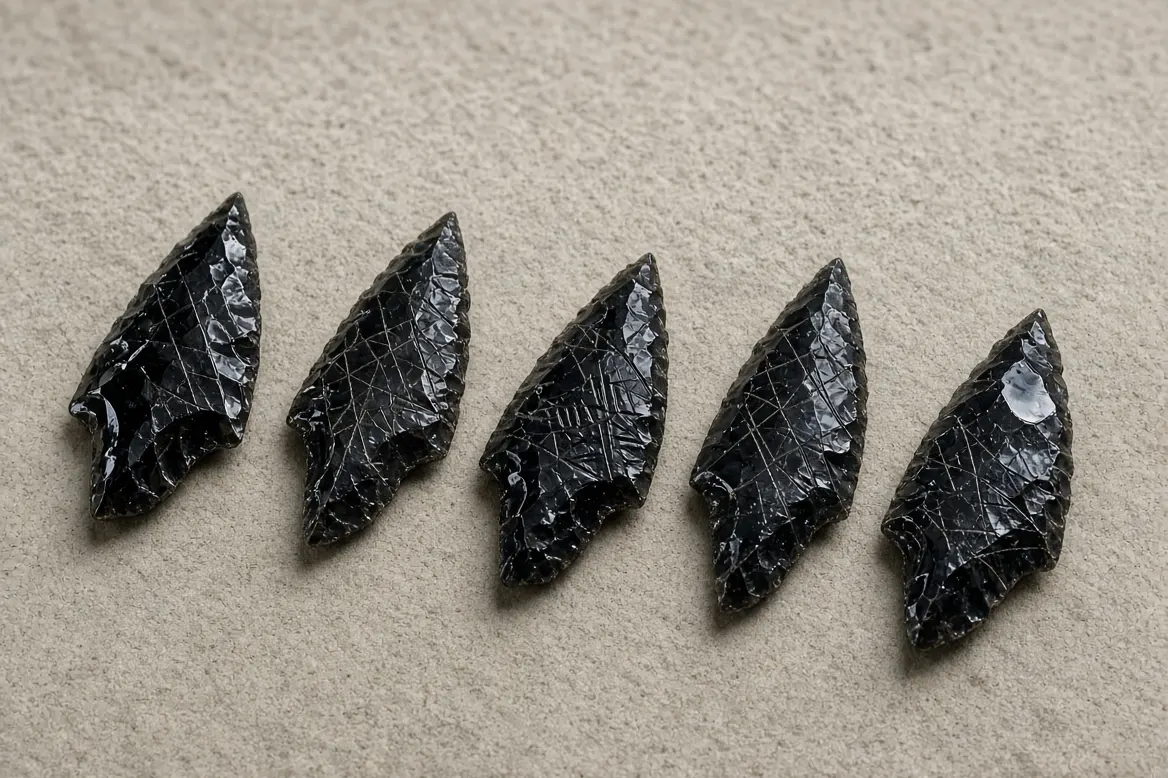

In the heart of Cappadocia, in the Neolithic settlement of Tepecik-Çiftlik, located between two large deposits of volcanic glass, eleven obsidian points with uniquely engraved designs were recovered. These pieces are part of a broader set: of the thousands of obsidian arrowheads found in the region, only 54 exhibit this type of markings.
Researchers Alice Vinet from the University of Aix Marseille and Denis Guilbeau from the French Ministry of Culture examined all the engraved points under a microscope and attempted to reproduce the strokes. They found that to leave those marks on the smooth surface of the obsidian, it was necessary to repeatedly pass a flint fragment over it. This makes it very unlikely that they were accidental scratches.
The points with incisions are the same size and shape as those without any markings. They also did not appear in special contexts, such as graves. Furthermore, they show similar wear to the unmarked pieces, indicating that they were used in the same way.
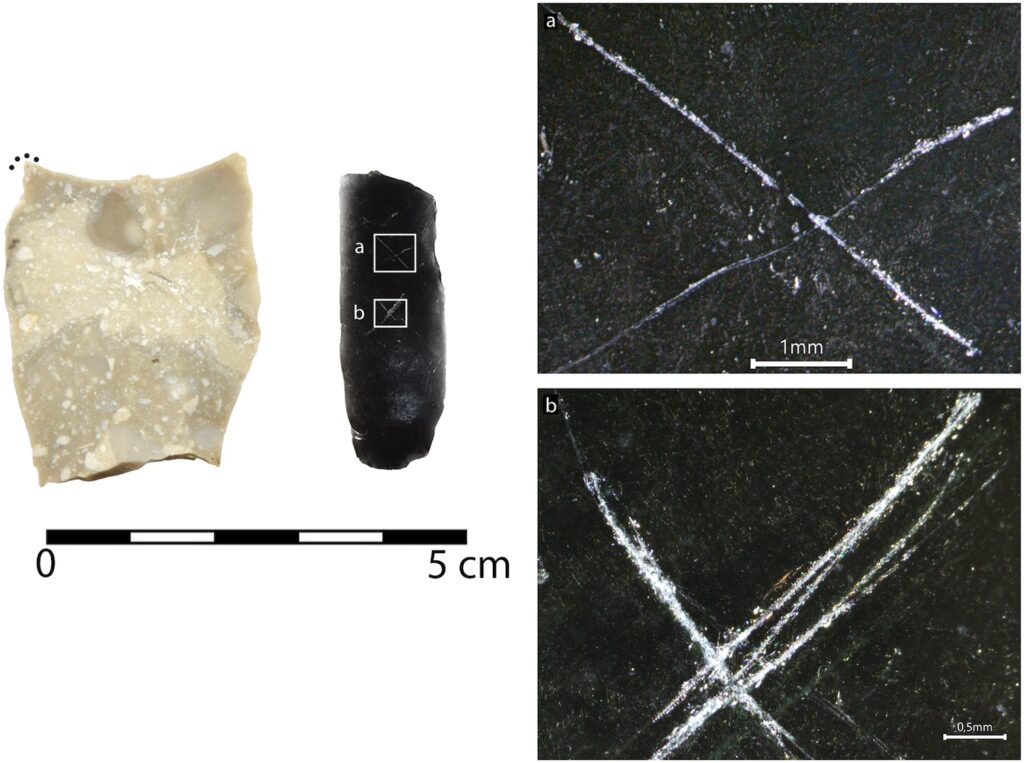
However, the researchers observed a striking detail: the engraved points recovered from the same site often share similar motifs. From this pattern, they concluded that not all the mysterious marks may have served the same purpose.
A discovery that raises new questions
The study, published in the scientific journal PLOS One, focuses on a material that was fundamental for the Neolithic communities of central Anatolia. Obsidian, a volcanic glass of excellent quality for carving, circulated widely in the area and was used to make tools and weapons.