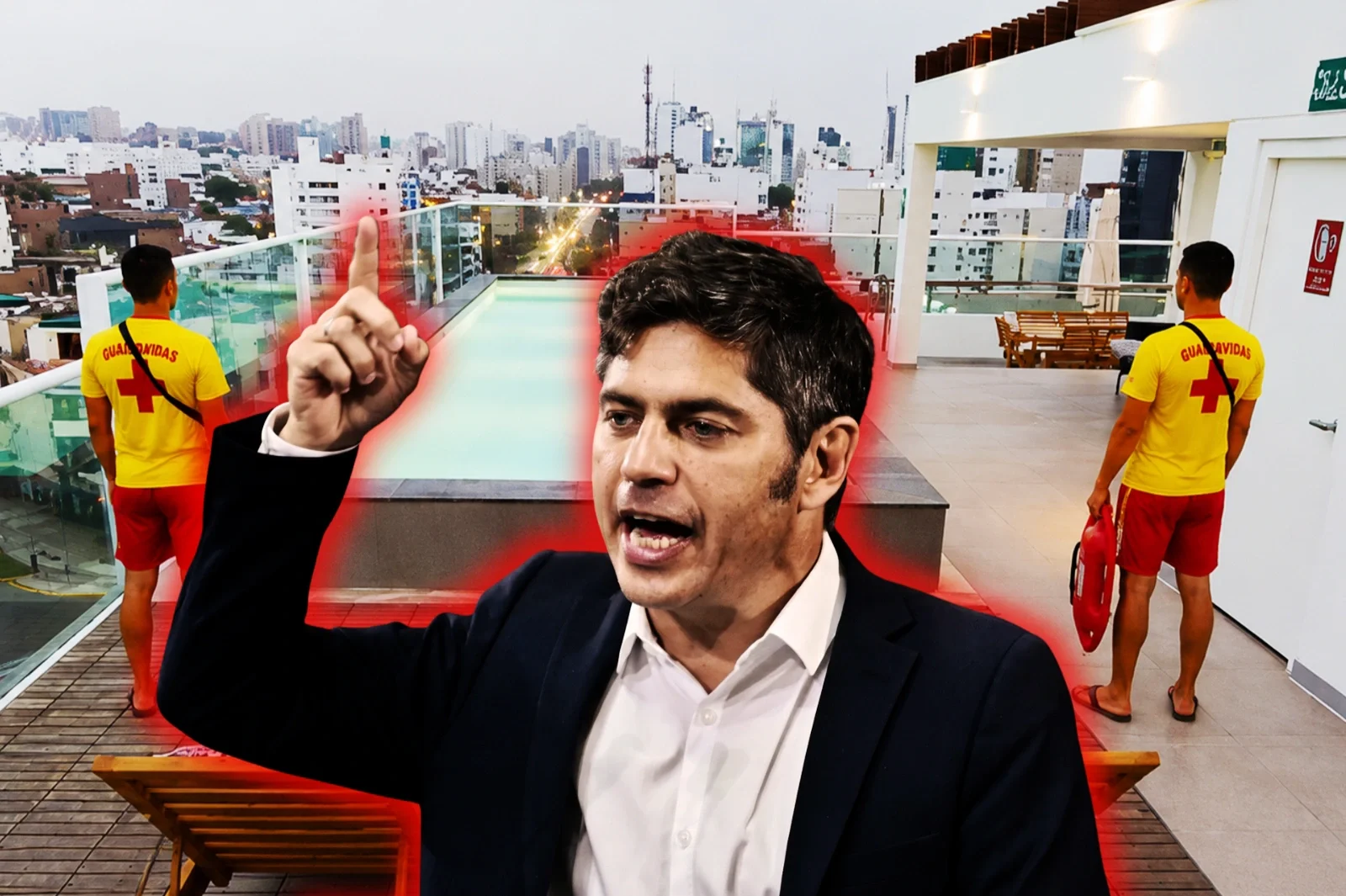
The Government of Axel Kicillof has begun to implement the Provincial Law No. 14,798, which has generated strong criticism and discontent among condominiums and owners in buildings in the province of Buenos Aires, not only due to the absurd regulation but also because of the enormous economic cost it generates.
The regulation, which governs the activity of lifeguards, requires the mandatory presence of authorized personnel in all common use pools, without establishing differences based on size, capacity, or characteristics of the space.
This means that any pool belonging to a building, even the smallest, is required to hire a lifeguard, being subject to the same demands as large-scale facilities. For administrators and residents, this regulation creates a financial burden that is difficult to sustain.
Axel Kicillof
Sebastián Libano, leader of the Chamber of Condominium Administrators of La Plata, described the situation with concern: “It is becoming impossible to comply with the regulation financially.”
Additionally, he highlighted one of the main criticisms: “it does not differentiate between a swimming pool and a canvas pool. If it is for common use, it must have a lifeguard.”
The regulation requires six-hour daily shifts for at least 150 consecutive days, which forces the hiring of more than one lifeguard if the pool remains open throughout the day. This is compounded by pension contributions, mandatory clothing, and safety equipment, such as first aid kits, spinal boards, and automatic defibrillators.
The result is an exponential increase in expenses. In small buildings, the cost of hiring a lifeguard can equal or even exceed the salary of the caretaker, creating an immediate impact on the monthly bills that residents reject.
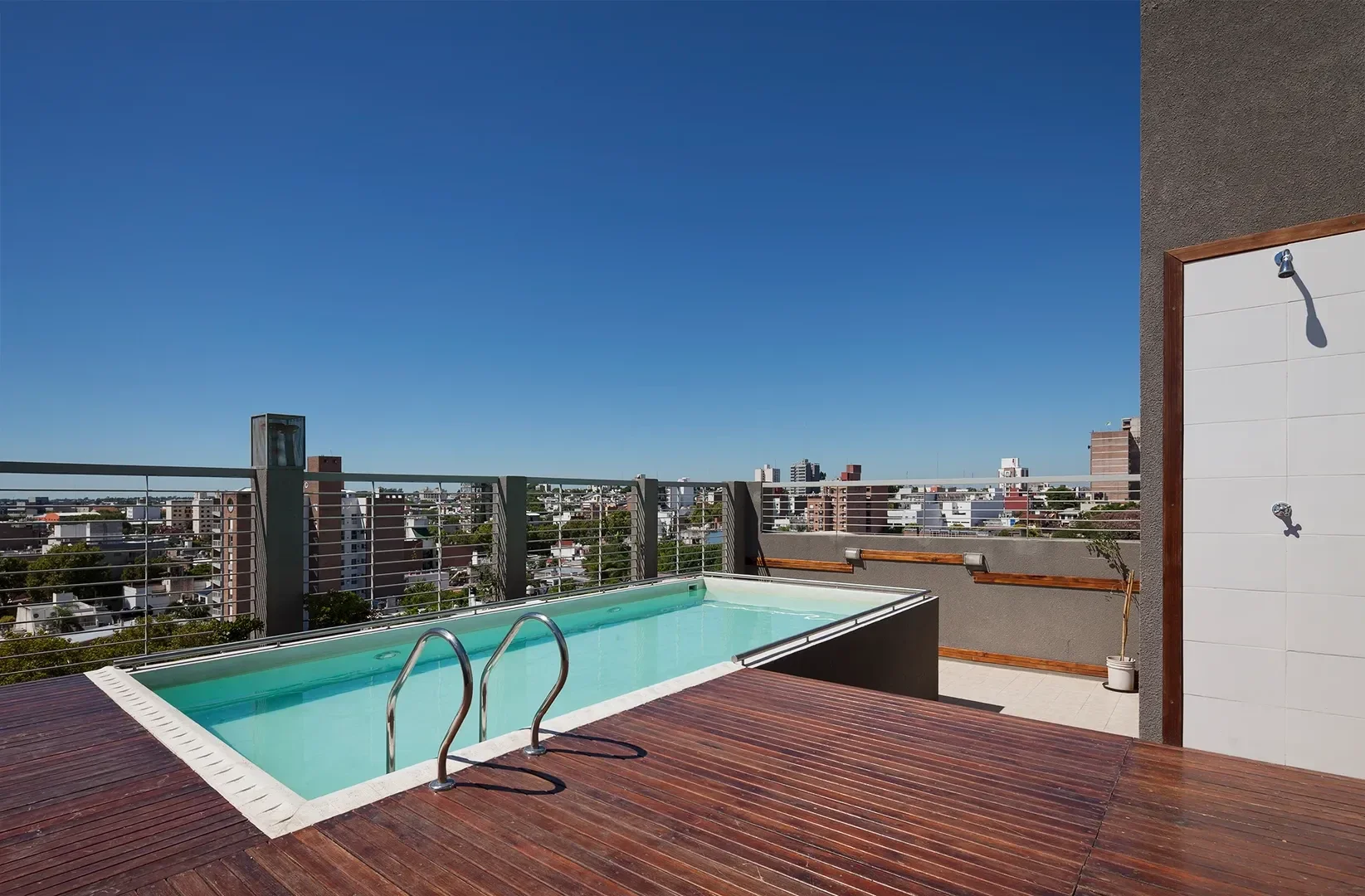
Building pool
Ariel Coppari, president of the Chamber, explained how condominiums react to this situation: “Administrators raise the issue, the expense is not approved, and they opt to close the pool. Some close it, and others simply fill it with dirt. They cannot maintain them.”
The phenomenon has even acquired a name within the sector: the “dead pool.” These are spaces that still exist in buildings, appear on plans and in real estate listings, but remain unused because the condominium cannot afford the costs required by the regulation to enable them.
The pressure is not only economic. Administrators also face a legal dilemma. Keeping the pool open without licensed lifeguards can lead to severe fines and civil liabilities. However, complying with the law means passing on costs that many owners and tenants consider directly unfeasible.
Coppari insisted on the lack of reasonable criteria within the regulation: “They should have provided a definition by size. There are buildings with pools of 2 by 2 meters that have to hire a lifeguard.”
Meanwhile, uncertainty grows as the next season approaches. Administrators are calling for an urgent review of the law to prevent the number of closed pools from continuing to rise.
In the current context, the unusual regulation promoted by Kicillof's Government not only generates rejection due to its rigidity but also because of the enormous cost to the pockets of the residents of Buenos Aires.