The year 2026 began with the outbreak of a crucial conflict in modern geopolitics. On January 3, the United States carried out military operations in Venezuela aimed at putting an end to the regime headed by Nicolás Maduro, marking a turning point in the country's political crisis. The decision came after many years of severe institutional, economic, and social deterioration, reshaping the regional landscape.
The capture of dictator Maduro was presented by Washington as an action aimed at restoring political order and facilitating a transition, in line with its historical role as guarantor of hemispheric balance, a role that the United States had abandoned, giving priority to the value chain of the Middle East and Asia. The Trump Administration is taking up the Monroe Doctrine again.
In this context, it is appropriate to analyze the events that led to the operation, the actions of the actors involved, and the resulting energy and trade implications, since, without a doubt, we are facing one of the most important military operations in the history of the United States.
Donald Trump.
Operation Absolute Resolve
The United States carried out "Operation Absolute Resolve", which consisted of the deployment of more than 150 aircraft (F-18, F-22, and F-35) from twenty land and maritime bases, tasked with dismantling and deactivating the Venezuelan air defense systems of Iranian origin through selective bombings.
These actions allowed United States forces to enter the country and proceed with the arrest of Nicolás Maduro, who was transferred -along with his wife- under custody outside Venezuelan territory. It is estimated that the operation left a death toll of 32 Cuban soldiers and 24 Venezuelans, while the United States suffered no casualties.
Trump stated that "Venezuela will be free", after one of the most turbulent regimes in Latin American history. He also announced the closure of El Helicoide, the country's largest detention and torture center.
It is worth noting that during Maduro's regime more than 7.7 million Venezuelans left the country, the economy accumulated a contraction of more than 75%, and hyperinflation eroded purchasing power. In terms of human rights, there were thousands of arbitrary detentions and hundreds of deaths in protests. In addition, poverty reached 90%, and the Venezuelan people tried to remove him from power democratically on three occasions, which were not recognized by the regime itself.
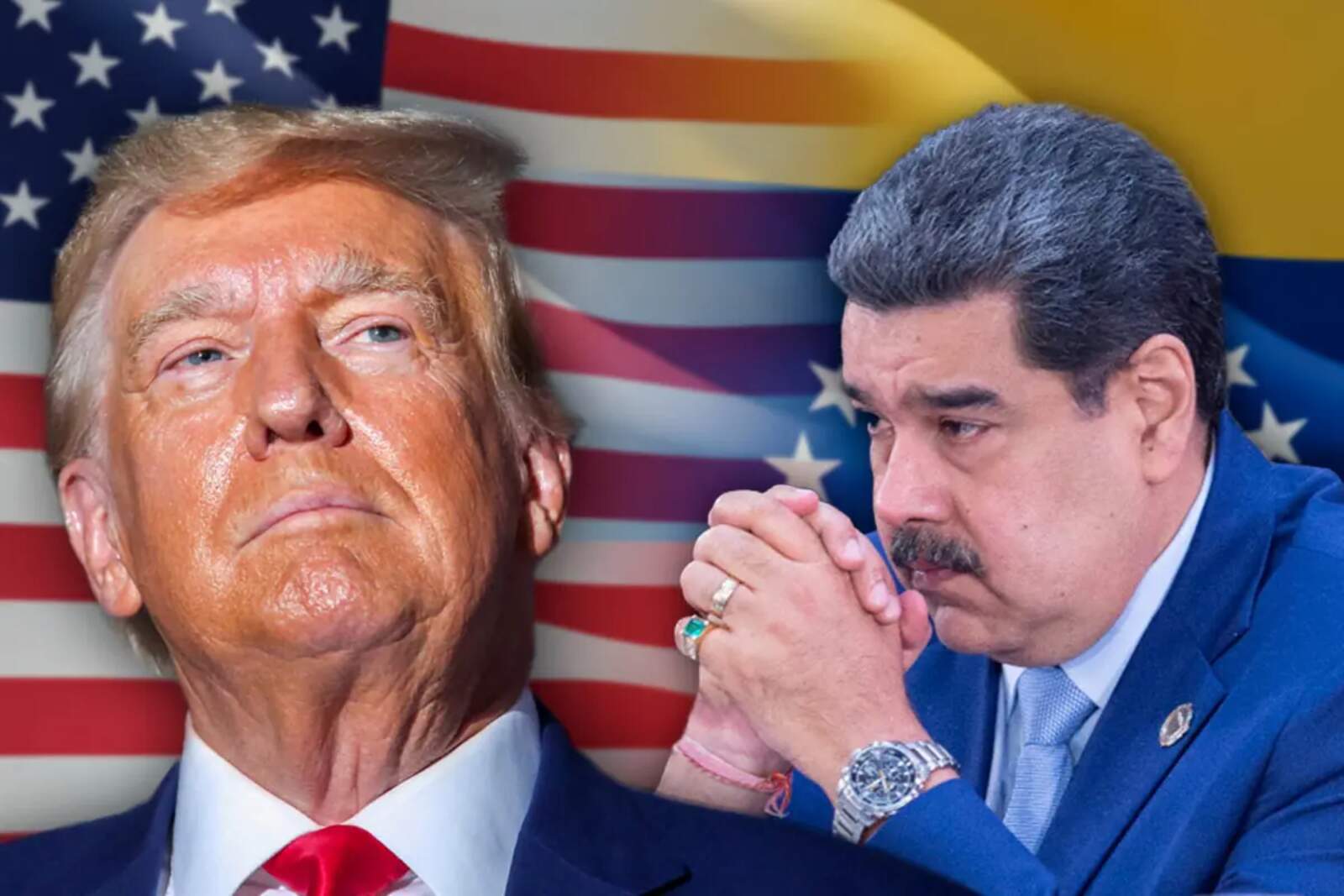
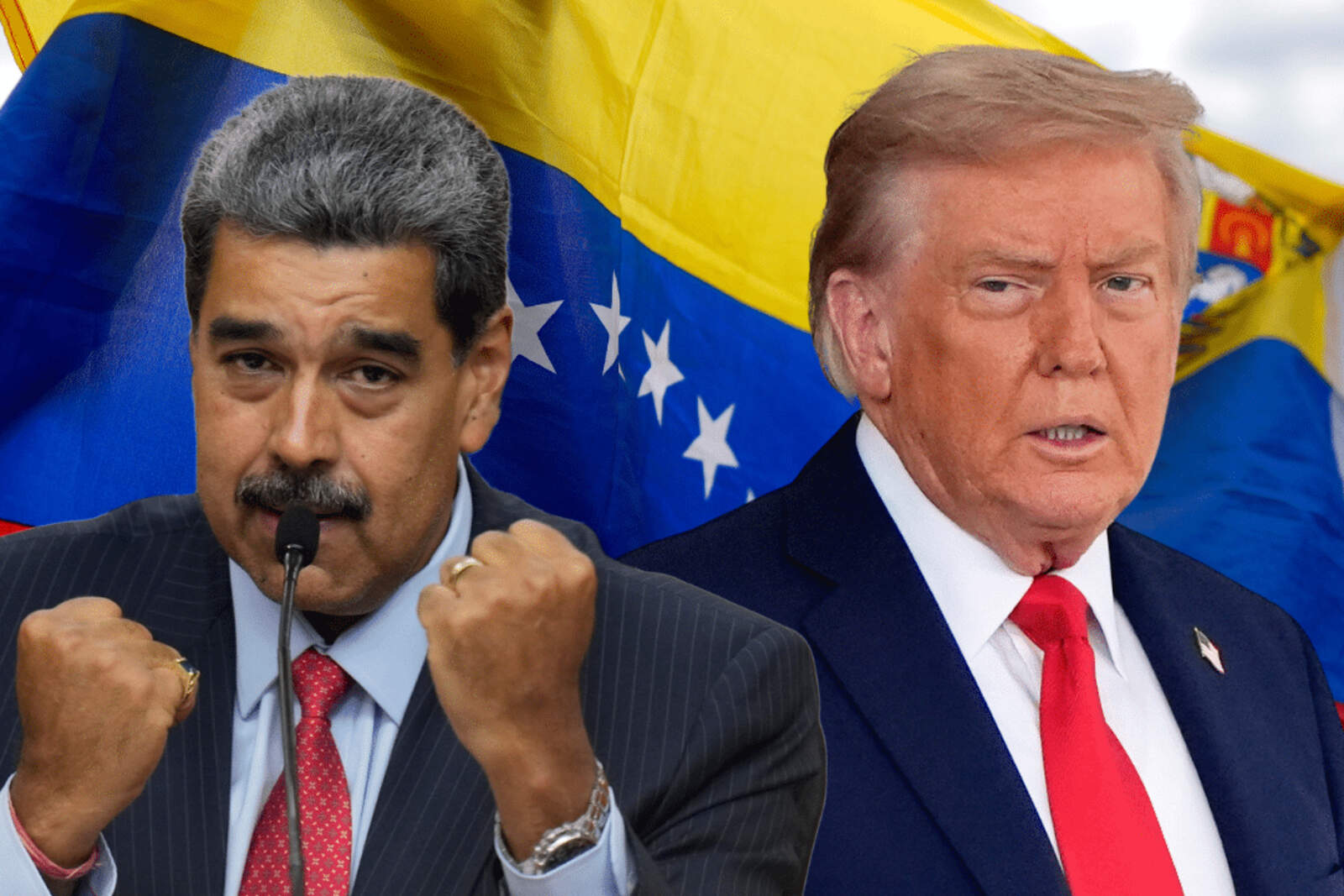
Donald Trump y Nicolás Maduro.
United States strategy and the reaction of the powers
From the United States' perspective, the operation replied to a hemispheric security strategy aimed at eliminating a focus of instability and transnational crime. Trump maintained that his country "will not tolerate dictatorships that destroy nations and export chaos", while officials in his administration indicated that the action sought to guarantee an orderly political transition and protect the civilian population.
It is also important to emphasize that the extracontinental powers —Russia and China— have been gaining strategic weight on the American continent, especially in Venezuela in recent years, which represents a threat to regional security.
In parallel, the reaction of those nations was immediate: China's Ministry of Foreign Affairs declared that the United States "violated international law" and demanded the release of Nicolás Maduro and respect for Venezuelan sovereignty, while the Russian government described the intervention as an "armed aggression" and expressed its "deep concern", demanding explanations from Washington.
Energy and trade impact
The United States operation had an immediate impact on markets and on energy expectations linked to Venezuela. After the capture of Nicolás Maduro, the Caracas Stock Exchange recorded an increase of nearly 50%, while the country risk fell by approximately 3,800 points, reflecting an abrupt reduction in the perception of political and financial risk.
In parallel, President Donald Trump stated that the United States will have an active role in the reorganization of the Venezuelan oil sector, with the objective of making the most of resources that were not being exploited, or that were being used illicitly by extraregional actors.
Donald Trump, presidente de Estados Unidos.
Conclusion
The historic United States operation in Venezuela represents a turning point in the competition for global hegemony. The end of Maduro's regime redefines the regional balance and reinforces the United States' role as a central actor in Latin American stability, by articulating hemispheric security, political transition, and the energy dimension.
Nevertheless, the consolidation of this process will depend on the United States government's ability to maintain order, avoid power vacuums, and manage the reaction of external actors.
It is also appropriate to emphasize that more than half of Venezuela's crude oil exports last year went to China. Although China's official figures show a discrepancy, it has managed to import enormous quantities through ghost fleets and by falsifying the ships' location signals at the time of departure.
Now, the Asian giant will have to replace this immense import of Venezuelan oil, resulting in a possible benefit for Russia's energy sales.
The geopolitical strategy that the USA has been carrying out is framed within the Monroe Doctrine: no extracontinental power within America. President Trump has relaunched the Doctrine through his now famous corollary, even calling it "Donroe Doctrine". In fact, it will be necessary to pay close attention to the USA's advance over Canada and Greenland during the coming weeks.
From South America, and particularly from Argentina, we must support this policy, which brings us closer to the recovery of Malvinas and to control of the South Atlantic. Anyone who doesn't agree with this line defends the continued European control of our seas.