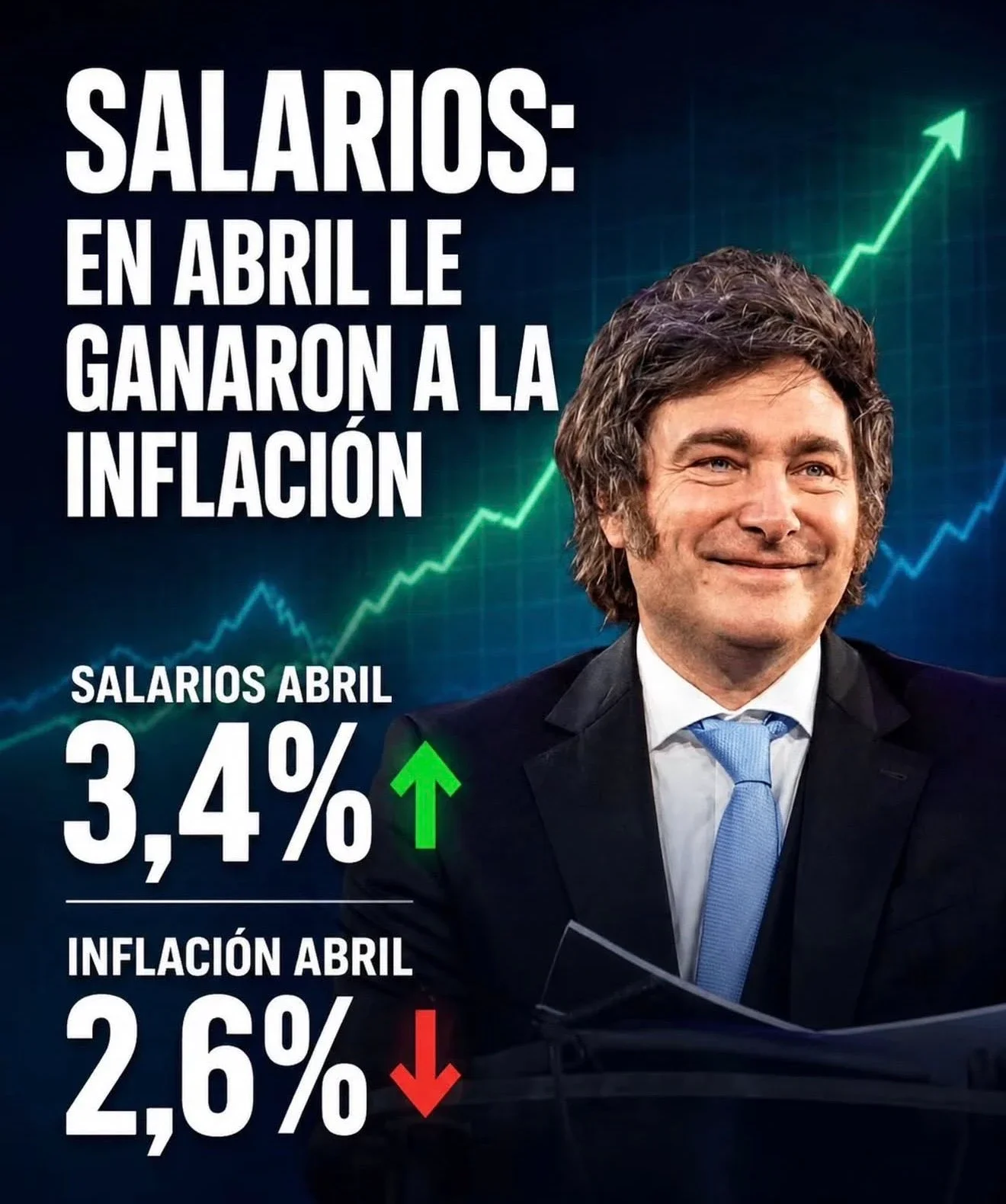
The slowdown of inflation began to reflect in incomes and left a favorable signal for purchasing power in April. According to private surveys, negotiated salaries in collective bargaining agreements rose by an average of 3.4% during the month and managed to exceed the 2.6% recorded by the Consumer Price Index.
This data reflects the favorable impact of the slowdown in prices on purchasing power. With more contained inflation, several salary agreements were able to surpass the advance of the CPI and marked a real improvement for various sectors of the formal economy.
The IMF also projected significant growth for the Argentine economy and the continuation of the disinflation process.
According to a report by Fundación Capital, 6 out of the 14 activities surveyed recorded salary increases higher than inflation during April. Among the sectors with the best performance were Chemicals, with an increase of 9.4%; Gastronomy, with 6.8%; Smata, with 5%; Building managers, with 4.4%; and Commerce and Utedyc, both with increases of 3.5%. Banking, meanwhile, matched the monthly inflation with an increase of 2.6%.
The recovery was driven by three main factors: the monthly inflation slowdown, the application of fixed sums, and the renegotiation of collective bargaining agreements in unions that adjust their agreements quarterly. This combination allowed several sectors to regain margin against the advance of prices.
The result for April appears as a relevant signal within the economic normalization process announced by the Government. As inflation loses strength, salary agreements have a greater capacity to translate into real improvements, especially in those areas where collective bargaining incorporated updates or additional payments.
The data was celebrated by the president on social media.
The data also shows a heterogeneous improvement, with sectors advancing more strongly than others. Activities such as Chemicals and Gastronomy had increases clearly above the CPI, while other sectors remained closer to monthly inflation or still below it. However, the overall average allowed the surveyed salaries to close April in positive territory.
Looking ahead, consultancies anticipate a sectoral dynamic, with differences depending on each activity, the pace of collective bargaining, and the evolution of inflation. With more orderly prices, salaries in competitive sectors have started to find room to increase their purchasing power.