Nevertheless, although the veto is agreed upon, the reason for the decision is different. While Milei's government is doing it to protect the economy and maintain the surplus, Cristina Kirchner did it because she wanted to use the money for the Kirchnerist electoral campaign.
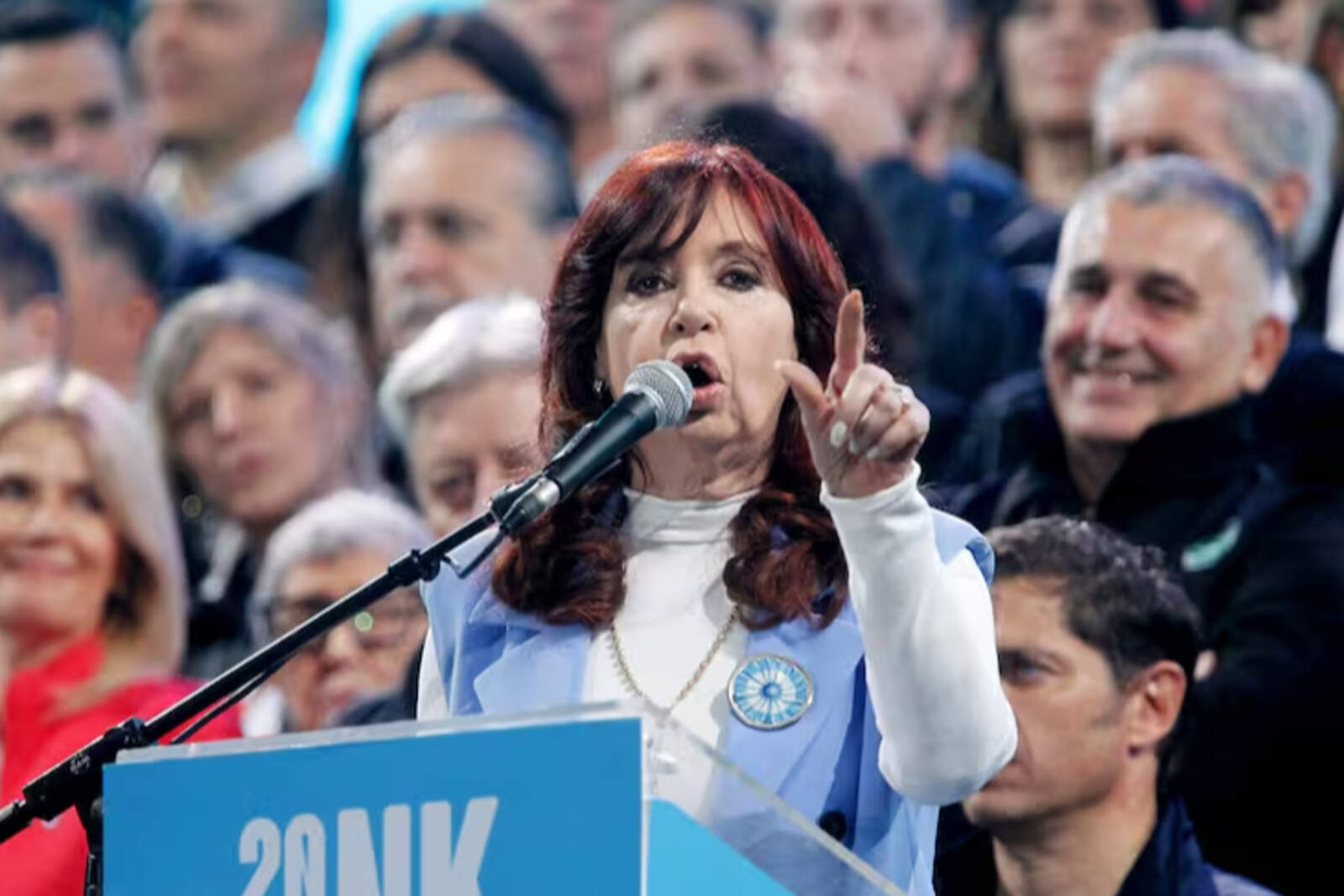
Cristina Kirchner, condenada por corrupción.
This double standard highlights one of the great political hypocrisies of sectors aligned with Kirchnerism. The same Cristina who more than a decade ago justified the veto with phrases like “the more they attack me, the stronger I get” and assured that she was not afraid of the political cost, today seeks to break the State with unfeasible laws.
In 2010, the Kirchnerist government estimated that implementing the pension law would entail a cost of 6% of the following year's revenue. In 2025, Milei's economic team warns that the measure promoted by Congress directly threatens the fiscal surplus achieved after a sharp spending adjustment.
Moreover, the Kirchners also have less discussed precedents regarding pension cuts: in 1992, just after taking office as governor, Néstor Kirchner reduced provincial salaries and pensions in Santa Cruz by 15% by decree. This was a display of pragmatism that current Kirchnerism seems to have selectively forgotten.
Today, many of those who applauded Cristina's veto in 2010 accuse Milei of insensitivity and savage austerity. Argentine politics, once again, seems more concerned with the authorship of decisions than with their actual content.
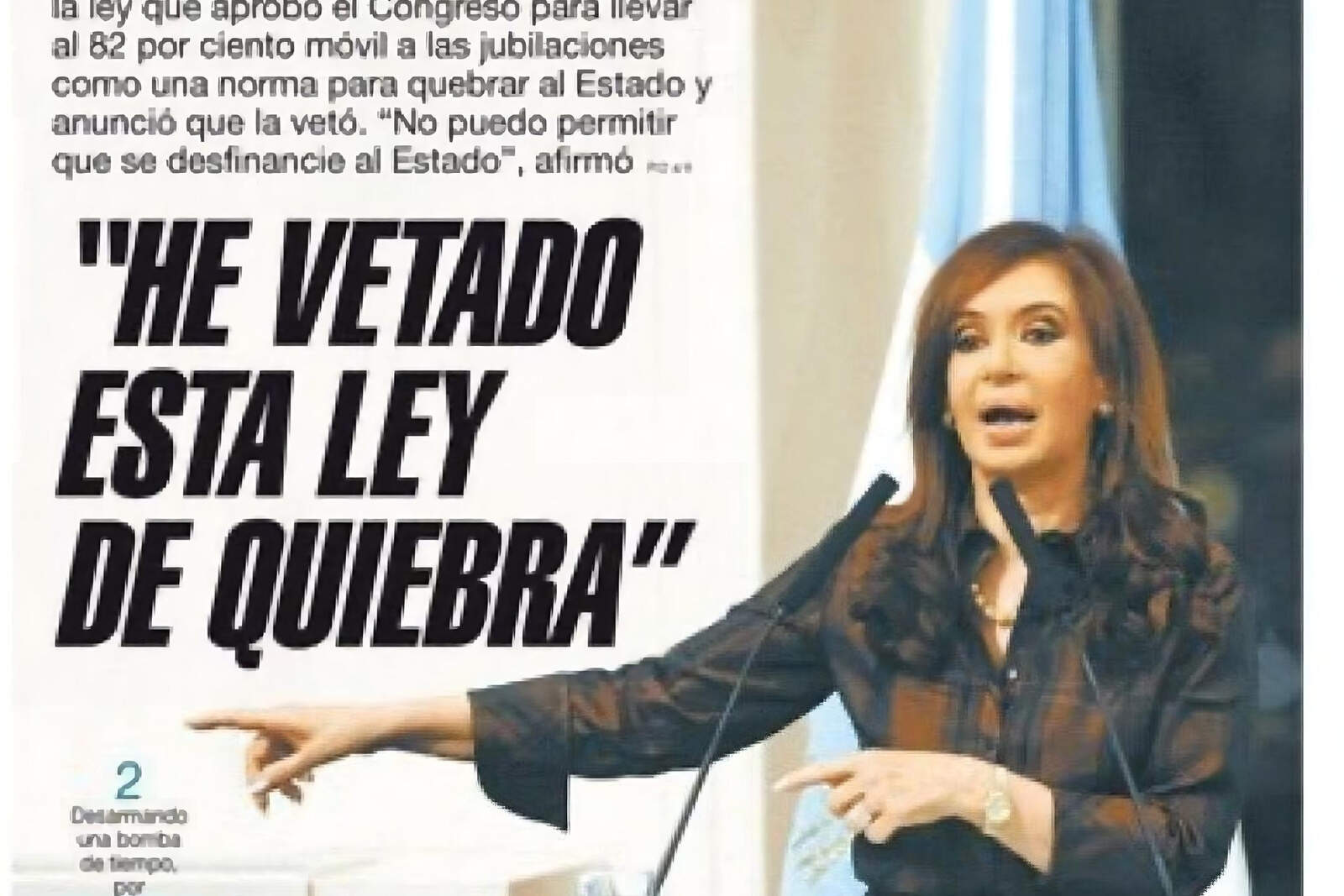
On October 14, 2010, then-president Cristina Fernández de Kirchner vetoed a law passed by Congress that established that minimum pensions should increase to reach 82% of the minimum living wage.
The regulation, which had been approved by both chambers, included the historic tie-breaking vote of Julio Cobos, and aimed to correct a chronic debt with Argentine retirees, who at that time received only 36% of the average salary.
Despite legislative support, Cristina labeled the measure as a “scam for retirees” and asserted that it was “a bankruptcy law” for the State.
Cristina Kirchner, expresidente de Argentina.
Fifteen years after that decision, president Javier Milei is repeating an almost identical action: he will veto the Kirchnerist bill approved by the Senate that proposes an increase in pension benefits without the corresponding funding.
This law puts the fiscal surplus at risk, something essential for stabilizing the Argentine economy and generating sustained growth. What at that time was staunchly defended by Kirchnerism as an act of institutional responsibility is now fiercely criticized when it comes from a non-Peronist government.