Milei announced a new strategy to reinforce Argentina's claim over the Malvinas and prepare the country for an increasingly geopolitically centered dispute in the South Atlantic
Today, Argentina presents itself as a reliable ally, with firm convictions and a bright future ahead, while the United Kingdom sinks into self-inflicted decay, undergoing “a permanent and irreversible change in morals, values, customs, taboos, language, humor, art, and even eating habits,” as extracted from Peter Hitchens in The Abolition of Britain.
The Opposition to the New Claim for the Malvinas
Of course, the reactions from the usual suspects have not been long in coming. In response to the call for national unity, we have faced an opposition that, with few exceptions, has once again reduced the debate to petty arguments typical of those who have run out of ideas, such as claiming that Milei is a fan of Thatcher or making comparisons with de facto governments. Nonsense that does not withstand the slightest analysis.
From the apatrid communists by definition to the cardboard nationalists, passing through a frankly psychopathic Kirchnerism, all have contributed their bit in favor of the British cause. It happens that sometimes the “national and popular field” has no other option but to side with the English, although they compensate with the unavoidable sticker of the Islands on the Lumilagro.
A Stronger Argentina to Defend Its Interests
President Milei understands that a global reconfiguration is approaching, for which each nation must ensure its survival; that the new pages of history will be written over the South Atlantic and Antarctica; that the era of Artificial Intelligence will lead to fierce competition for energy; and, above all, that in light of all this, Argentina cannot remain indifferent.
In this sense, he has taken the first steps, getting a devastated country on the brink of hyperinflation back on its feet. A country that, thanks to macroeconomic stabilization and deregulation, is now on a path of sustained growth. This has also allowed progress towards re-equipping our Armed Forces, which were emptied and vilified by those who left a poor and defenseless nation.
Now we are going for what is to come: to sanction from the most reformist Congress in history laws that empower this government and future governments aligned with the ideas of freedom to assert our interests in the concert of nations. We have everything to be a world power; let’s not waste the opportunity.
On Wednesday night, President Milei addressed the Argentine people in a historic national broadcast. Not only for a strong assertion of Argentine sovereignty over the Malvinas Islands, but because for the first time in the lives of many of us, we have a government that thinks long-term.
On one hand, the government has expressed a clear commitment to the constitutional mandate to exercise sovereignty over our territory. Going beyond mere words and empty declarations that politics had accustomed us to, the national government will impose peaceful but exemplary sanctions on actors involved directly or indirectly in the illegal exploration and exploitation of our natural resources.
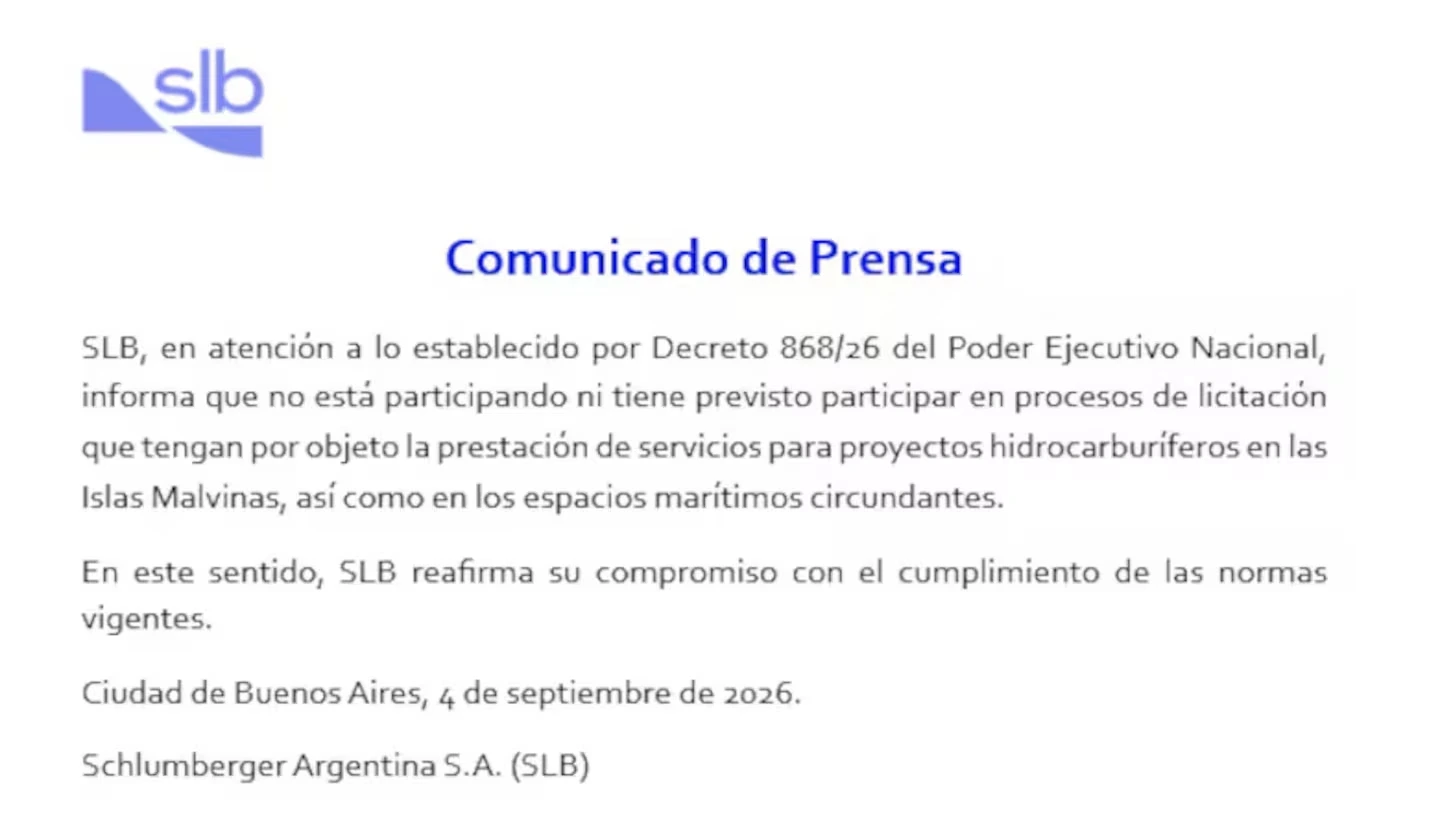
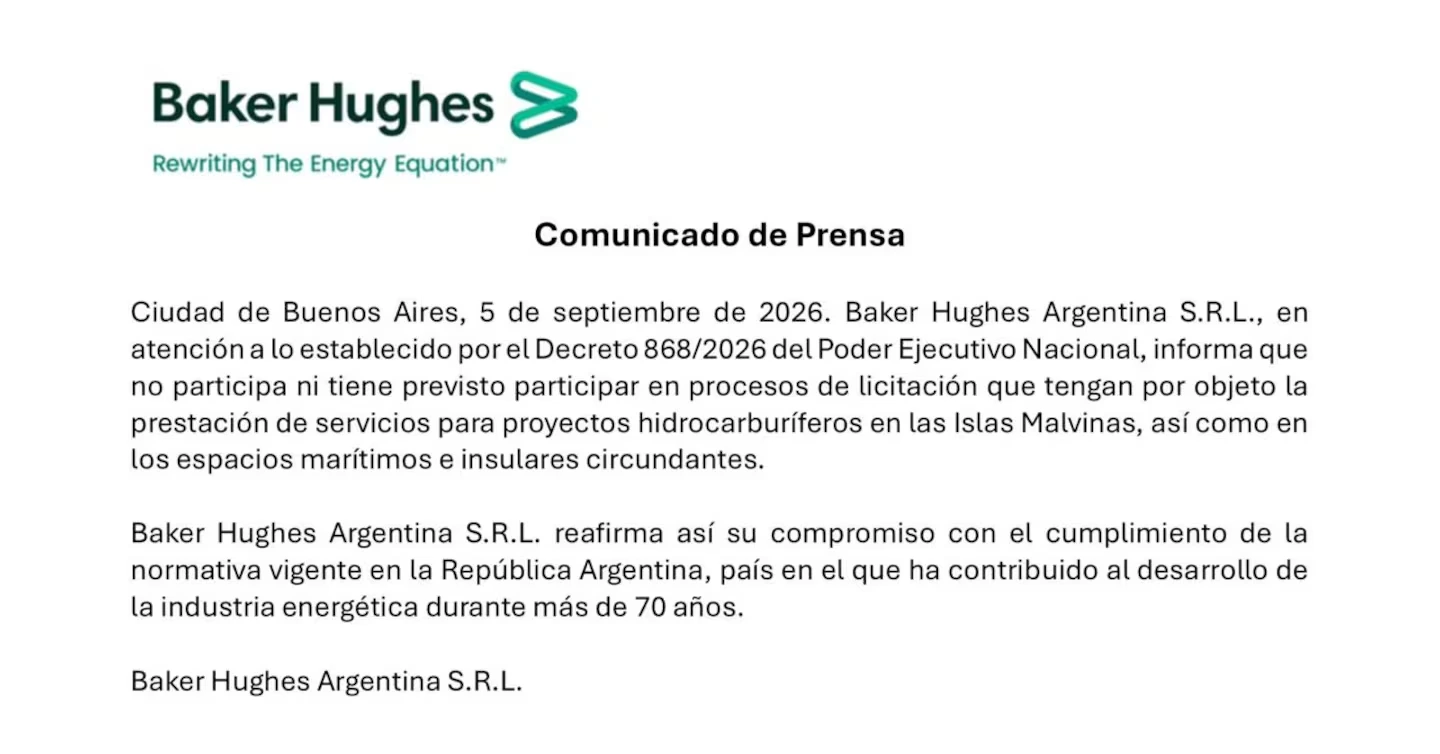
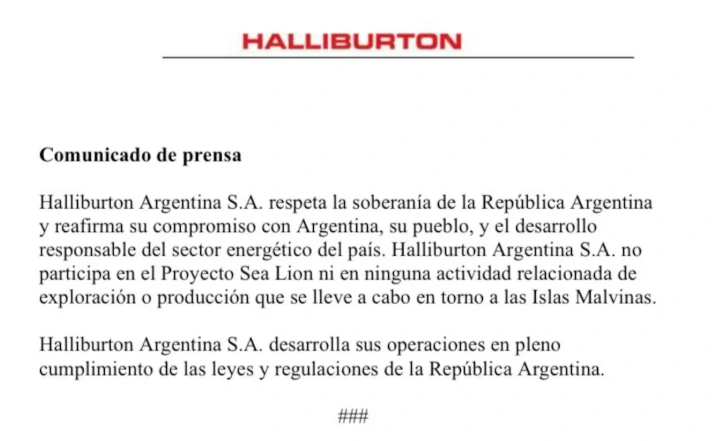
As a result, for example, the company SLB, Baker Hughes, and Halliburton have publicly stated their commitment to the current regulations, anticipating in a statement that “they are not participating and do not plan to participate in bidding processes aimed at providing services for hydrocarbon projects in the Malvinas, as well as in the surrounding maritime areas.”
A New Law for the Defense of National Sovereignty
On the other hand, the President announced that he will send a National Sovereignty Defense Law project to Congress with three main points: tightening Law 26.659 to sanction companies and suppliers participating in unauthorized operations in the islands—disqualifying them from contracting in Argentina and including, when appropriate, trial in absentia, and extending the regime to other activities affecting natural resources; creating a National Security Council that establishes a mandatory and cross-cutting policy, coordinating Foreign Affairs, Defense, Intelligence, and Economy, and protecting critical infrastructure and aerospace and maritime space; and empowering that Council to respond with economic and diplomatic tools against state or non-state actors that threaten national security.
It is worth clarifying that all this occurs in the context of a historic reevaluation of the United States' position regarding the sovereign conflict announced by President Trump. This is not coincidental, but stems from a radical decision in foreign relations.
The government has carefully worked on its geopolitical alliances, shifting towards the West, undoing the unfortunate Kirchnerist legacy of close ties with the worst in the world.