The global right is going through one of its most defining crises. This has manifested itself through discursive and, eventually, political ruptures on both sides of the Atlantic, exposing a deep ideological fracture.
Many of these disputes emerged from the decline of certain aspects of the woke ideological conglomerate, a phenomenon that caused the sense of an "end of the battle against the identitarian left" and forced those who had shared the same trench to look at each other and redefine their own conceptual frameworks.
To this are added the ongoing conflicts, mainly in Europe and the Middle East, which also split the waters, showing that what was situated to the right of the left did not constitute a monolith, and that in many cases a new cultural battle was beginning to crystallize.
In this context, not only did preexisting tensions resurface, but new phenomena appeared, difficult to fit into the traditional coordinates of left and right. Some sectors that had presented themselves as part of the resistance to progressive identitarianism began to exhibit, with increasing clarity, the same tics, methods, and obsessions they claimed to combat.
What initially seemed like a collection of marginal eccentricities was revealed as a deeper pattern: the partial (and sometimes complete) adoption of the emotional, tribal, and identitarian logic of the most rancid wokism.
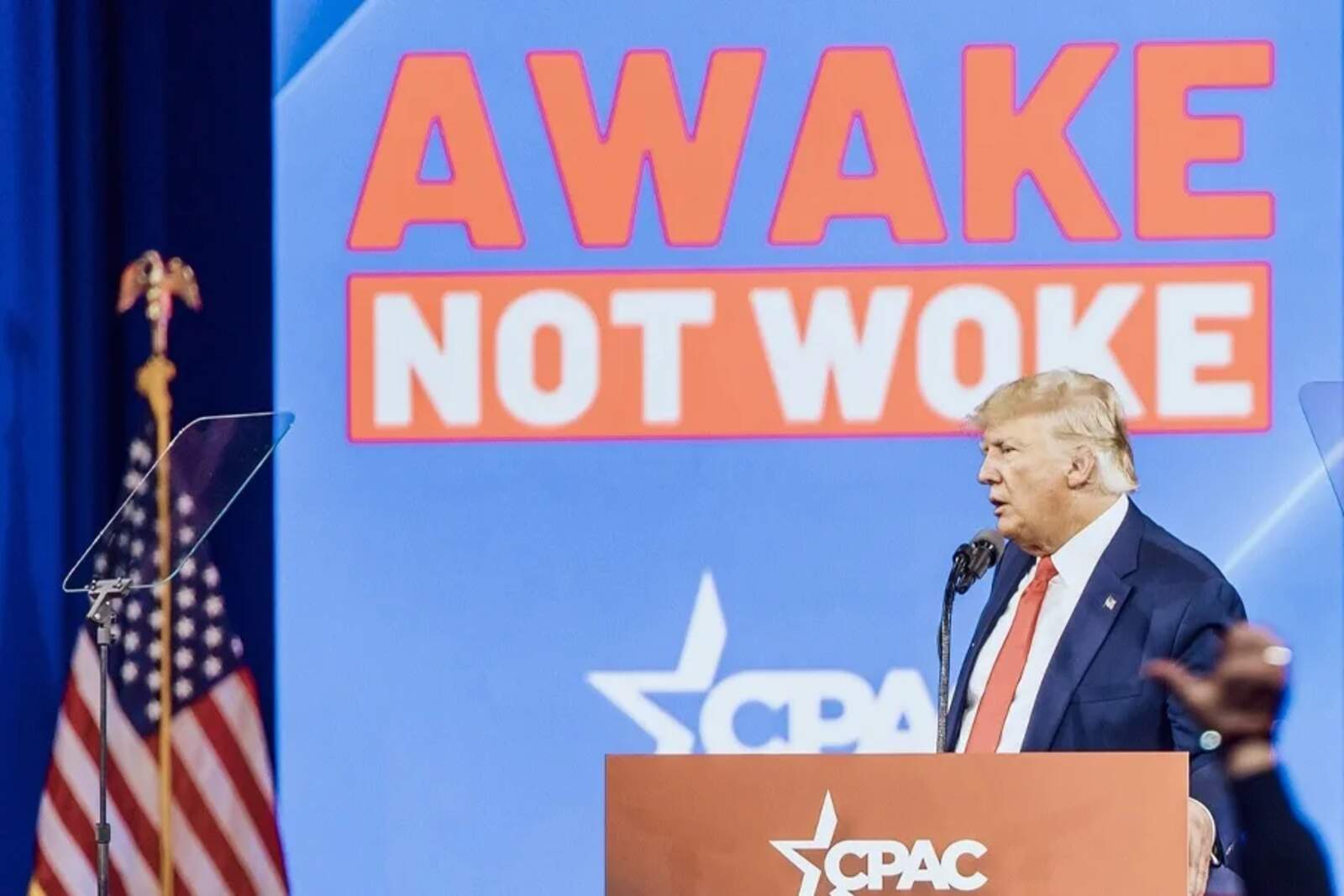
El presidente Donald Trump.
The "woke right" is precisely that group of actors who present themselves as belonging to the right-wing spectrum, but operate with the same identitarian grammar and emotionality of progressivism: selective victimologies, identity politics, subjective moralism, and a logic of "oppressor/oppressed" that even exercises the famous historical revisionism.
Within this framework, antisemitism has become the most evident point of contact between the woke right and the woke left: both recycle it as a totalizing explanatory axis (the Jew as hidden power, absolute oppressor, or architect of conspiracies and corrupt systems), repeating the same pattern of victimizing and paranoid thinking.
Thus, the woke right ends up converging with the woke left in the same mental framework, where antisemitism operates as a unifying myth and as a moral pretext to justify actions and reactions that would have been unthinkable until recently.
To avoid splits and internal conflicts, some have tried to cover the sun with their hands, claiming that "there were no enemies within the right" and that the focus on the battle against the left should not be lost. These are laudable slogans, but unrealistic: the die is cast and the divisions exist, whether they are accepted or not.
Beyond unifying voluntarism, the wars within the right continue to be waged and put at risk the movements, leaders, and governments that constituted themselves as an alternative to the progressive hegemon that dominated almost this entire century. A map of the groups and subgroups in conflict, with their interests, contradictions, associations, and divorces, could clarify the picture, but all of this is still in full reconfiguration. Here is a first approach.
I. The MAGA rift
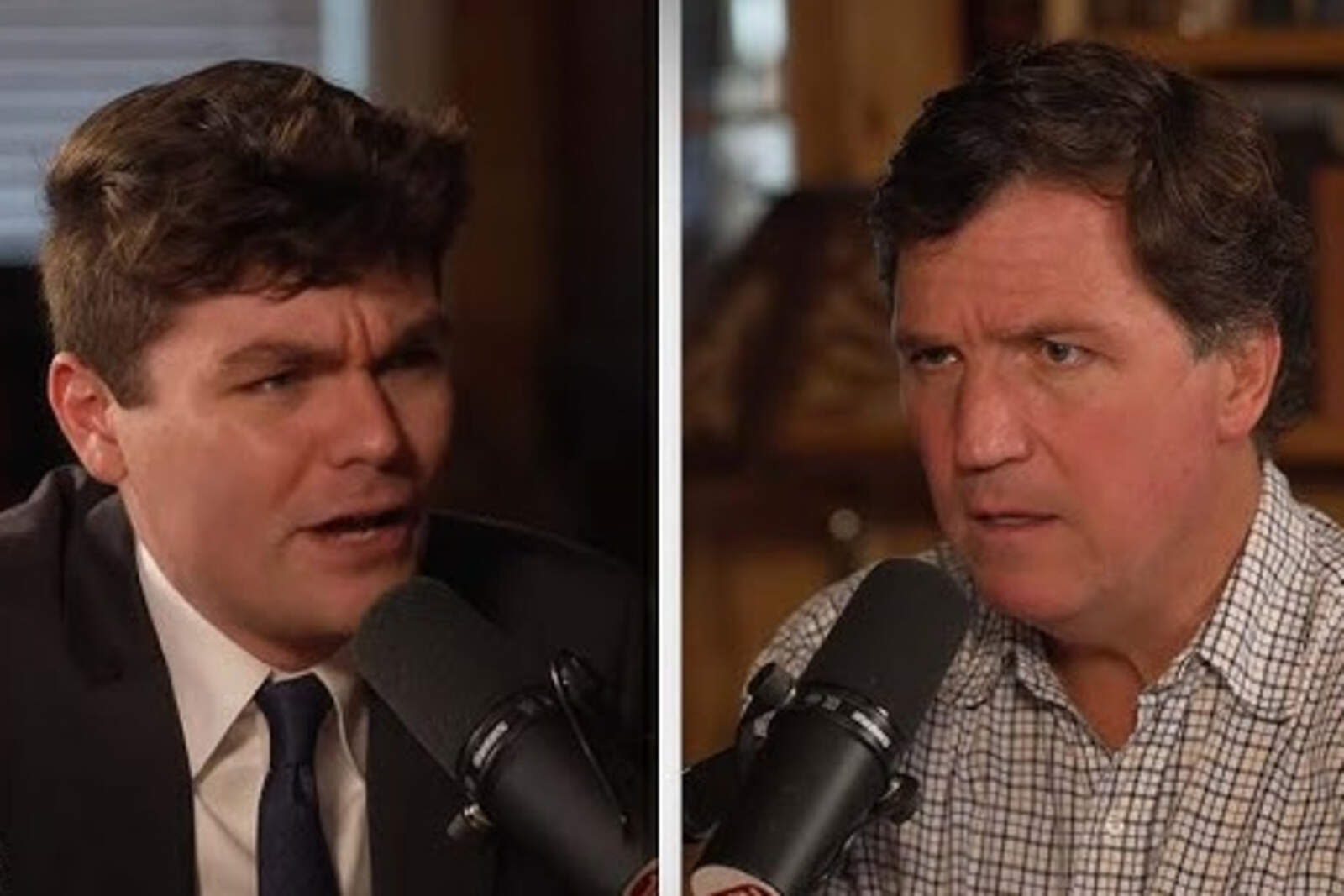
The crisis within the heart of the American right, especially within the MAGA orbit, became visible between October and November 2025. This is not when it began, but it did become evident as a result of Tucker Carlson's interview with Nick Fuentes.
The interview was relevant due to Fuentes's explicit statements, which were deeply antisemitic, racist, misogynistic, divorced from all historical rigor, and culminated with the revelation of Fuentes's admiration for Hitler and Stalin.
Carlson's complicit silences regarding these ideas, as well as the proposals to impose ethnic and sexist preferences, a kind of mirror action that would replace BLM identitarianism with white identitarianism, were the most scandalous, along with Fuentes's caricatured hatred toward Jews, women, or capitalism. This is a childish, victimist resentment copied from the Antifa movement.
Tucker Carlson y Nick Fuentes
One could consider Carlson, and his extensive history of rewriting WWII, whitewashing radical Islamism, promoting Putinism, antisemitism, and any kind of conspiracy theory, as the ramblings of a desperate personality, but the most serious thing is that Carlson is one of the most influential commentators in the world.
After the death of Charlie Kirk, Carlson has become a prominent speaker for the organization Kirk founded, Turning Point USA. The Vice President of the United States and the president of the Heritage Foundation, among other very powerful figures, have defended him, unleashing fierce internal conflicts within the MAGA ecosystem, the GOP, and the conglomerate of publications and think tanks that nourish global conservatism.
However, Carlson's influence is limited by the fact that Trump has been more pro-Israel than any other politician, candidate, or would-be candidate and is, ultimately, the one who defines what MAGA is. Demolishing, distorting, or changing the head of MAGA has been the goal of Carlson's circle of friends since this internal conflict broke out openly.
That is one of the reasons why Carlson, Fuentes, Candace Owens, and other influencers are pushing so hard to transform the Republican Party and the conservative movement into a force hostile toward Israel and the Jewish people, under an isolationist and geopolitically shortsighted stance.
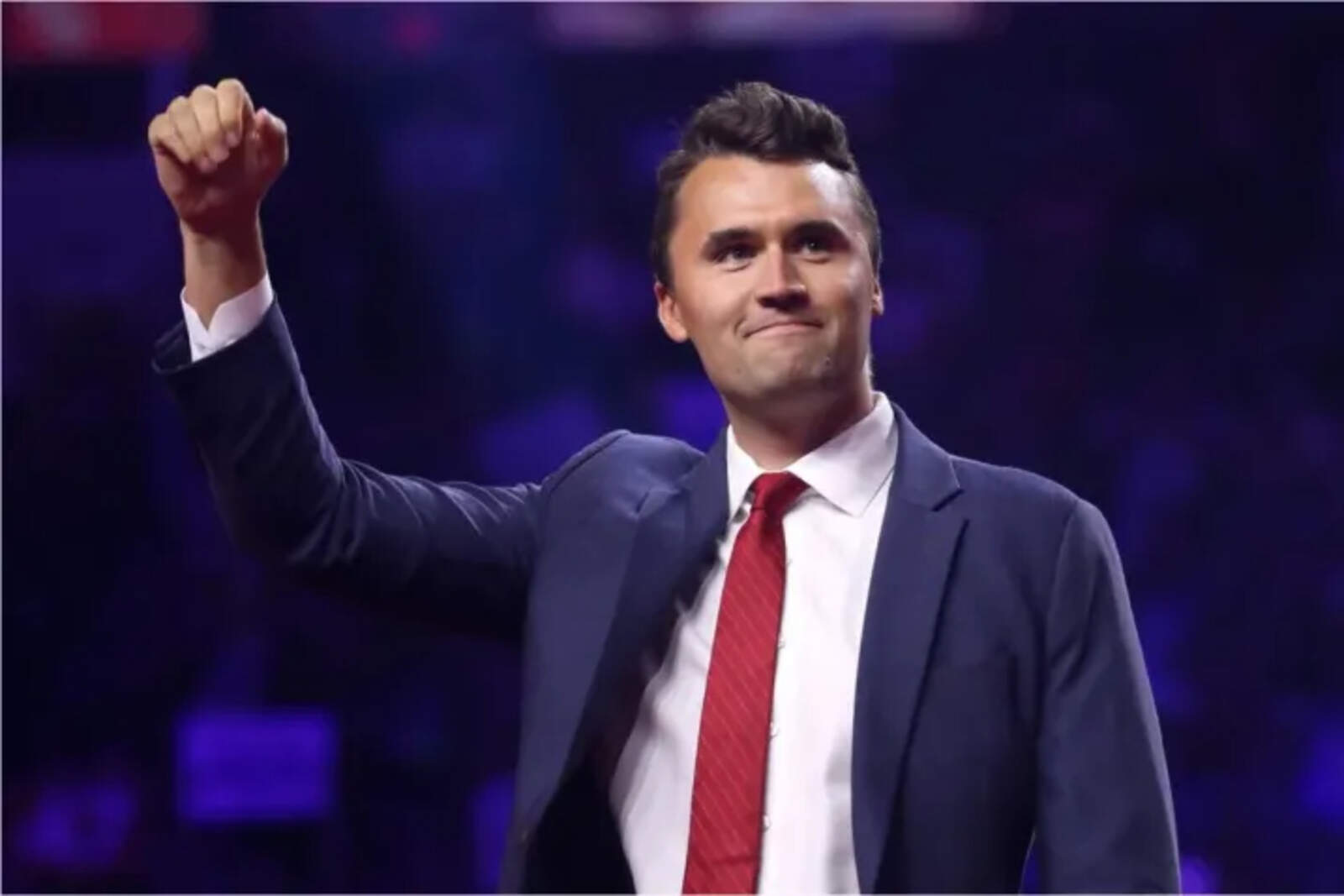
Charlie Kirk.
Israel, the only democratic country in the heart of the Middle East, is a vital ally for the geopolitical interests of the West, which has weakened anti-American terrorist groups such as Hamas, Houthis, or Hezbollah, in addition to being key for U.S. intelligence and the control of Iran's nuclear program.
Carlson and his circle of friends seem to have forgotten who have burned American flags for decades, carried out attacks seeking the end of the "Great Satan."
At this moment, controversies within American conservatism are intensifying. There have already been resignations of representatives in parliament, the downfall of foundations, redirection of donations, and even changes in X's policy to allow users to see where the accounts that most influence the debate on social media are located.
II. The Hispanic American branch of the woke right
This chaotic package of controversies has been transferred to the Hispanic American right, which also has its own version of the woke right and which has made an enemy of the Argentine president, Javier Milei, the most famous representative of the alternative right's success in the region.
Similarly to what happens with Trump, many Hispanic influencers who supported Milei believing he would become the executor of their integrist and ultramontane delusions now feel betrayed, because Milei is also a pro-Israel president, aligned with Trump's geopolitical guidelines, but who also has his own agenda regarding his closeness to the Jewish people.
Meanwhile, the wave of antisemitism unleashed after Hamas's invasion of Israel on October 7, 2023, exposed the true face of these influencers and politicians. The growing aggressiveness of the Hispanic American woke right toward the president of Argentina has led to the cancellation of the Conservative Political Action Conference (CPAC) summit, for example.
It is not worth naming names; the virulence of these figures is directly proportional to their need for attention, and what is worth analyzing is the phenomenon, not the people.
For example, it is interesting that at every stage of Milei's rise, these figures showed unanimous support for the libertarian. But Milei never hid his support for Israel, so it is worth asking under what criteria they accuse him of being a "traitor."
Milei also never hid his vision of the role of the State or his geopolitical guidelines. Those who did conceal their true ideological impulses were those who, knowing how Milei thought, nevertheless sought his closeness and support to parasitize some of his fame.
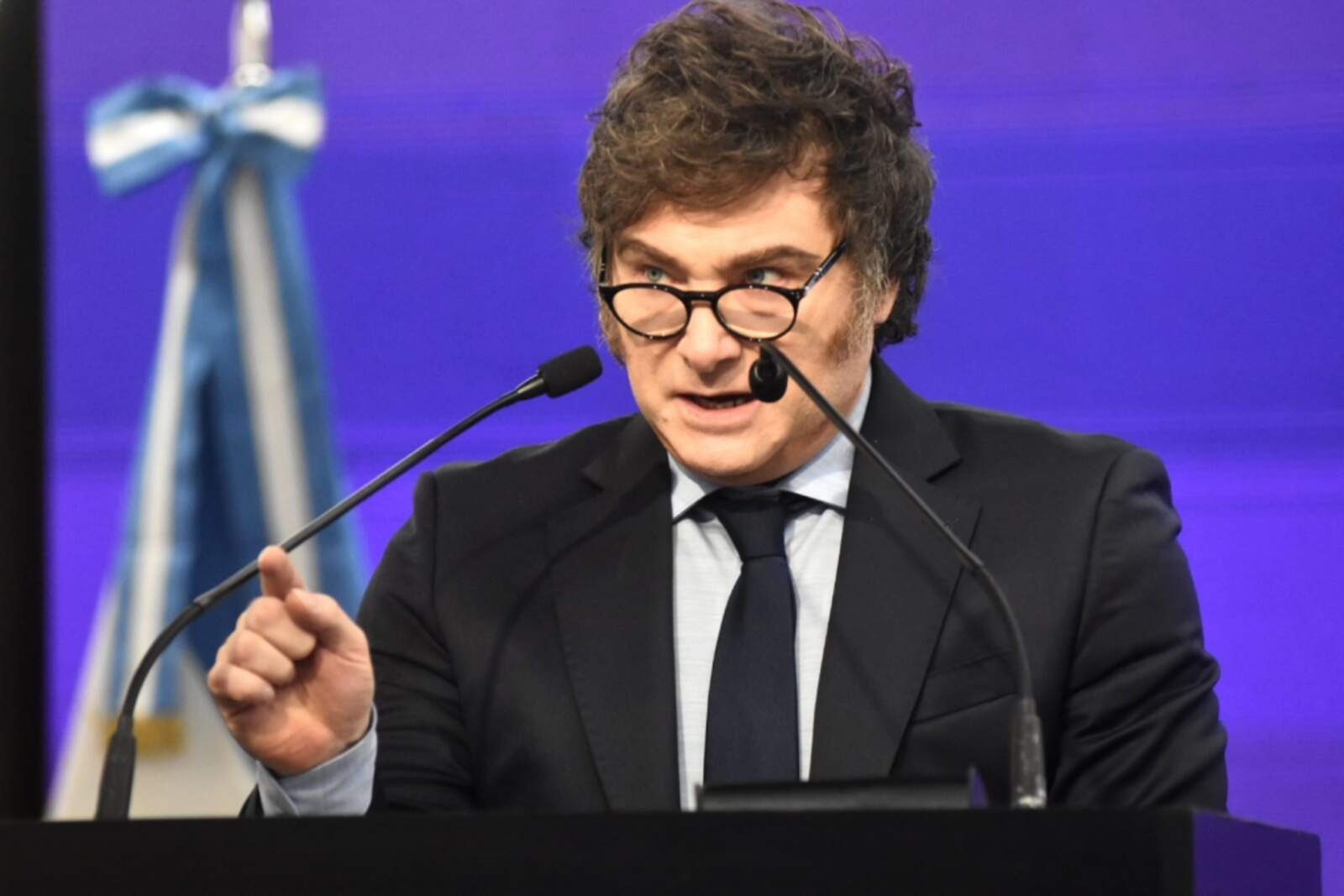
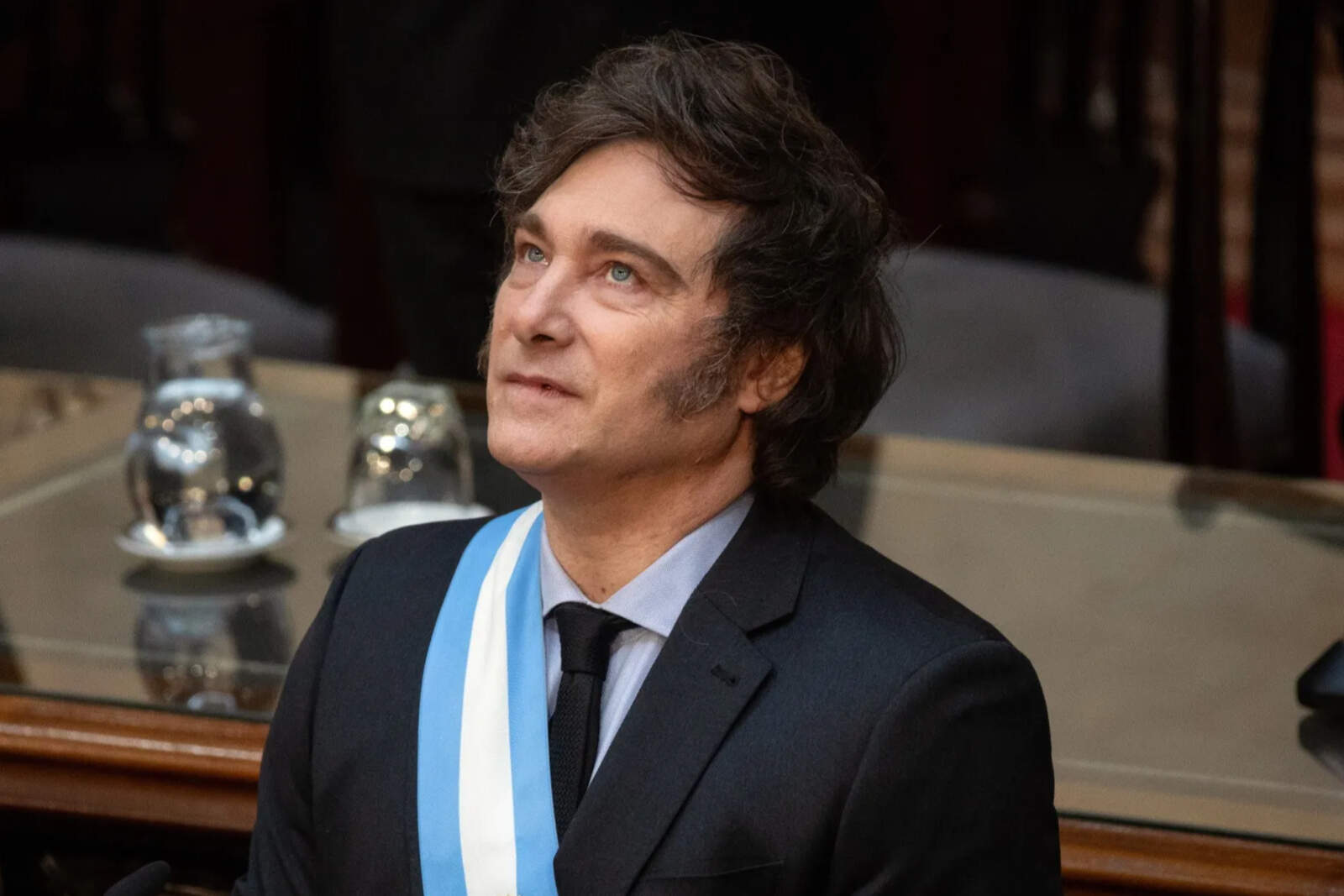
Javier Milei, en su jura como presidente.
The rupture ended up going viral shortly before the elections in which Milei's party, La Libertad Avanza (LLA), was vying for control of both chambers of Congress. Such was the anger and virulence of the woke right against Milei that they even called for voting against him. The result of those elections (successful for the libertarian) showed that at least in Argentina, the woke right is not only marginal but pathetically ridiculous. However, the underlying discussion is another.
The struggle between the woke right and Mileism is taking place at a time of reconfiguration of political forces in the region. In this context, Agustín Laje, an intellectual who has largely shaped the narrative of the emerging Hispanic right, intervened in the fight defending Javier Milei. This drove the Hispanic woke right, which had appropriated Laje, crazy.
In the context of a heated debate on X, Laje argued that it was not true that the Argentine president had not waged the "cultural battle" he had promised, and posted a list of actions that the Milei Administration had carried out in pursuit of that battle.
Therefore, Laje concluded that the reason for the virulence of the woke right against the president was actually another: "what really bothers them is something that was absent back then, or that they kept well hidden: an open hatred of Judaism, as an essential articulator of all political discourse."
"This never existed between 2018 and 2024, not even remotely. Life, family, freedom, property, national sovereignty: none of all the immense advances in these areas (for which we had been fighting for years) seems to attract them in the least, faced with a Milei who openly sympathizes with Judaism. This, then, is the core of the matter," he added.
III. The philosophical root: The woke right and post-liberalism
This hostility is framed within a philosophical debate that has gained traction in the last decade: post-liberalism. This movement, which attacks the foundations of classical liberalism, constitutes an umbrella for the emergence of a "woke right": a faction obsessed with identity, state collectivism, and imposed morality.
Although the movement goes back a long way, it is true that in 2018 it was a specific debate among a few eccentrics. But now it is on the agenda. Post-liberals oppose classical liberalism as a theoretical framework that prioritizes individual rights as the source of political authority and human development.
Post-liberals consider that this liberalism is a secularizing force (they even use the description "satanic" in a non-ironic way) that uses the language of freedom to hide the real objective: to deny the higher authority of the "common good." In this sense, they are critical of conservatives such as William F. Buckley Jr., Milton Friedman, or Ronald Reagan.
Hence the idea of "post-liberalism." They consider that current political and economic problems are consequences of adopting liberal principles in law, culture, and the economy. Liberalism becomes "structural" for post-liberals in the same way that racism is for critical race theorists: the system itself is the source of the problem. In this sense, their philosophy could be framed as just another critical theory, like any of those proposed by the woke left.
Post-liberalism holds that the cultural battle was lost because the limits of liberalism were accepted, both in its economic and political versions, preventing the use of state power to promote its ideology, also arguing that individual autonomy eroded the moral foundations of the West. Some authors claim that conceiving the State solely as a guarantor of individual freedoms is insufficient to face the "cultural battle." This is a stance almost identical to old constructivism.
Post-liberalism rejects the idea of a limited state and "fusionism," the doctrine that united liberalism and traditionalism, and which deeply influenced Reagan. They consider that this alliance no longer responds to contemporary social reality and that today it acts as a brake on any attempt at moral reconstruction.
Like all ideological movements, post-liberalism is a kind of large set divided into sub-factions that may disagree with each other. That said, one of the factions is this woke right that is hostile toward free markets, free trade, state impartiality, and foreign military interventions.
In contrast, they are more favorable to state intervention, progressive redistributionist consensus, the welfare state, and social justice. Many sub-factions of the woke right are associated with Catholic integralism and with anti-capitalism.
Much of the woke right saw in the post-woke era and the rise of figures who came to power such as Trump or Milei, an opportunity to redefine the right in a way that favored them. Although they supported these politicians electorally, philosophically they subscribe to ideologues such as Alexander Dugin or Pat Buchanan. In many ways, they parasitized the leaders of the alternative rights to grow in the heat of their successes, and now feel the frustration of remaining in electoral marginality.
IV. The battle for the right's identity:
Post-liberalism as an ideological/philosophical framework is not synonymous with the woke right. It is rather that umbrella where these factions and others accommodate and mutate. In itself, the woke right as a reactionary phenomenon possesses the same unviable ideological conditions as its left-wing twin.
It is whiny, contradictory, false, and endogamous. It inevitably "empowers" those who define their identity only through the victimized collective. Liberalism was kryptonite for this phenomenon; illiberalism wants to essentialize it.
Recent history shows that, once these types of movements are built, totalitarians end up running them. The illiberal messianism of the woke right believes it has found its moment and will not stop its attacks, even if it must blow up the leaders it once used as tactical vehicles. For now, at least in Argentina, its destructive drive has a limit: electoral reality.
Nevertheless, it is important to take note and review how these figures infiltrated political parties and foundations in the period Laje mentions, between 2018 and 2024, engaging in self-criticism about how we let ourselves be deceived and how many red flags we overlooked. The current conflict is not a passing internal dispute, but a decisive struggle for the moral and intellectual identity of the right for the coming decades. This battle is just beginning.