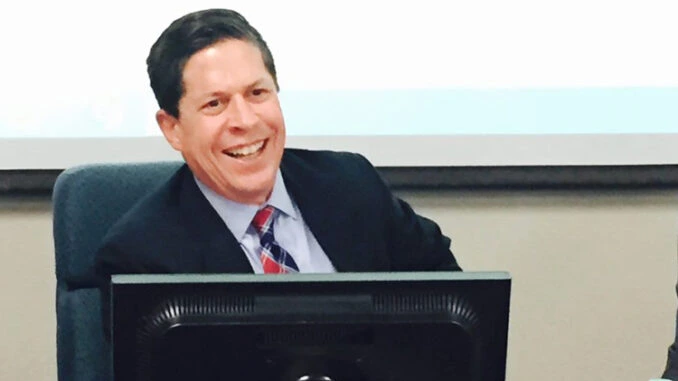
District Attorney Ron Freitas accused the Democratic governor of ignoring the families of the victims by commuting the sentences of the 548 inmates on death row
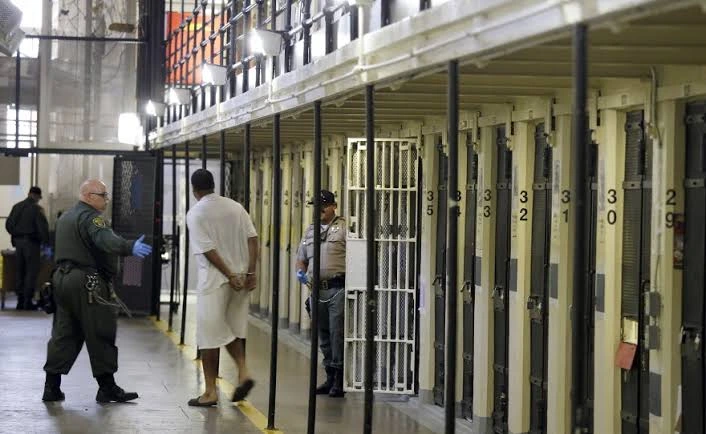
The decision of California Governor, Gavin Newsom, to commute the death sentences of the 548 inmates remaining on death row provoked a strong reaction among state prosecutors, who questioned the measure for considering that it minimizes the crimes of some of the most violent murderers in the country and overlooks the suffering of the victims' families.
Ron Freitas, district attorney of San Joaquin County, stated that his office will continue to seek the death penalty in cases it deems appropriate, despite the Democratic governor's attempt to practically dismantle the application of the death penalty in California.
''We will continue to prosecute the worst of the worst and carefully select those individuals. We will continue to seek the death penalty in the right cases, for the right people, and for our victims,'' Freitas declared.
Ron Freitas, district attorney for San Joaquin County, strongly criticized Gavin Newsom's decision to commute the death penalty for 548 prisoners
The prosecutor harshly criticized Newsom's decision, announced on Thursday, and argued that it represents a blow to families who have waited for years for those responsible for brutal murders to receive the punishment imposed by the courts.
Freitas described the collective commutation as a sudden elimination of judicial work and of the sentences that had been obtained after lengthy processes. He also questioned that the state administration had not adequately consulted prosecutors before announcing a decision of such magnitude.
''It is incredibly devastating to have worked so hard on so many cases for our victims and to see this massive elimination of justice. It was very, very disappointing,'' he stated.
The official added that the victims' families were deeply affected upon realizing that the sentences of those responsible for the crimes for which they had waited for justice for years would be replaced by life sentences.
The California justice official said that the families of the prisoners' victims are profoundly affected.
The Democratic governor announced that the 548 death sentences would be replaced by life imprisonment without the possibility of parole. Although the measure does not contemplate the release of any of the inmates, it represents a significant change for those who had been sentenced to die for some of the most serious crimes committed in the state.
In a letter addressed to Californians, Newsom defended his decision arguing that the State cannot execute people for moral reasons and that there is a risk of condemning and executing the innocent. According to the governor, inmates can die in prison without the State having to resort to execution as punishment.
''As governor, I have come to the conclusion that the State cannot morally kill them,'' he wrote.
However, Freitas rejected the idea of treating all convicts uniformly, regardless of the severity and circumstances of their crimes. He recalled that among the inmates benefiting from the decision are multiple murderers, repeat offenders, serial killers, child murderers, and rapists.
''These cases are the worst of the worst. They are mass murderers, repeat offenders, serial killers, child murderers, and rapists. Literally, the worst criminals we have in our system,'' he argued.
The Democratic governor of California decided to commute the death sentence of nearly 550 people sentenced to death based on “moral reasons”
The criticism directly targets Newsom's argument that establishing differences among convicts based on their crimes would imply creating different categories of victims. The governor maintained that all families deserve the same recognition and that the death penalty is incompatible with California's values.
Nevertheless, his detractors believe that this stance ignores the fundamental differences between the crimes and the circumstances that led the courts to impose death sentences.
The decision also constitutes Newsom's most forceful step against the death penalty since he took office. In 2019, he imposed a moratorium on executions, although prosecutors retained the legal authority to seek the death penalty in new cases.
California has not executed any convict since 2006. The mass commutation comes as Newsom approaches the end of his term and considers a possible presidential candidacy in 2028, which also places his decision within a context of national political projection.
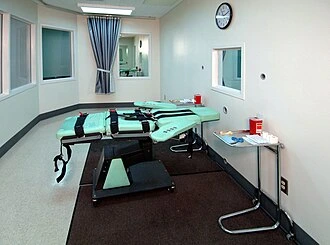
The state of California has not executed a prisoner since 2006
The measure also does not equate to the formal abolition of the death penalty. Prosecutors can still seek it in eligible cases, and Los Angeles County District Attorney Nathan Hochman also rejected any interpretation that the commutations have eliminated that punishment from the judicial system.
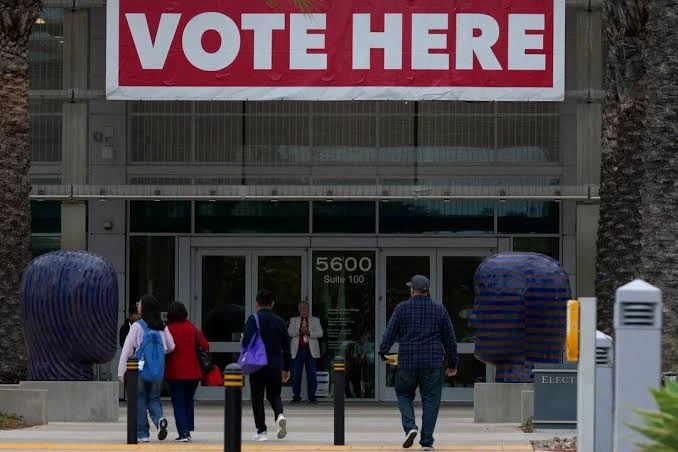
''Only the Legislature or the voters can do that,'' Hochman stated, who recalled that Californians have rejected twice, through ballot initiatives, the abolition of the death penalty.
Approximately 66% of Americans support the death penalty for those convicted of murder, compared to 32% who oppose it, according to a poll published in July.
Although Newsom claims he acted out of moral convictions and concerns about possible judicial errors, his critics question whether he has used his executive authority to simultaneously modify hundreds of sentences without distinguishing between the crimes committed.
Most Americans and Californians have rejected the abolition of the death penalty on previous occasions.