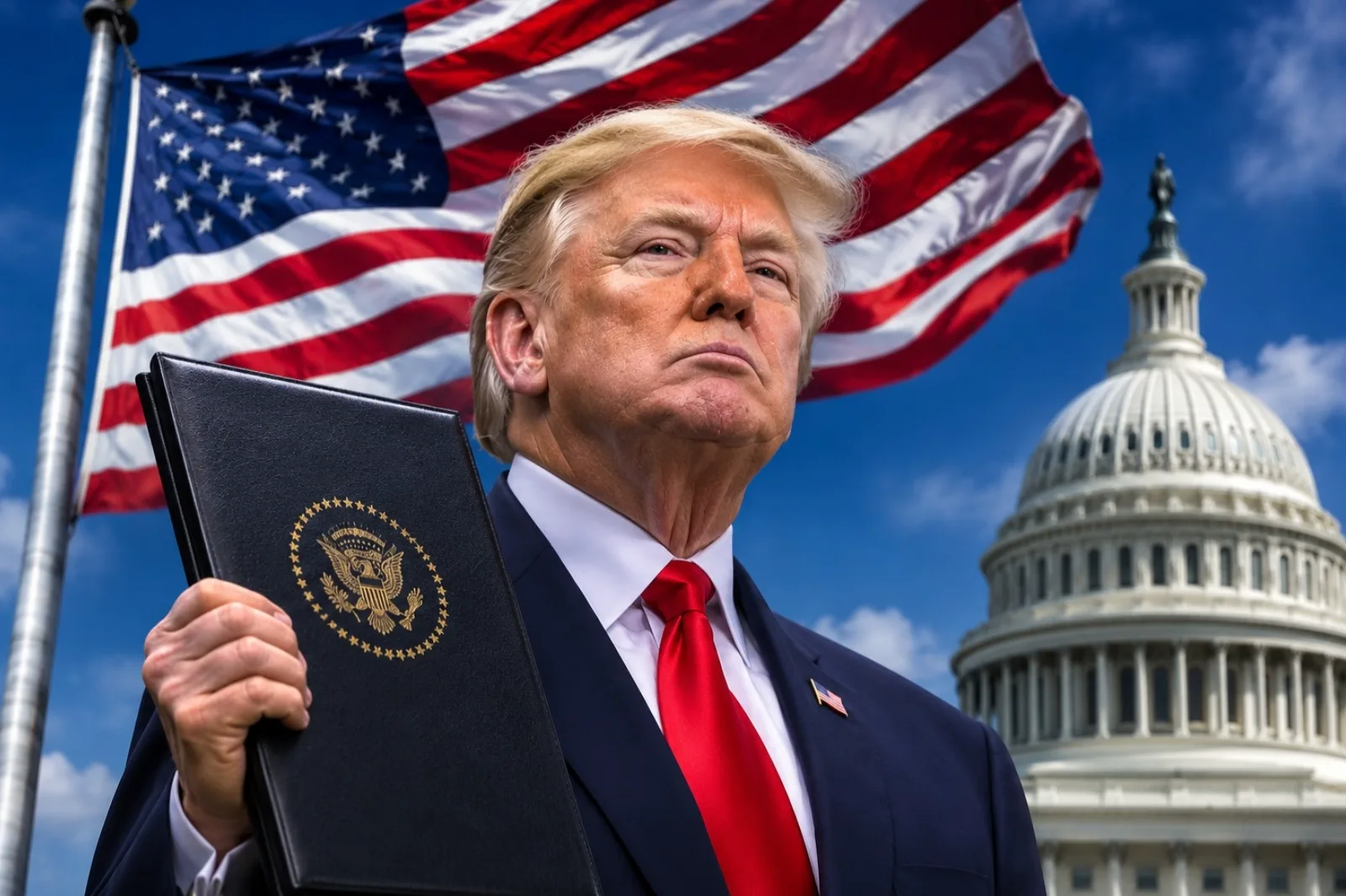
On the electoral super Tuesday tomorrow, it will be determined in the US which party will control the Senate, the House of Representatives, and the number of governorships in the country
Tomorrow, the Republican Party will defend its narrow majorities in both the House of Representatives and the U.S. Senate in the midterm elections. These elections, in addition to determining control of Congress for the next two years, will define the future of the country and the remainder of Donald Trump's term.
"If they elect a Republican House of Representatives and Senate on November 3, we will continue to put America first every single day," Trump promised on the campaign trail last week, asserting that if the Democrats take control, "this country will go to hell."
Similarly, it is worth noting that traditionally the party in the White House has lost seats during midterm election years, with former Republican President George W. Bush in his early years being the only exception in modern history before we go back to Franklin Delano Roosevelt.
On the other hand, gubernatorial races will be contested in 36 of the 50 states in the country. Additionally, except in four states, all will hold state legislative elections. Voters will also weigh in on 145 measures that will appear on state ballots across the country.
Below is a detailed analysis of what is at stake this November 3.
Trump has traveled through the key electoral states of the country in recent weeks.
SENATE
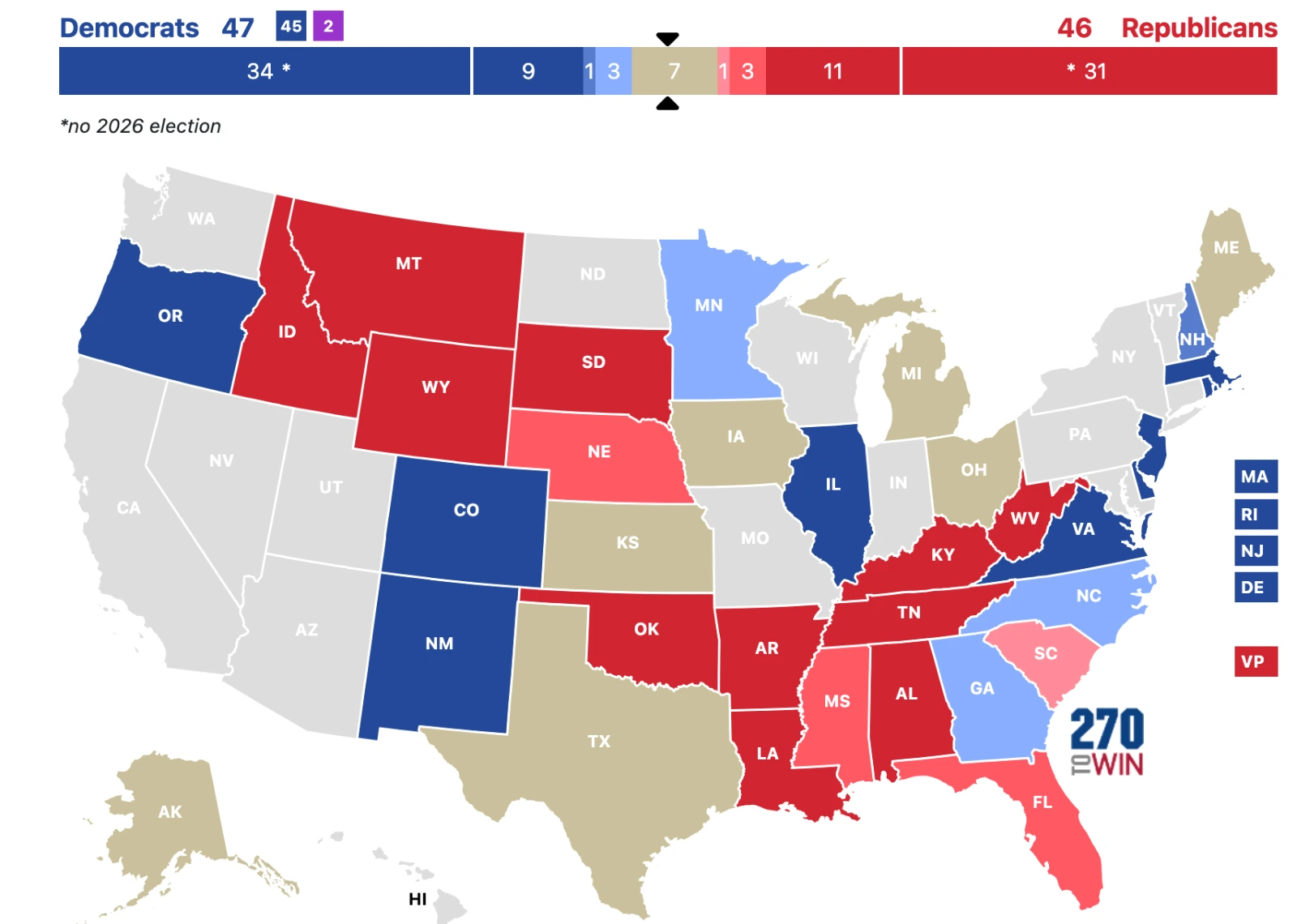
Republicans hold a majority of 53 votes to 47, and there are seven states whose elections poll within the margin of error or are in a technical tie. Both parties are three seats away from a majority. Democrats are favored in 48 seats, while Republicans lead in 47. The majority party needs to maintain 50 seats to keep control of the Senate, as Vice President JD Vance holds the tie-breaking vote.
If Democrats have a dream night and win all the competitive races, they could emerge from the midterm elections with up to 54 seats. But if the right effectively defends itself, Trump's party could end up with 52 seats or even expand its majority.
Republicans are playing defense in Alaska and Maine while trying to seize the seat in Michigan left open by Democratic Senator Gary Peters after announcing he was retiring from politics. There are four states that Trump won comfortably in 2016, 2020, and 2024 — South Carolina, Ohio, Kansas, and Texas — whose elections the polling industry places as very close, giving the Democratic challenger a chance to win the seat.
In Texas, Trump supporter Ken Paxton faces woke pastor James Talarico; in Ohio, Senator Jon Husted defends his seat against Democrat Sherrod Brown; in Alaska, current Senator Dan Sullivan battles for re-election against former Democratic Representative Mary Peltola; in Maine, historic Senator Susan Collins seeks a sixth term against Troy Jackson; and in Michigan, former Representative Mike Rogers aims to defeat radical Muslim Abdul El-Sayed.
Senate control map made by the site 270towin.com
HOUSE OF REPRESENTATIVES
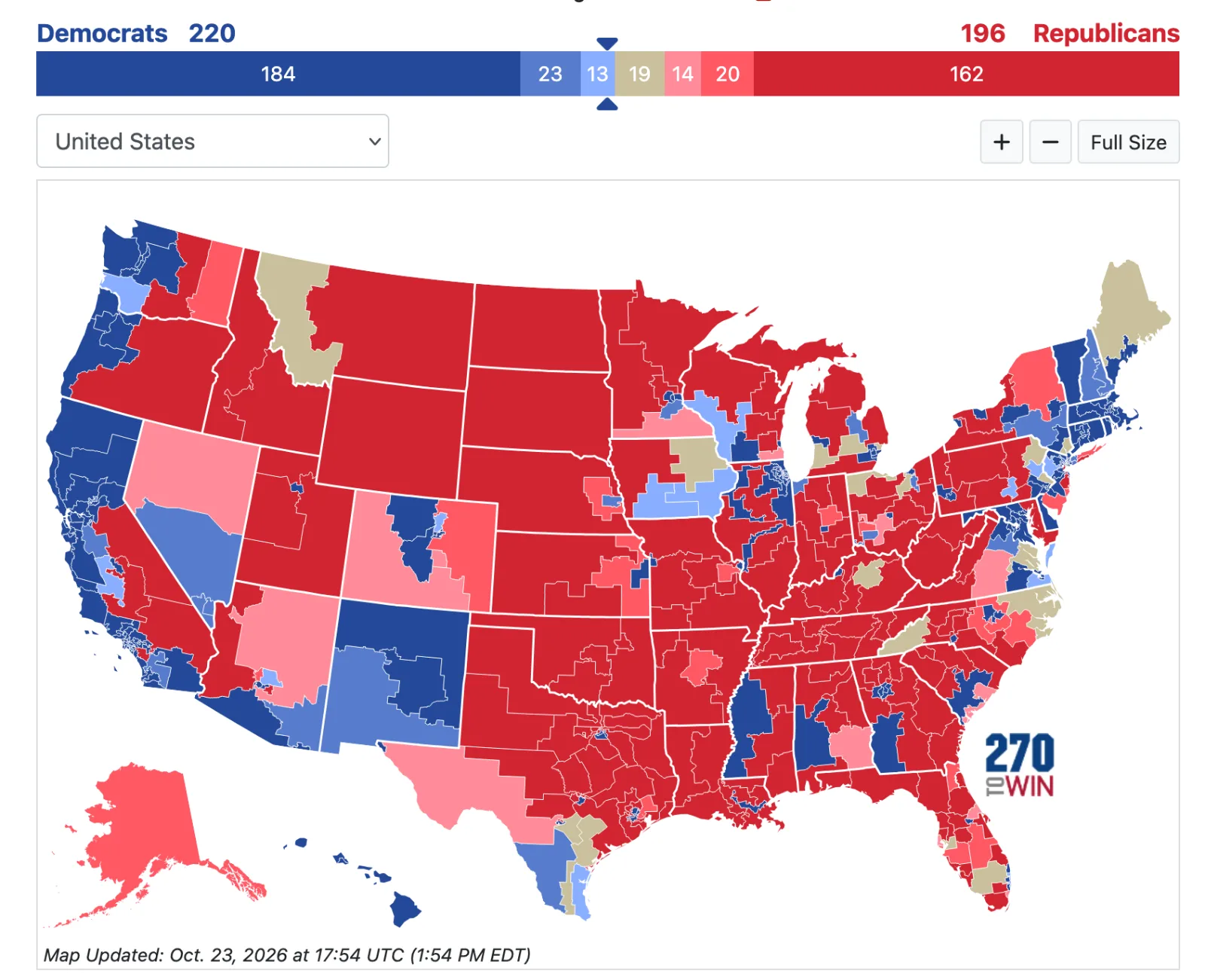
U.S. electoral history indicates that Democrats will regain control of the House. The important thing here is to measure the magnitude of the opposition's victory. A good night for the left could lead them to secure up to 240 seats in a chamber composed of 435 members. But if the Trump faction performs better than expected, it could end up with 212 seats — just six members short of a simple majority — enough to complicate the management for the next Democratic House Speaker, who will have to deal with the egos of their party.
Polls indicate that 220 districts lean toward the Democratic side, 196 for the Republican side and 19 are in doubt.
GOVERNORS
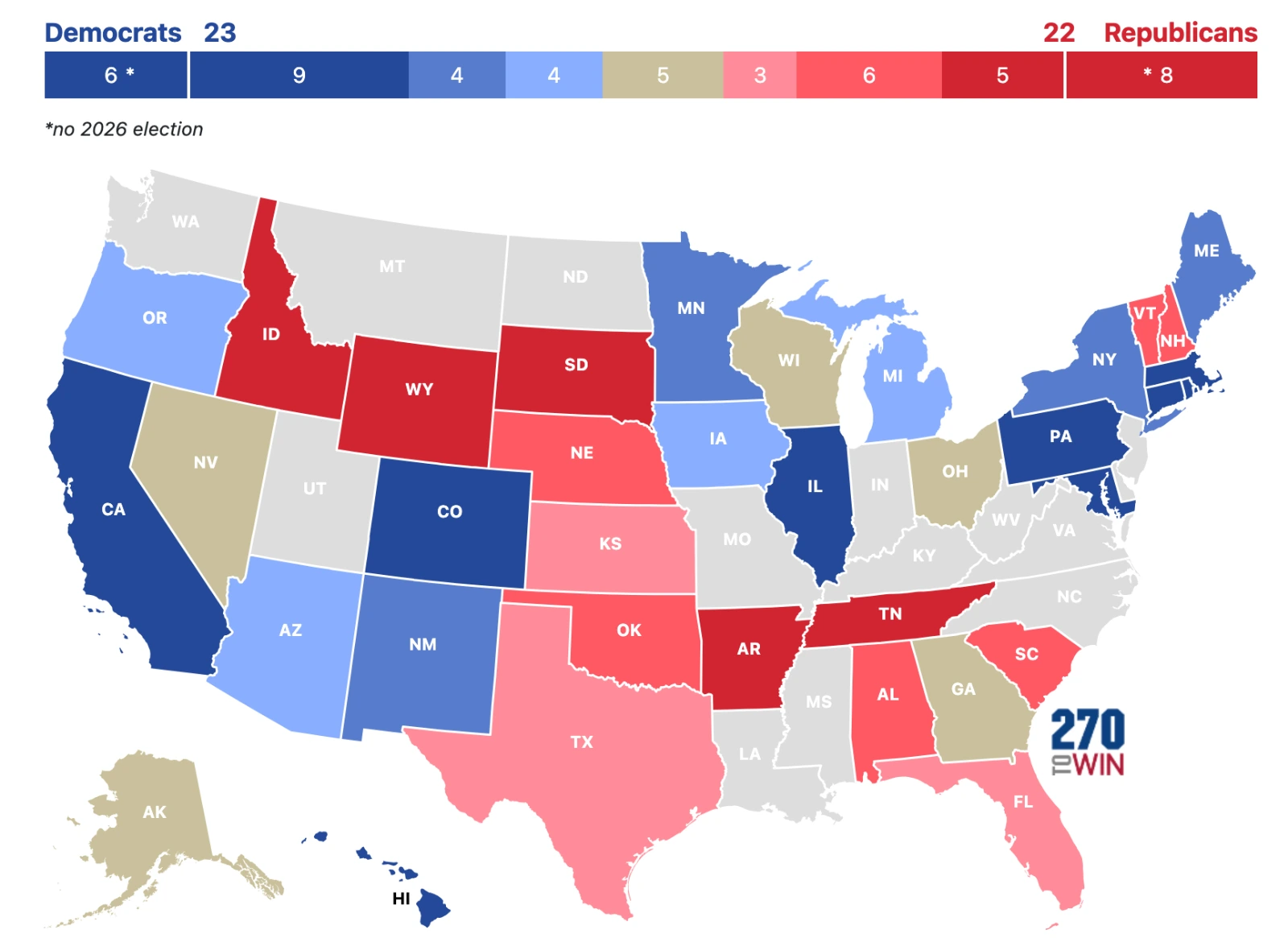
Currently, there are 26 Republican governors and 24 Democrats. There are five states governed by Republicans whose elections are in a technical tie: Alaska, Nevada, Georgia, Iowa, and Ohio. Wisconsin, which has a vacant governorship under Democratic control, is also rated as a technical tie.
Gubernatorial elections in Florida, Kansas, and Texas lean towards the right, according to forecasts. In contrast, in Arizona, Michigan, and Oregon, territories currently governed by the Democratic Party, the opposition to the federal government has an advantage.
Democrats are favorites to keep 23 governorates and Republicans to 22. Five are under a technical tie.
REFERENDUMS
Eleven states — Alaska, Arizona, Arkansas, California, Colorado, Kansas, Nevada, North Carolina, Ohio, South Dakota, and West Virginia — will submit various initiatives to a vote by their citizens. In Alaska, for example, voters will decide whether they want to repeal the ranked-choice voting system, open primaries, and the campaign finance disclosure rule.
In Virginia, a territory politically controlled by Democrats, voters will decide whether to restore voting rights to felons after they have served their time. In California, another Democratic stronghold, a 5% wealth tax on estates over $1 billion pushed by the left is being discussed. The same measure will be on the ballot in Washington.
Voters in Missouri, Maryland, and Colorado will weigh in on measures related to redistricting for federal congressional elections ahead of the 2028 elections. In this regard, it is important to note that the Supreme Court blocked Missouri from using a new electoral map in this November election that would have given Republicans the opportunity to gain an additional seat in the House.
Arizona, Colorado, Nebraska, and Washington state have referendums on the participation of transgender students in sports. Colorado is also voting on banning gender transition surgeries for minors and blocking state or federal funds for such operations.
Finally, in the aforementioned state of Missouri, voters will decide on the repeal of the right to abortion and the prohibition of gender transition medical care for children. Meanwhile, an initiative in Idaho seeks to overturn one of the strictest abortion bans in the country, while voters in Virginia and Nevada will decide whether to establish the right to abortion in their state constitutions.