
The administration of President Donald Trump is facing an intense legal battle to enforce its deportation policy, while organizations defending illegal immigration have filed thousands of lawsuits aimed at challenging the detentions carried out by Immigration and Customs Enforcement (ICE).
More than 20,000 cases related to ICE's detention practices have reached federal courts, with approximately 17,300 favorable decisions for the release of immigrants, according to data cited in the analysis. This figure includes cases of immigrants with criminal records, raising concerns among those who argue that the judicial system is hindering the government's ability to enforce immigration laws.
The dispute centers mainly on habeas corpus petitions, through which lawyers request that detained immigrants be released. For the Trump administration, the volume of these proceedings represents a significant obstacle to fulfilling its commitment to expedite the deportation of individuals who are illegally in the United States.

A stark contrast among judges
Significant differences have been observed in decisions based on the president who nominated the judges. Judges appointed by Joe Biden ruled against ICE detentions in 92% of the 5,914 cases analyzed. Judges appointed by Barack Obama did so in 95% of 4,360 cases, while those appointed by George W. Bush ruled against ICE in 90% of 3,072 cases.
In contrast, judges nominated by Trump supported ICE's position in 34% of the 3,946 cases analyzed. The remaining judges appointed by Ronald Reagan supported the detentions in 36% of 352 cases.
These figures have fueled criticism from officials in the Trump administration, who argue that some courts are systematically obstructing the enforcement of presidential immigration policy.
James Percival, General Counsel of the Department of Homeland Security, stated that groups opposed to Trump's immigration policy seek to accumulate enough judicial decisions that delay the execution of deportations. According to his argument, a succession of individual rulings can ultimately weaken the government's ability to implement its immigration program on a national scale.

An extensive network of legal assistance for illegal immigrants
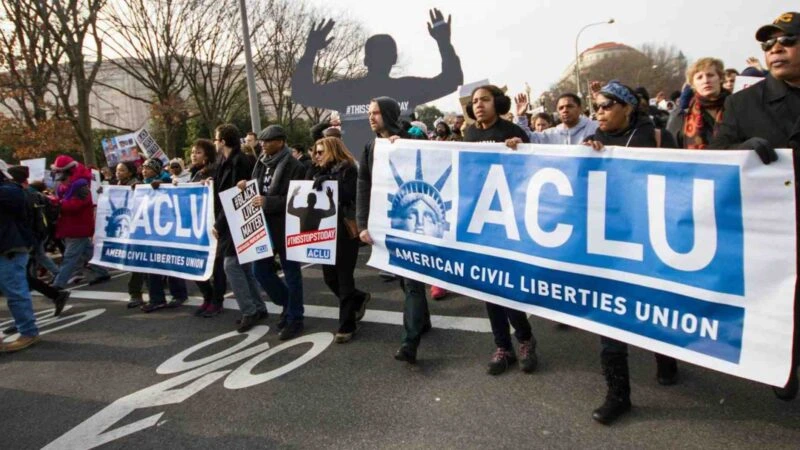
The legal offensive is backed by numerous organizations dedicated to defending irregular immigrants, including the ''ACLU'', ''Justice Action Center'', ''Ayuda'', ''Amica Center for Immigrant Rights'', and ''Al Otro Lado''.