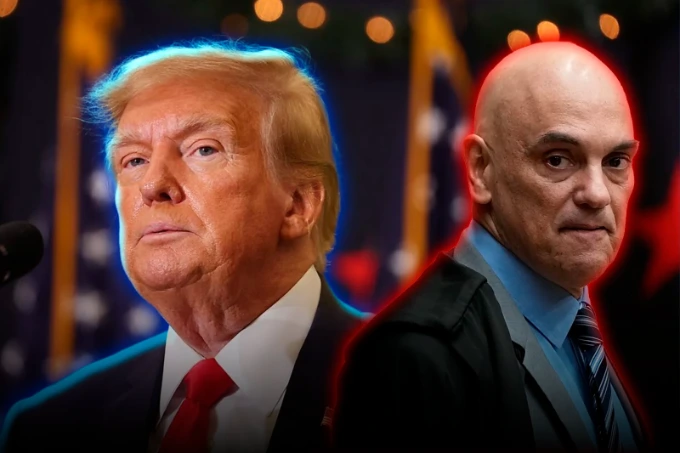
The President of the United States, Donald Trump, struck again at the communist regime of Luiz Inácio Lula da Silva by extending the national emergency declared regarding Brazil for another year, a decision based on censorship, political persecution, and violations of freedom of expression carried out by the Brazilian government and the Supreme Federal Court.
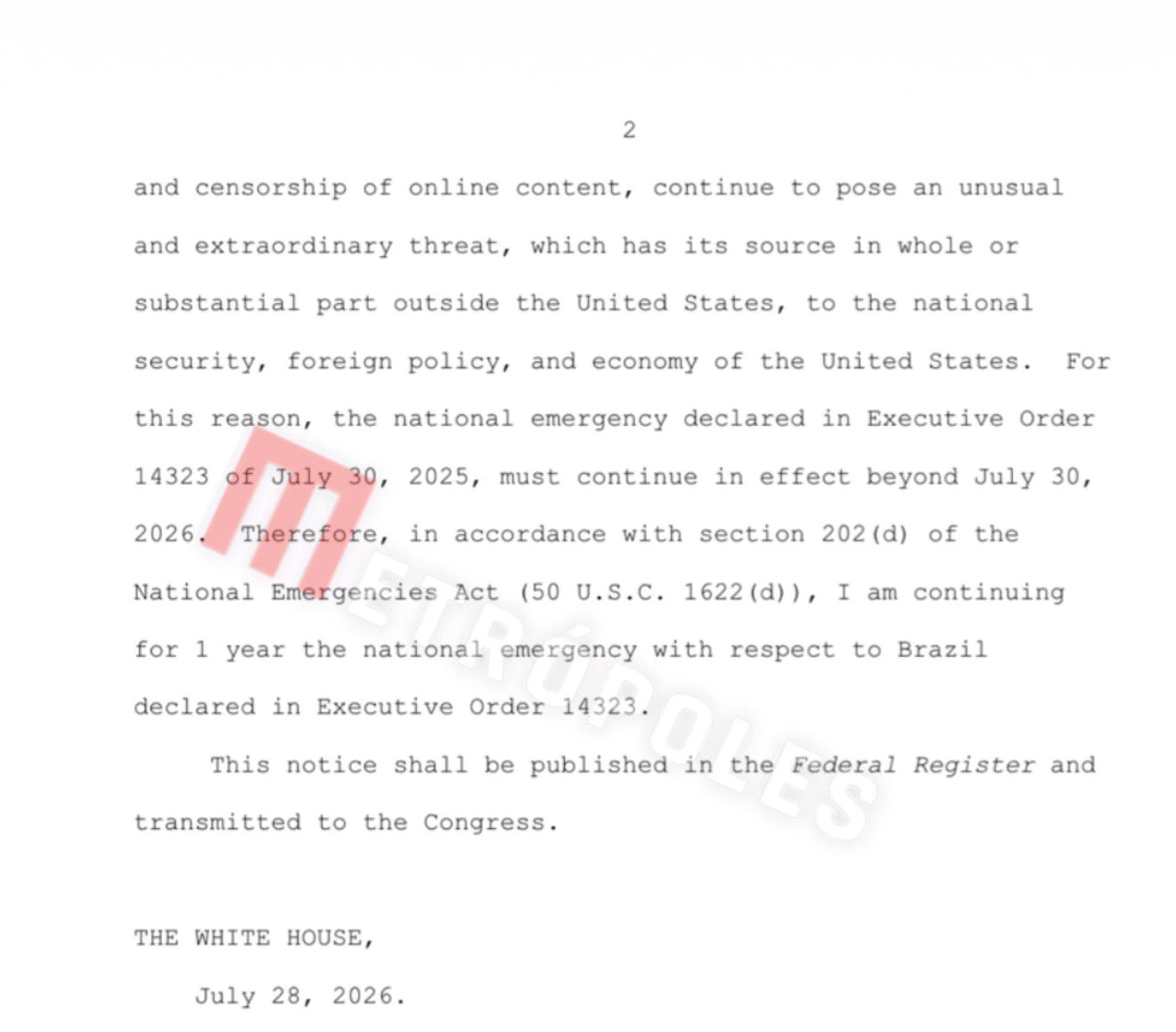
The resolution was signed this Tuesday, July 28, and will remain in effect after July 30, 2026. The White House stated that the actions of Brazilian authorities continue to pose an “unusual and extraordinary threat” to national security, foreign policy, and the economy of the United States.
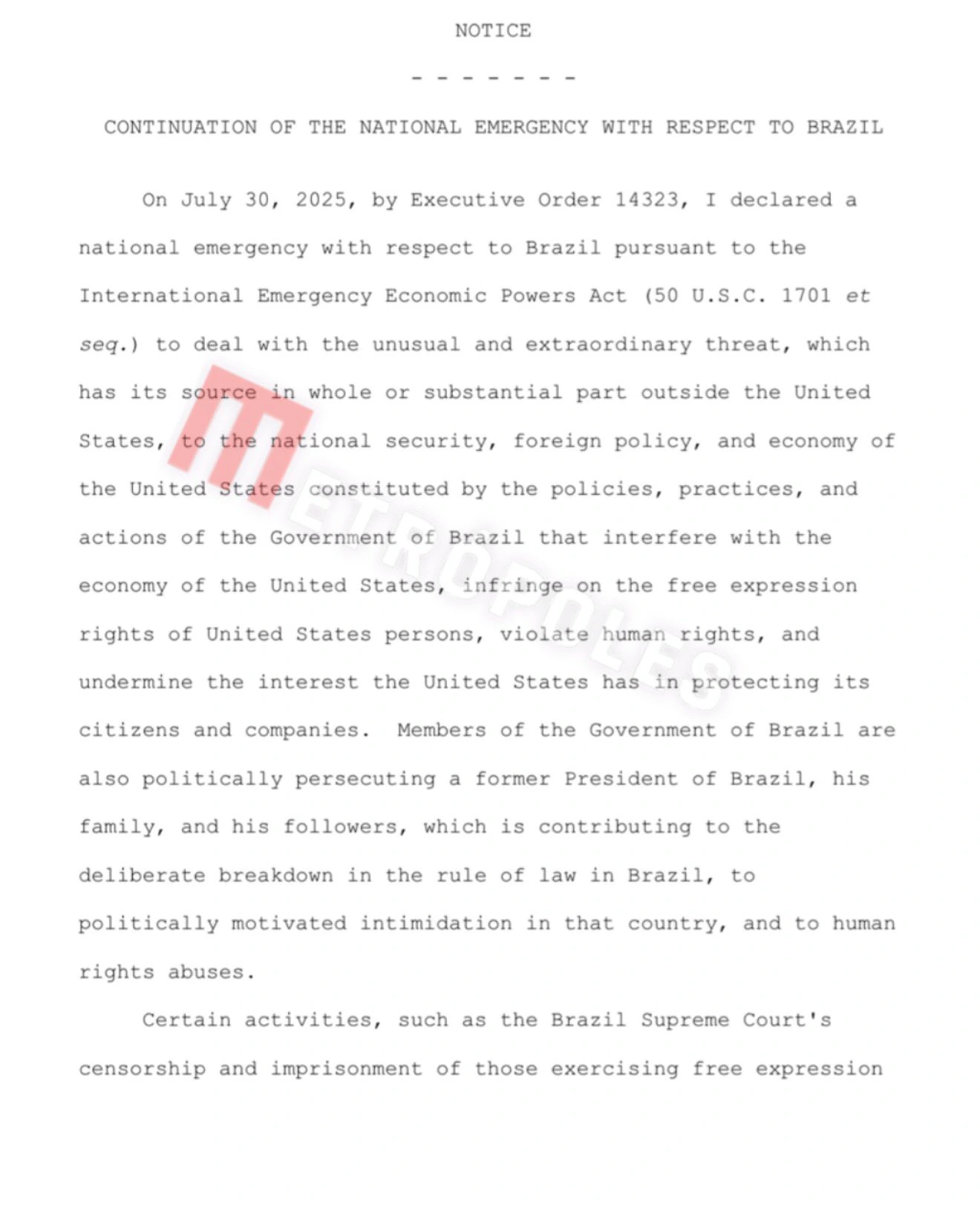
Fragment of the official statement that supports the national emergency of Brazil
The document particularly targets the censorship of digital content and the imprisonment of individuals for exercising their right to express themselves. Washington considered that these practices, driven by the Brazilian Supreme Court, continue to affect American citizens and companies, which is why it decided to maintain the emergency originally declared through Executive Order 14323.
That order, signed on July 30, 2025, had directly pointed to the communist judge Alexandre de Moraes, accused by the Republican administration of abusing his authority to persecute opponents, order raids, freeze bank accounts, confiscate passports, and imprison individuals for their social media posts.
The White House also denounced that Moraes sent secret orders to American tech companies to delete posts, provide user information, and block the accounts of opponents to the regime. The magistrate, who has become one of the main judicial supports of Lula's regime, also threatened fines, suspensions, and criminal proceedings against companies that refused to comply with his orders.
Fragment of the official statement that underpins the national emergency in Brazil
The original order also included a strong defense of former President Jair Bolsonaro, whose persecution was presented by Washington as part of the deliberate deterioration of the Brazilian rule of law. The United States warned that the judicial advance against the opposition leader threatens the possibility of holding free and competitive presidential elections in 2026.
The decision keeps open the legal framework that allows Trump to adopt new measures against Brazilian officials and respond to future actions of Lula's government. While da Silva accuses Washington of interfering in Brazilian elections, the Republican administration responds by placing at the center of international debate Moraes' censorship, the persecution against Bolsonaro, and the institutional degradation of Brazil.