A sector of conservative figures who clashed with Trump are considering forming their own political party to challenge the president from the right. The new movement would be faithful to the doctrine of non-interventionism and focused on the domestic agenda, although most Republican voters see this quartet as functional to the Democratic Party.
"We said we didn't want any more wars abroad and we supported Donald Trump because he promised it. But he stabbed us all in the back", former Congresswoman Marjorie Taylor Greene stated this month on her social media. "Our commitment is 'America First' for all citizens, right, left, and center. The movement has already begun."
Greene is seen alongside the anti-Semitic Congressman Thomas Massie (Kentucky), the well-known journalist Tucker Carlson, and the former director of the National Counterterrorism Center Joe Kent. They are all a mix of figures whom Trump has distanced himself from for various reasons and ended up losing their future within the movement.
The main driving force behind this supposed "America First" party is the rejection of the war in Iran, a conflict that erupted despite Trump prioritizing diplomacy and having to resort to the language of bombs after the Islamic terrorist regime refused to abandon its nuclear ambitions.
The idea of a presidential ticket led by Carlson —nicknamed on social media as "Tucker Catarlson" due to his connections with the Kingdom of Qatar and his activism against the State of Israel—and Greene —out of Congress since January of this year—is not new.
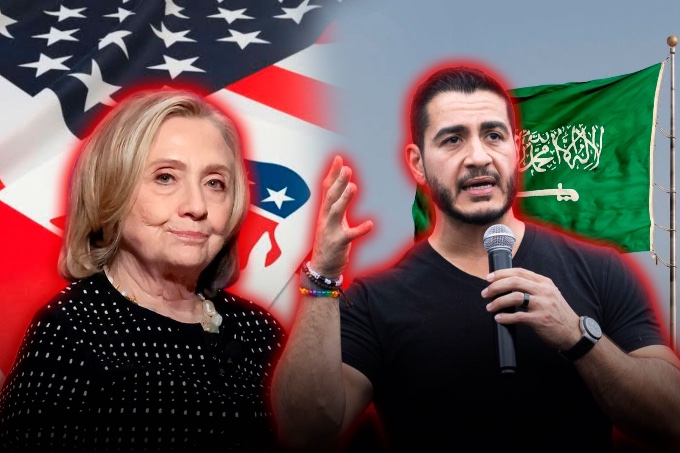
Texas Senator Ted Cruz ironically suggested that the host should team up with the radical Muslim candidate Abdul El-Sayed. "It's a great idea! Let Tucker form a unity ticket with Abdul El-Sayed. After all, both are apologists for the Muslim Brotherhood, both love the Ayatollah, and both go out to defend Iran", he acidly commented.
But the reality shows that neither Carlson nor Greene are doing well in the polls. "Qatarlson" barely touches a 21.1% positive image in the daily YouGov thermometer, compared to a 46.3% who reject him. Greene is doing even worse: only a 17% popularity rating and a 41% repudiation. Massie fares a bit better with only a 15% negative image and a 19% support, although he lacks electoral recognition, just like Kent.
Moreover, history shows that forming a third party in the American system rarely bears fruit. Perhaps Ross Perot, in 1992, when he garnered 18.9% of the votes, was the most successful example of this model, although it should be noted that Perot's candidacy only served to narrow the margin for President George H.W. Bush and hand the presidency to Democratic challenger Bill Clinton on a silver platter.