
In recent years, one of the most silenced debates in Uruguay has been the real size of the State and its impact on the private sector. This is not just about public spending or the fiscal deficit that appear in the headlines, but something deeper: how much wealth the private sector generates and how much of that wealth ends up being absorbed —through taxes, contributions, public tariffs, and mandatory transfers— by the state apparatus.
Following the methodology proposed by Murray Rothbard in America’s Great Depression (1963), it is possible to estimate what he called "state predation": the portion of the gross private product that the State extracts to finance its activities. What remains after that extraction is the "remaining private product," that is, what effectively stays in the hands of those who produce.
Two clearly differentiated periods
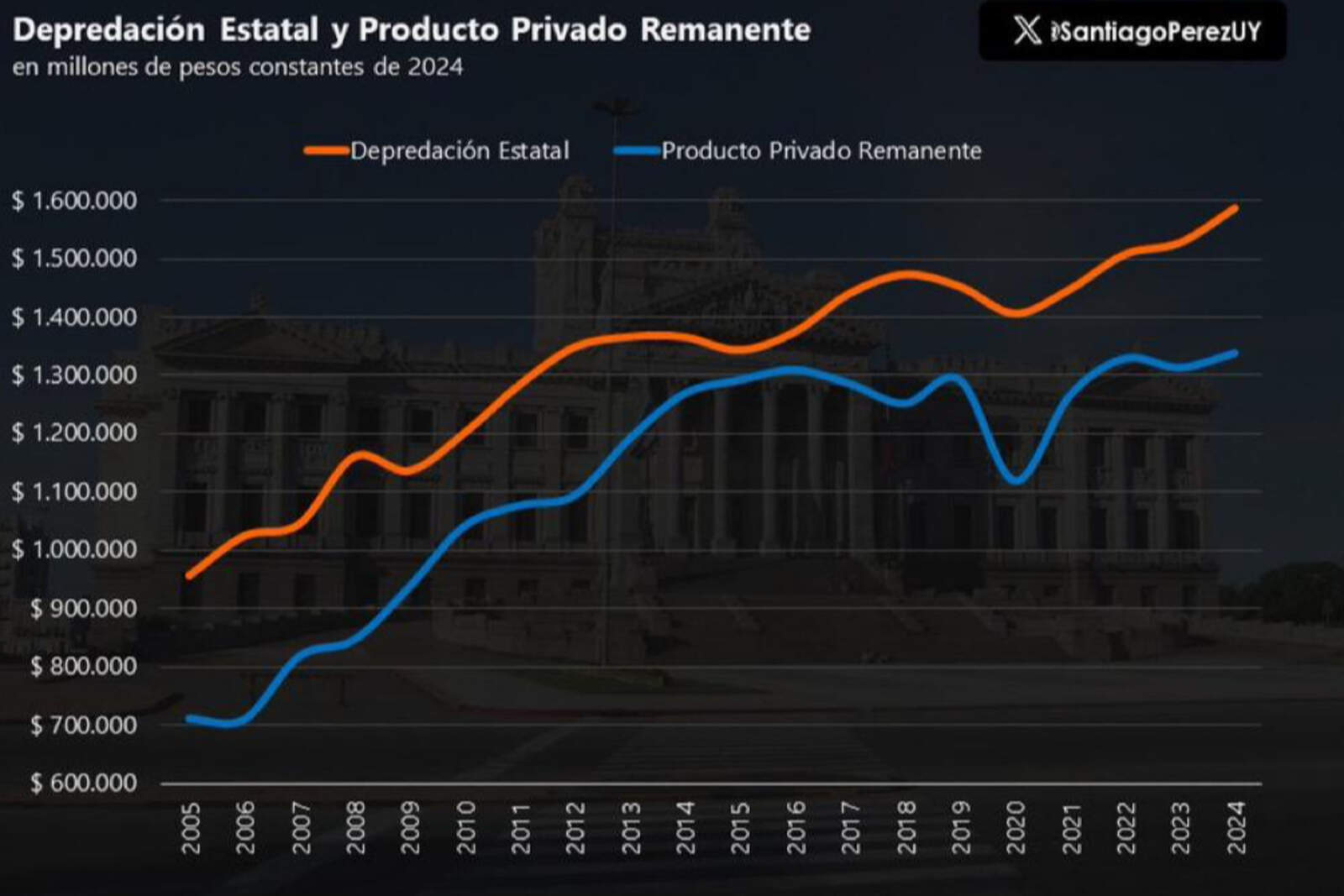
- 2005-2015: During the decade of the commodity price boom and strong economic growth, the remaining private product grew faster than state predation. Although the State took more in absolute terms (because the economy was growing), as a percentage of the gross private product the state burden tended to decrease slightly. This was the typical illusion of growth: "everyone grows, even if the State grows faster than most."
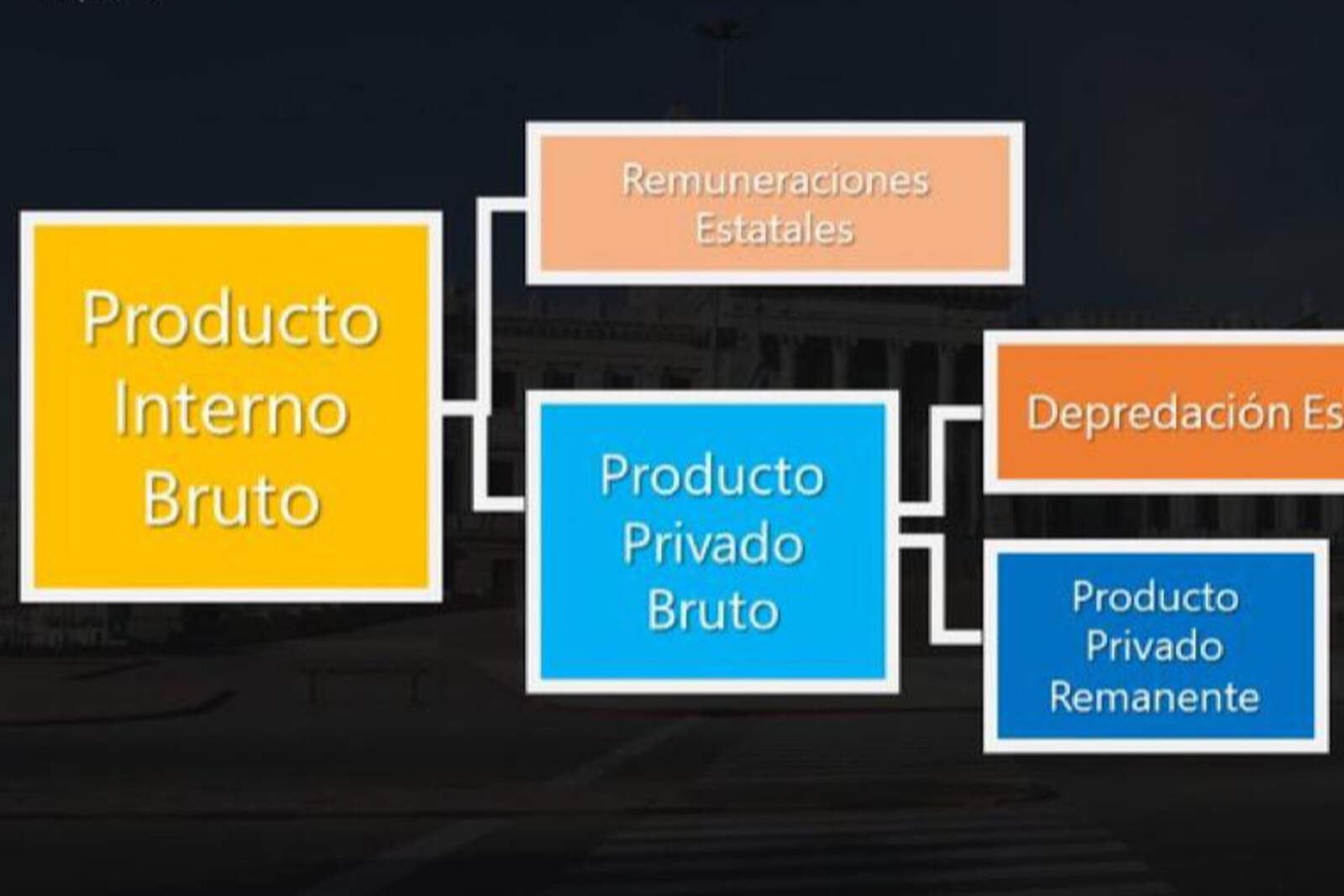
- 2015-2024: The outlook changed radically. The remaining private product stagnated (and even declined in real per capita terms in several years), while state predation continued to increase, although at somewhat more moderate rates than in the previous period. As a result, the State's share of gross private income rose again and today clearly exceeds 50%.
Who takes the money?
Predation is not just "taxes." It includes:
- Central government (national taxes, VAT, IRPF, etc.)
- BPS (social security contributions, both employer and employee)
- Public companies (UTE, OSE, ANTEL, ANCAP tariffs, etc., often above costs)
- Departmental governments (property taxes, licenses, fees)