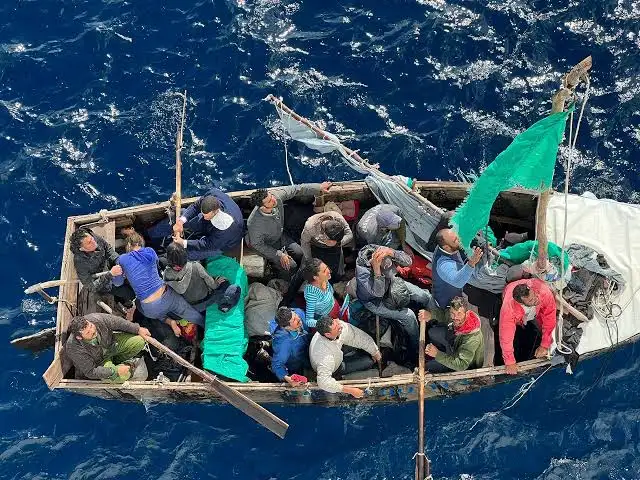
A demographic report revealed that the exodus reached record numbers over the past year. The scarcity of basic goods, power outages, and the deterioration of living conditions drove thousands of people to leave
Cuba recorded a new migration record in 2025, with more than 245,000 people leaving the island in search of better living conditions
The data, released by specialists from the Center for Demographic Studies (Cedem), reflects the impact of the deep economic crisis facing the regime of Miguel Díaz-Canel, marked by prolonged blackouts, shortages of food, medicine, and fuel, as well as a growing lack of job opportunities.
According to the report, exactly 245,774 people emigrated in 2025, a figure that consolidates the trend of significant population decline recorded in recent years. The provinces that recorded the highest number of emigrants were Havana, with 57,433 people, followed by Santiago de Cuba, Holguín, and Matanzas.
Demonstration against the dictator Miguel Díaz-Canel
At the same time, the natural population growth remains in negative values, with more deaths than births, accelerating the demographic aging of the country.
Emigration is a response to the combination of the economic crisis and the deterioration of basic services. Over the past year, Cubans faced blackouts that in some provinces exceeded fifteen hours a day, in addition to a persistent shortage of food, medicines, and essential products. The situation also affected transportation, economic activity, and the functioning of hospitals and schools.
The exodus coincides with one of the most difficult stages for the Cuban economy. The decline in tourism, the reduction of foreign currency, difficulties in importing fuels, and the crisis of the electrical system deepened the structural problems of the island. In recent weeks, even the authorities of Díaz-Canel's dictatorship suspended traditional events to reduce energy consumption due to the fragility of the electrical grid.
Cubans escaping from the island
The demographic data also shows an accelerated transformation of the population structure. The departure of young people of working age and the decrease in births increase the relative weight of the elderly population, generating new challenges for the labor market and the health system.
As thousands of Cubans continue to leave the country, the report concludes that the combination of economic crisis, blackouts, shortages of basic products, and deterioration of living conditions remains the main driver of the exodus, a trend that keeps Cuba facing one of the greatest demographic challenges in its recent history.