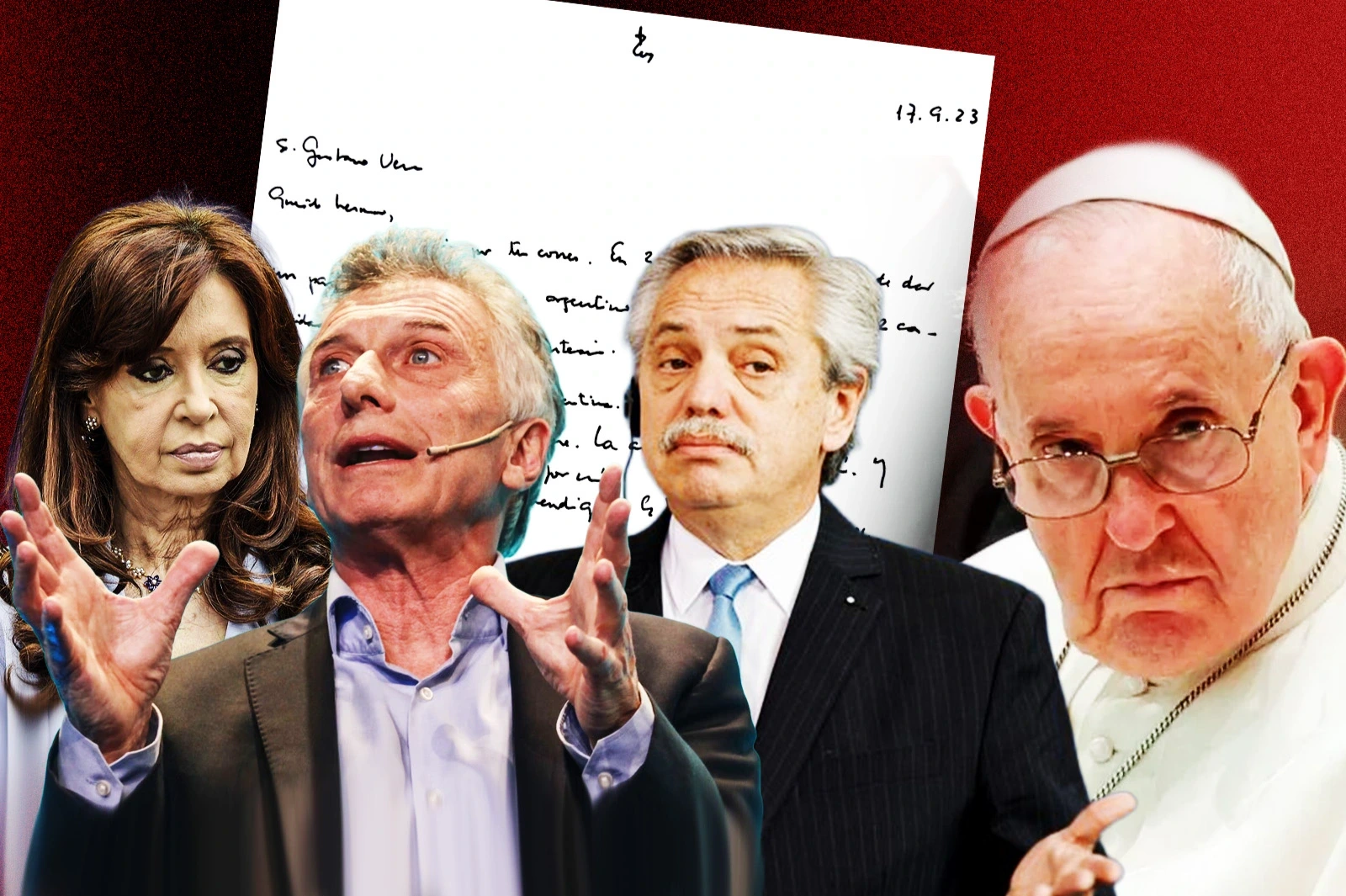
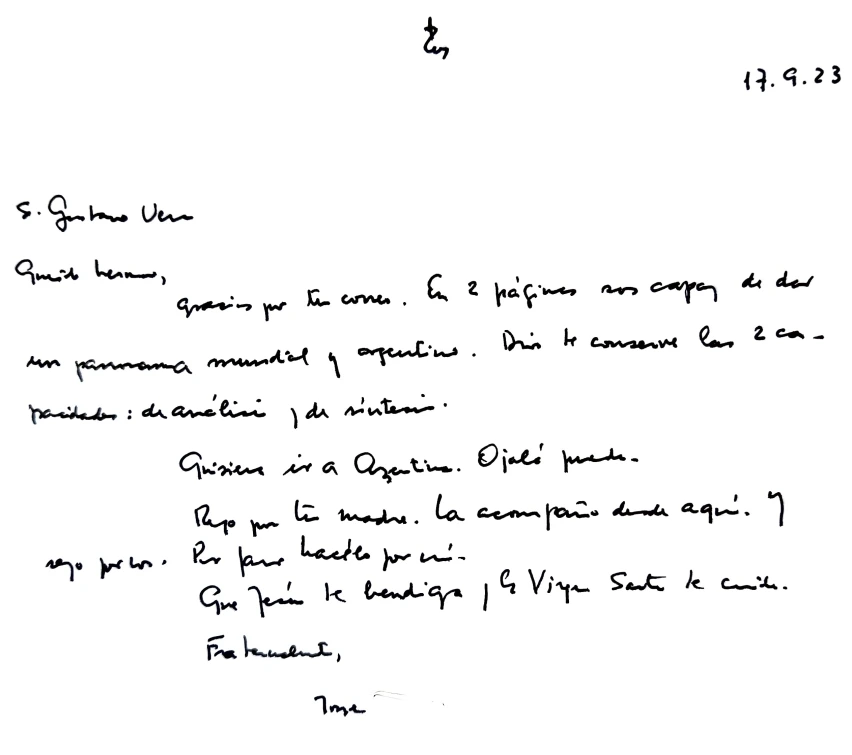
The letters include warnings about the “Mexicanization” of the country due to the advance of drug trafficking, questions about judicial inaction in cases such as Boudou's and references to the contradiction between the discourse and practices of K officials
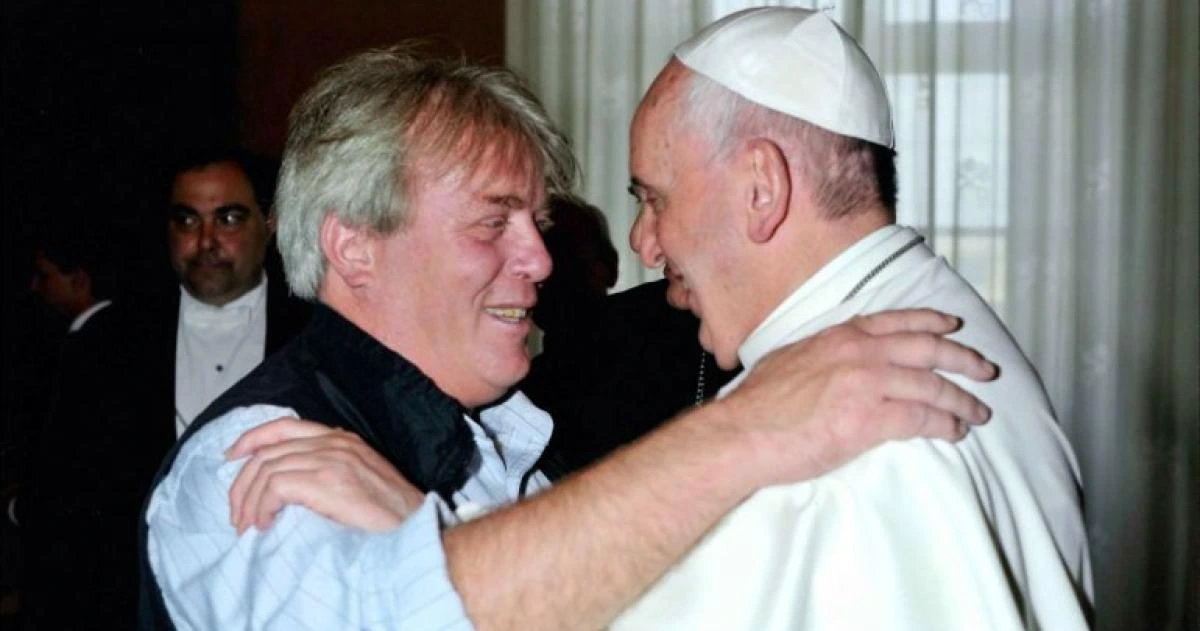
One year after the death of Pope Francis, which occurred on April 21 last year, the publication of the book “Friendship Is Not Negotiated” has triggered a political earthquake, revealing the contents of approximately 600 letters and messages exchanged between the Pontiff and Gustavo Vera.
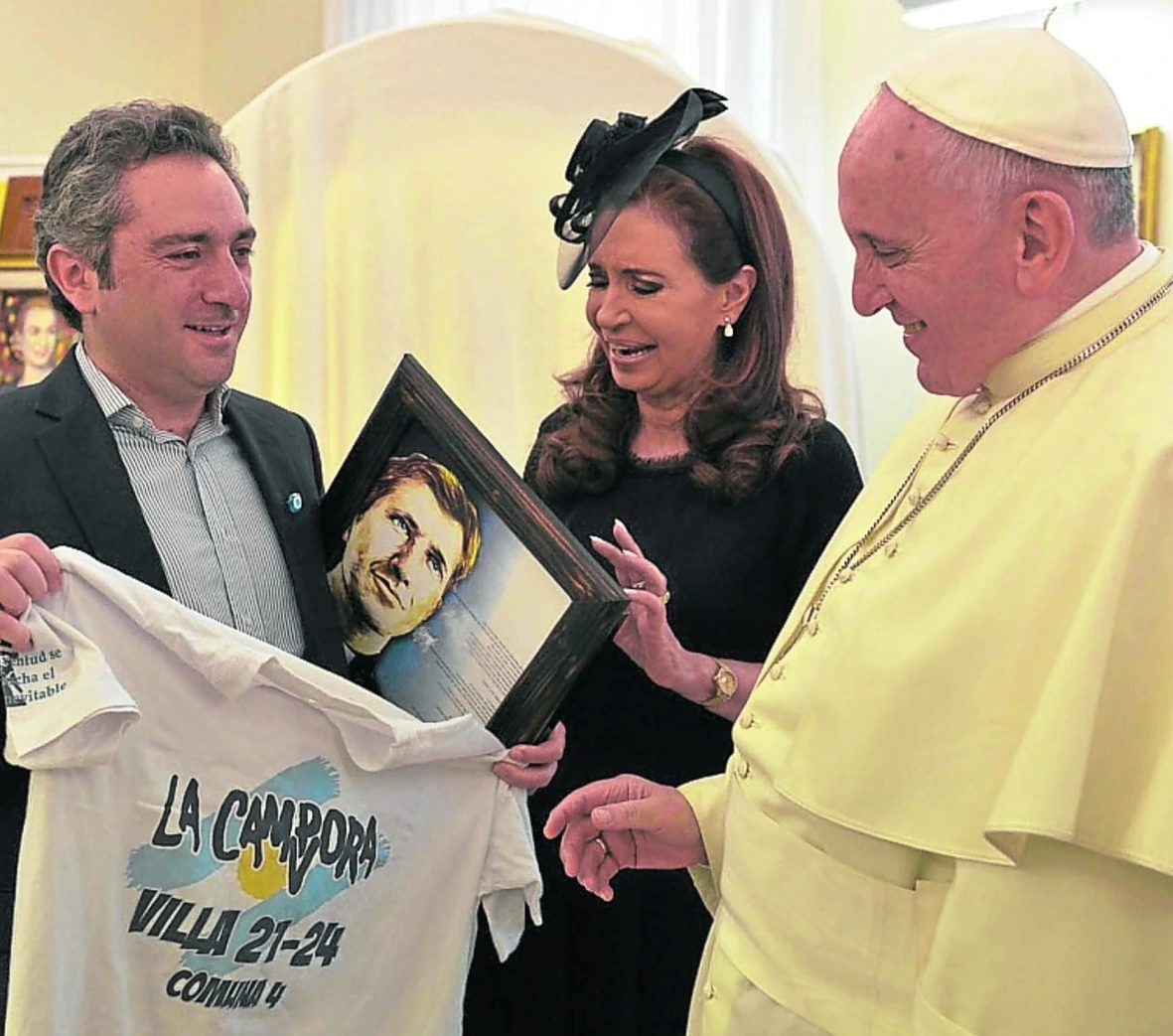
One of the most shameful episodes detailed in the sources is the “ambush” perpetrated by the former president, Cristina Kirchner, in the Vatican.In September 2014, under the pretext of a private meeting in Santa Marta, the then president appeared by surprise with 33 guests, including members of La Cámpora and trade unionists of dubious reputation such as Omar “Caballo” Suárez. The Pope, surprised by this invasion of their privacy, was forced to invite everyone to lunch, evidencing the lack of protocol respect for Kirchnerism
. Letter from Francisco In addition, the letters reveal Francisco's annoyance at official mythomania.
The Pontiff questioned what he called an “Argentine deformation”: the habit of Kirchner officials to greet him at general audiences and then lie to the press claiming that they had held “private interviews”.
The Pope's contempt was not limited only to the hard core of Christianity, but was extended to those who, from different walks of life, attacked the fundamental principles of the Church. The sources confirm Francisco's marked and persistent “discomfort” with both Mauricio Macri and Alberto Fernández, mainly caused by the promotion of the abortion agenda during their respective efforts.
This coincidence in promoting laws contrary to the faith marked an irreparable rift, exposing a political class that, for the Pontiff, prioritized short-term interests over morality.Francisco and Vera
In the case of Mauricio Macri, the relationship was plagued by mistrust and media operations that the Pope did not hesitate to crush. Francisco had to come to the crossroads of attempts to link him to the social upheaval of the time, calling the versions that he encouraged marches against the Cambiemos government in 2016 as a “fantasy that breaks thermometers”. For Bergoglio, the level of fabulation surrounding his figure during Macrism was another example of the inability of this management to generate genuine dialogue without resorting to the distortion of reality
.
For its part, Alberto Fernández's administration ended up plunging the link with the Vatican into the same mud of “incoherence”. As with Macri, the Pope maintained his categorical rejection of the legalization of abortion, adding Fernández to the list of presidents who ignored his warnings.
Francisco was forceful in demanding that everyone, including the Fernández administration, abandon political “shortcuts” and stick to respect for the law and institutionality, suggesting that the lack of consensus and inaction in the face of fundamental problems were forms of political “cowardice” that only deepened the orphanhood of the Fatherland Cristina hands over La Campora shirt to the Pope The Pope's concern for institutional degradation under Kirchnerist rule was total. During Aníbal Fernández's campaign for the governor of Buenos Aires, Francisco explicitly warned of the danger of the “Mexicanization” of Argentina. In his letters, he described the situation in Mexico as “one of terror” and hinted that the advance of drug trafficking in the country, under the cover of state inaction, was an imminent threat
.
Regarding widespread corruption, Bergoglio was relentless in describing a “kind of double belonging: to crime and to the law” that had been installed in public officials, describing it as a sign of “serious decline” and a “two-headed monstrosity”. He even went so far as to compare the situation of those who fought against this system with the persecution of prophets at the hands of
the corrupt.
The correspondence also sheds light on the ecclesiastical and political protection of nefarious figures. Mention is made of the scandal of Eugenio Zaffaroni, a judge linked to the guarantee speech but whose departments functioned as brothels. Francisco, while maintaining a cordial bond, did not stop the La Alameda investigations, and the letters highlight the enormous distance between the public discourse of these officials
and their private acts.
As for the impunity of the Kirchner leadership, the Pope's intervention before Judge Ariel Lijo, who was handling the Ciccone case involving the then vice-president Amado Boudou, stands out. At a meeting in May 2014, when the judge expressed doubts by appealing to “prudence”, Francisco answered him with a lapidary phrase that today resounds like a condemnation of the judicial system of the time: “Prudence is very good. But if prudence is inaction, it's cowardice
.”
Finally, the letters deny that Francisco was a militant of the populist project. On January 19, 2019, the Pope was categorical in criticizing the “omnipotent simplism” of Argentines who intended to confuse the “Vatican with the Iron Gate”. Despite the fact that the government tried to use his figure to legitimate itself, Bergoglio kept the memory of the “slander and defamation” suffered during the Kirchner presidencies. Although she asked to “take care of Cristina” in 2015 because of a question of institutional stability in the face of her medical license, she made it clear that this was not partisan support, but rather an attempt to prevent the people from paying the cost of new political “shortcuts”.