with pro-Russian positions. The organization even issued a statement defending the spy network disrupted by SIDE.
The framework also includes links with Kirchner sectors and spaces of Peronist militancy. The research identified connections with K-influencers, graduates of urban universities, municipal employees in Buenos Aires and second-line leaders. The scheme does not seem to be looking for high-profile figures, but rather cadres with territorial arrival, network management and capacity for discursive reproduction
The existence of a network of Russian influence that operates in Argentina through local organizations, political activities, university links, municipal contacts and influencers related to Kirchner sectors was discovered. The center of this structure is CICRAL Argentina, the Center for Integration and Cooperation between Russia and Latin America, an entity that functions as an articulation platform to install the Moscow agenda in the country
.
CICRAL was publicly launched in 2024 at Casa Rusa, the institutional space from which the Kremlin promotes different cultural, academic and political activities in Argentina. Although it presents itself as an organization oriented to regional cooperation, its activity shows a much broader pattern: building links with leaders, militants, communicators, universities and municipalities to promote the Russian narrative under concepts such as the “multipolar world” and cooperation with
Latin America. The organization's public launch was in February 2024.
The network operates through a low-profile strategy, but with a great capacity for territorial penetration. The research detected seminars, talks, training events, meetings in academic fields, coordination with municipalities and presence in activities organized around the Russian agenda. It is not a massive structure or visible to the general public, but rather a network of middle cadres, militants and local operators capable of installing speeches, generating contacts and amplifying content
on social networks.
Among the names linked to CICRAL are Esteban Luis Perié, president of the entity, and Lucas García, appointed as vice-president. Garcia participated in February 2025 in the III Future Technologies Forum, chaired by Vladimir Putin, confirming the level of connection of this organization with institutional spaces of the Russian regime. Perié, on the other hand, is associated with trips, activities and contacts with Argentinian militants aligned
.
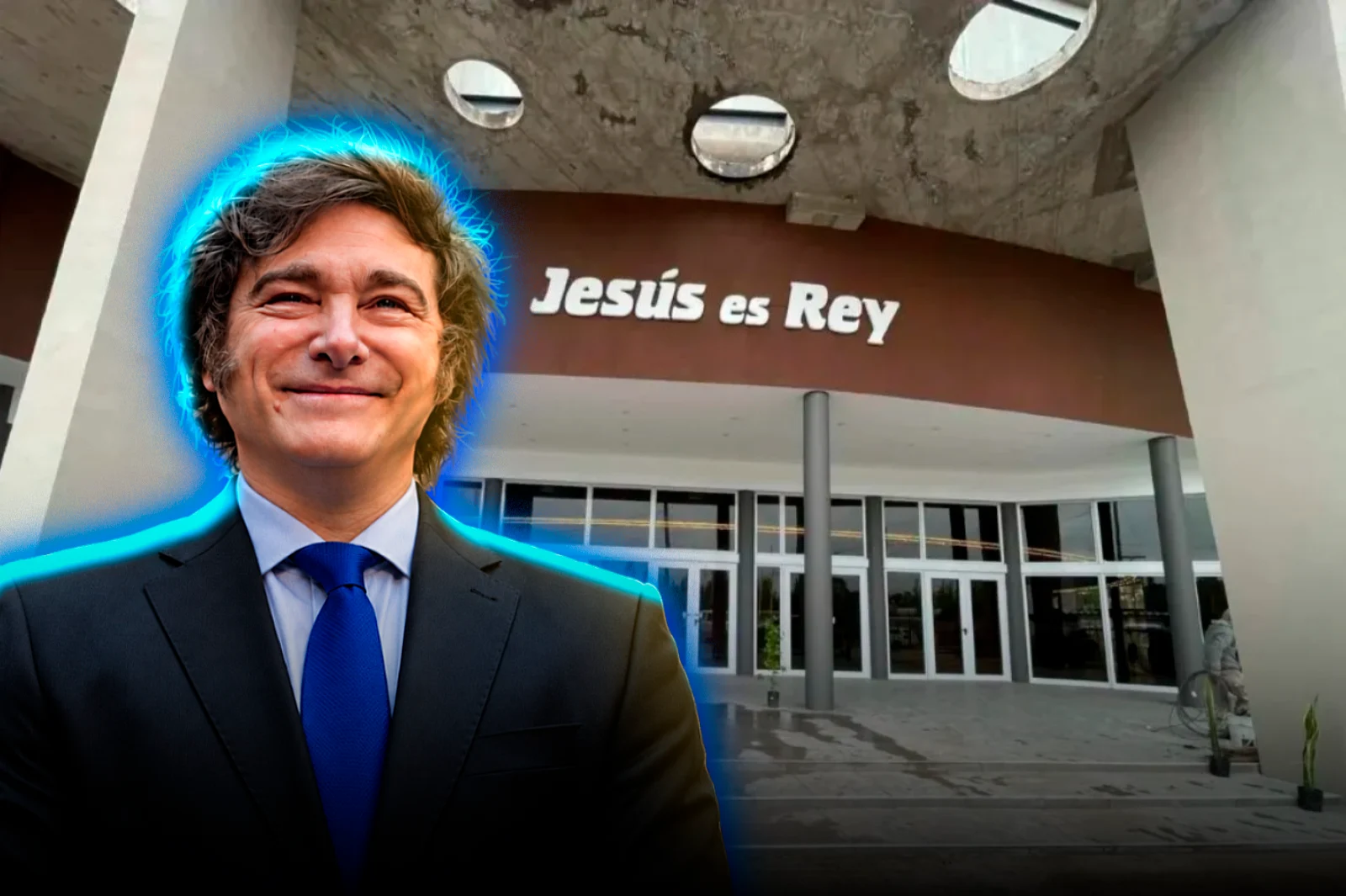
The methodology is well-known: cultural activities, academic cooperation, youth meetings, geopolitical seminars and supposedly institutional events that serve to build political influence. Under an aesthetic of international exchange, the network promotes a view aligned with Moscow's interests and contrary to Argentina's strategic shift under the Government of Javier Milei, who decided to rebuild the relationship with the West, the United States
and Israel. A group of Kirchner influencers traveled to Russia to a congress of the regime.
The case becomes more relevant after the participation of Argentine Kirchner influencers in the Sovintern, a socialist forum held in Moscow between April 25 and 29. The meeting brought together more than 300 delegates from around 100 political parties and movements from more than 70 countries, under an international left-wing agenda with a strong pro-Russian imprint
.
At the same time, my journalistic investigations had already warned of aRussian disinformation network in Argentina, accused of financing content, publications and digital operations against the national government. In this context, the activity of CICRAL and its local connections raise questions about the degree of penetration of Russian intelligence in Argentina