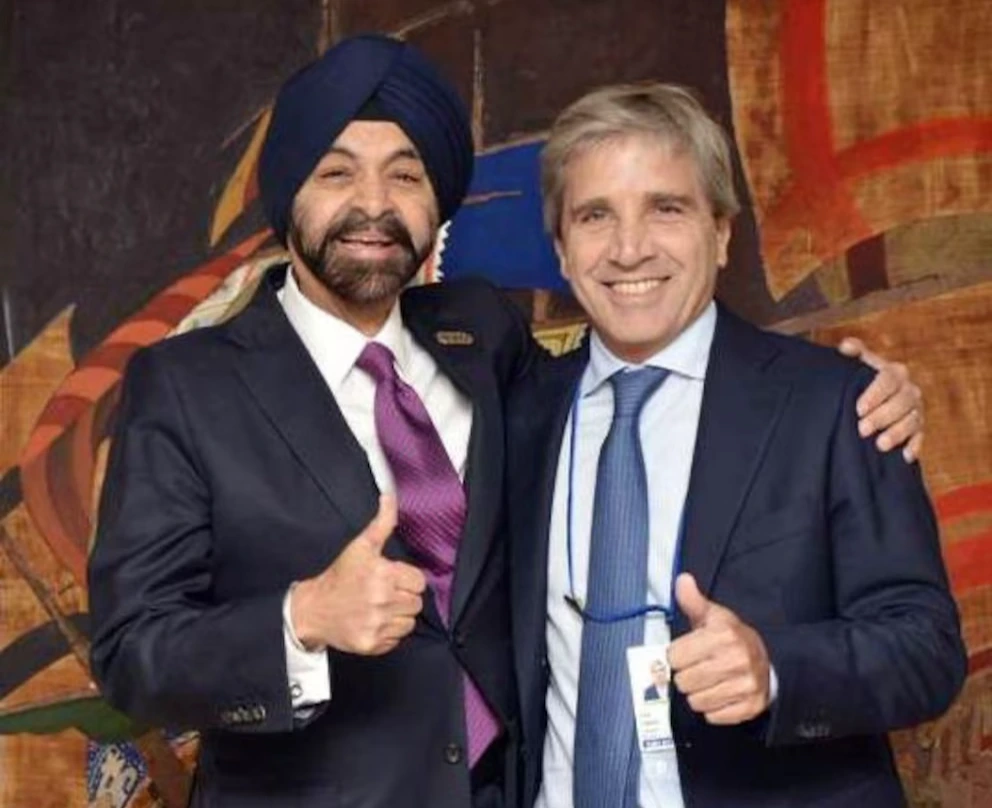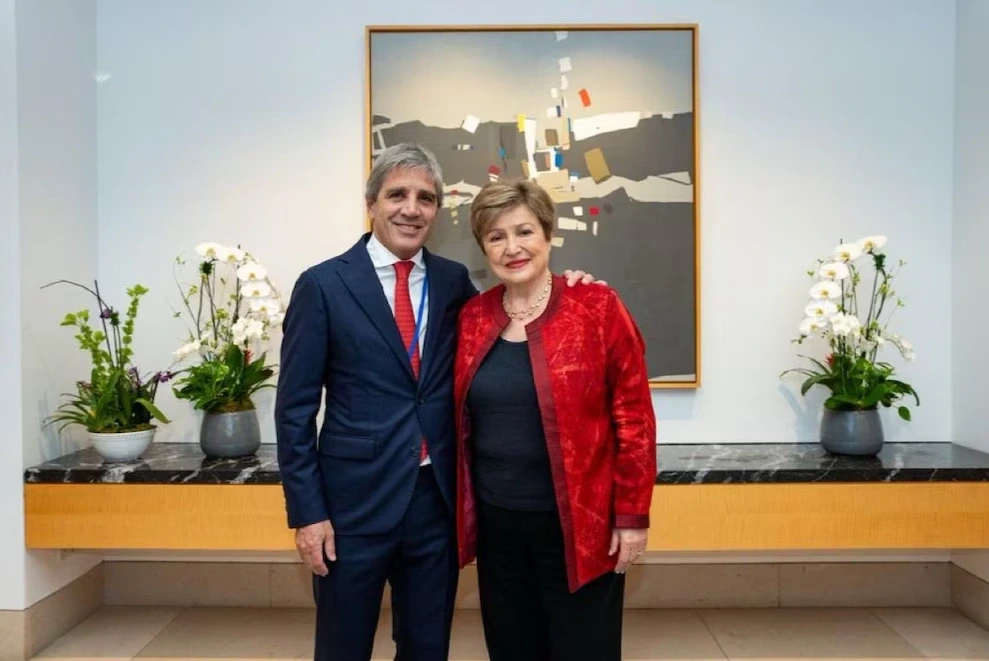

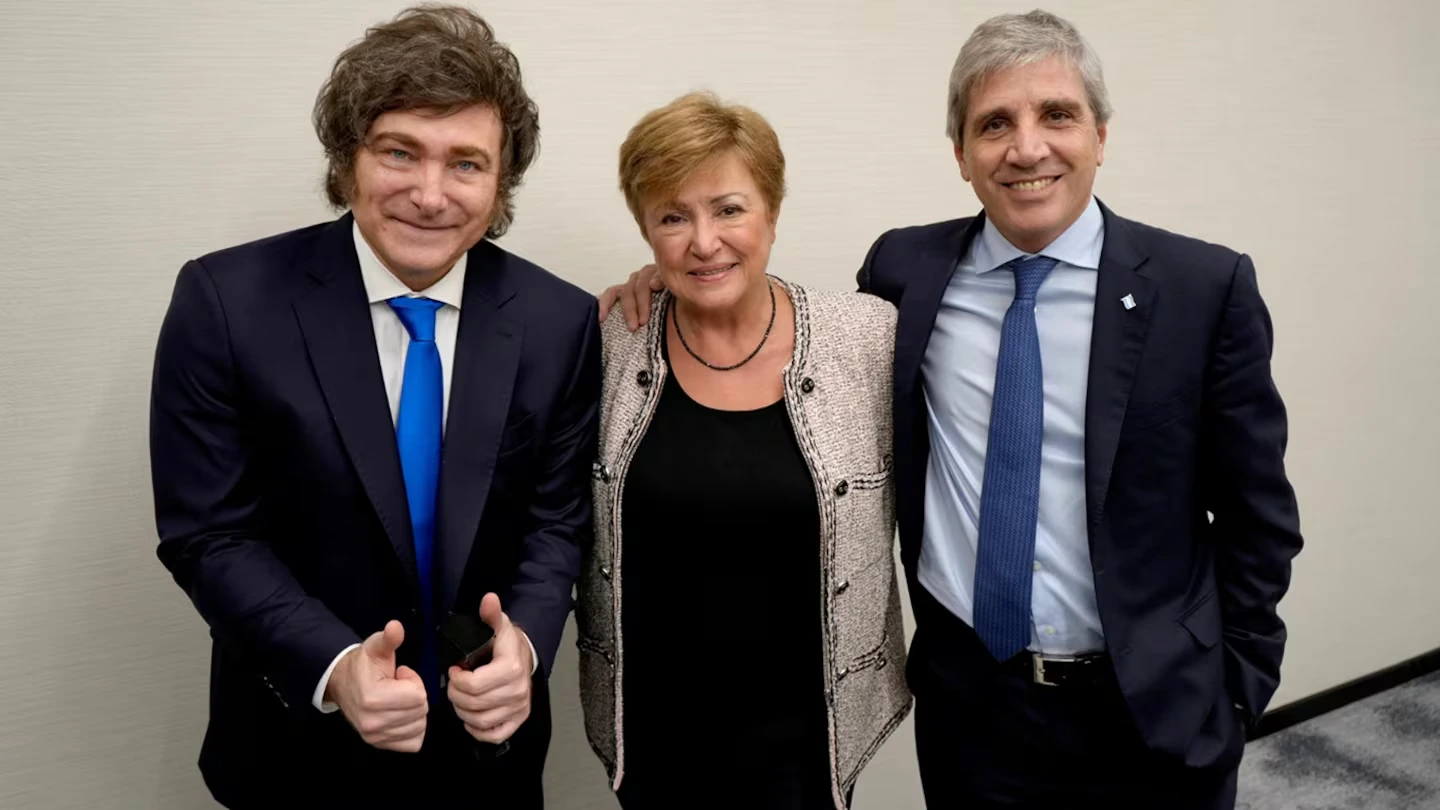
In a context of growing international validation of Argentina's economic direction, the technical staff of the International Monetary Fund strongly supported the multilateral financing strategy and the adjustment program promoted by the Government, in the run-up to a key meeting between Luis Caputo and Kristalina Georgieva in Washington, United States. Just four hours before that meeting, the agency's officials who regularly negotiate with the Treasury Palace highlighted the consistency of the economic plan, as well as the strategy deployed to obtain guarantees from the World Bank and the Inter-American Development Bank (IDB), aimed at covering private debt maturities in July
.During a press conference in the US capital, Nigel Chalk praised the course taken by Argentina and stated: “What has happened over the course of this year was a very positive policy boost for the country. The Budget was approved, there was an important labor reform, reserves are accumulating through the consistent action of the Central Bank in the markets. There is a continuous effort to eliminate distortions in the economy, to open it up and to increase productivity
.”
Asked about the possibility of a waiver (pardon) for non-compliance with the reserve targets set for 2025, Chalk avoided anticipating definitions, but reinforced confidence in the current scheme: “In terms of the waiver, that is a decision of our board of directors. We'll present that to the directory. They will decide when they meet. But we feel that the entire current framework now has consistency, it's a solid macroeconomic framework.” After his speech, Luis Cubeddu took the floor, who deepened technical support for the economic program and projected an inflationary slowdown
after the March figure.Cubeddu explained that inflation of 3.4 percent in March responded to specific factors: “The increase in inflation of 3.4 percent in March reflects a number of factors, and clearly the increase in global energy prices had an impact. Also during March, there were basically increases in seasonal prices, such as education.”