
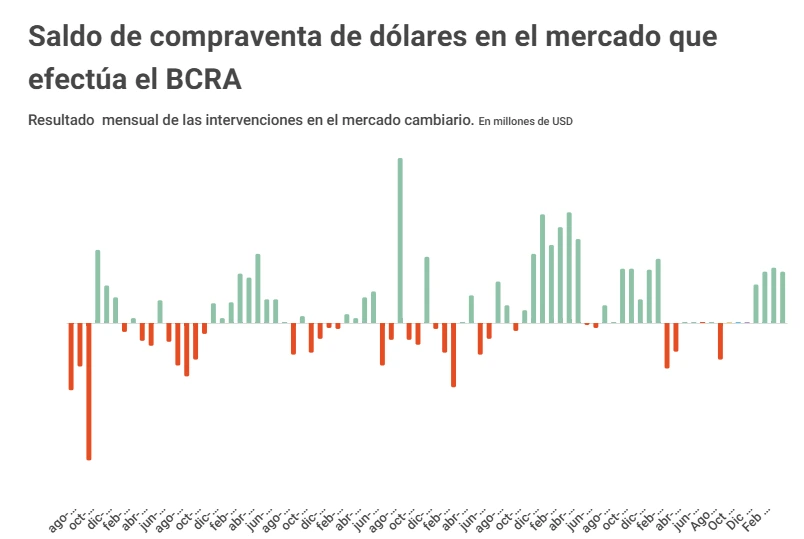
Within the framework of an economic strategy aimed at stabilizing macroeconomic variables and restoring credibility, the Central Bank of the Argentine Republic intensified the accumulation of reserves during 2026, consolidating a sustained buying trend in the foreign exchange market and showing concrete progress in the objectives set by the official program. The monetary authority chained 69 consecutive days of dollar purchases in the official market, complemented by block transactions carried out directly with companies and organizations.
In the last round, it totaled USD 95 million, allowing the annual cumulative amount to exceed USD 6 billion, specifically reaching USD 6.02 billion since the implementation of the new monetary scheme in January 2026.This performance implies that the Central Bank has already achieved 60% of the expected purchasing goal for the entire year, evidencing an acceleration in foreign exchange acquisition during April. In the week that ends alone, the bank added USD 595 million, reinforcing the pace compared to previous months. However, the accumulation of international reserves was partially conditioned by external debt payments made by the Treasury, which purchased part of the dollars from the Central Bank itself. This dynamic moderated the net growth of foreign currency assets, although without altering the general trend of strengthening
.
This coordination between monetary policy and fiscal policy aims to avoid pressures on the exchange rate and inflation, maintaining balance in a context of transition.
Official estimates project that, depending on the demand for pesos and the supply of foreign exchange, the net balance of purchases could be between USD 10,000 and USD 17 billion in 2026. In that regard, the president of the BCRA, Santiago Bausili, said that these factors will be decisive for the
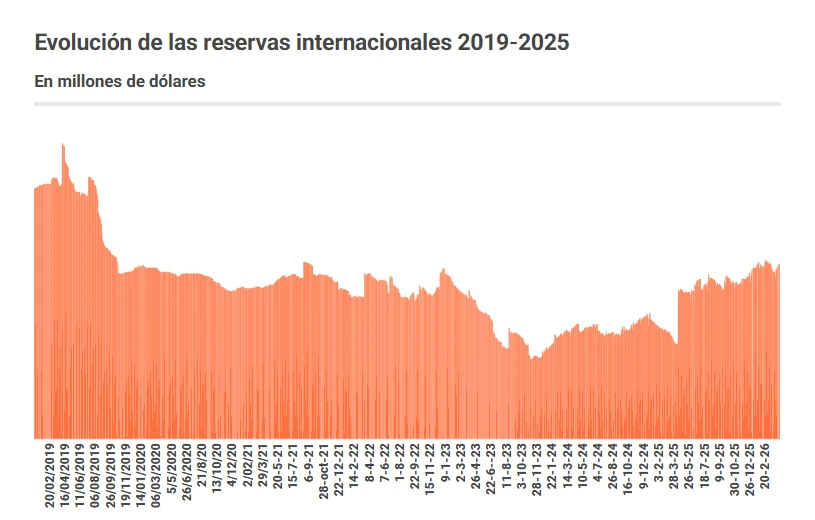
final result.At the close of the last day, international reserves reached USD 45,791 million, after registering a daily increase of USD 160 million. It should be remembered that in February they had reached USD 46,905 million, the highest level since 2018 and a maximum in the current administration. Recent changes reflect both foreign currency debt payments and changes in the valuation of assets, including gold and bonds, in a volatile international scenario