Councillors from La Libertad Avanza presented hundreds of projects to reduce or eliminate municipal taxes and alleviate fiscal pressure on businesses, SMEs and producers.
Nuevo
Agregar La Derecha Diario en
Compartir:
Libertad Avanza deployed a political offensive in the province of Buenos Aires to push for a sharp reduction in municipal taxes. In a coordinated action in 116 municipalities in Buenos Aires, 396 space councilors simultaneously submitted legislative projects aimed at eliminating local taxes, reducing tax burdens and simplifying administrative procedures
.
The initiative seeks to transfer to the municipal level the tax reduction agenda promoted by the national government headed by Javier Milei, with the aim of alleviating fiscal pressure on economic activity and improving conditions for productive development.
The strategy was previously communicated to the President and to the Secretary General of the Presidency, Karina Milei, who also chairs La Libertad Avanza at the national level.
Both leaders gave their endorsement to the legislative offensive launched in the deliberative councils of much of the province.
269 projects to eliminate or reduce municipal taxes
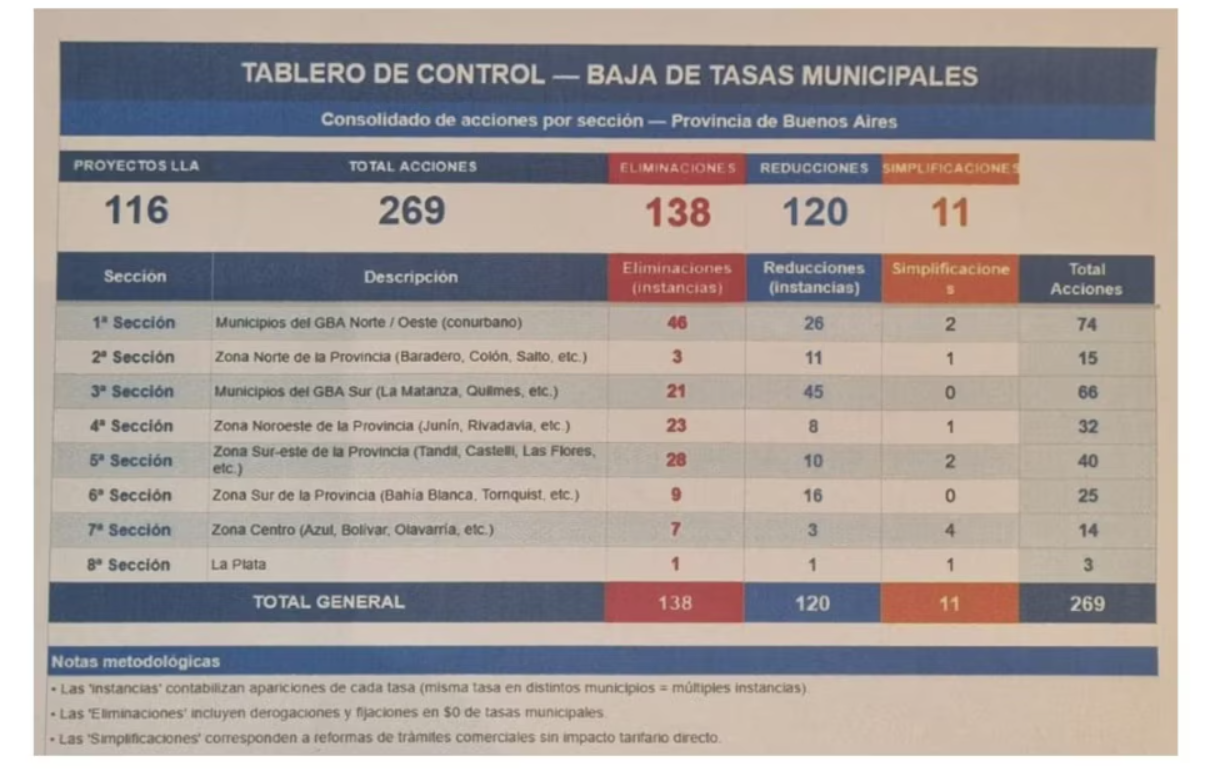
The plan includes a total of 269 legislative initiatives distributed in the different districts where space has political representation
.
Of the total number of projects submitted:
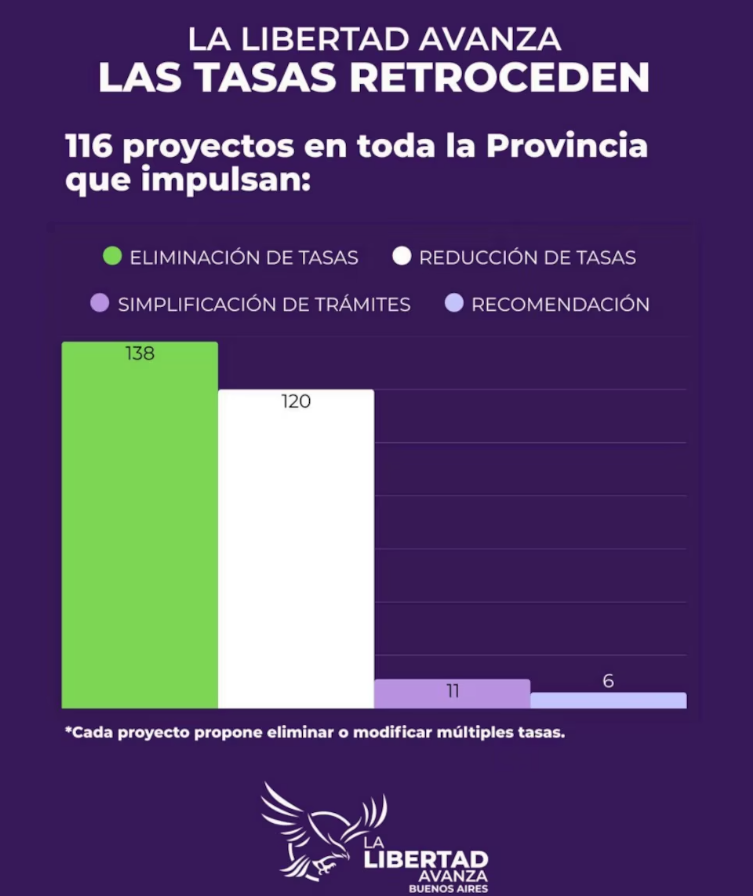
138 seek to eliminate municipal taxes considered unnecessary or without consideration
.
120 propose to reduce local taxes.
11 initiatives aim to simplify administrative procedures related to commercial and productive activity.
From space, they argue that many municipal taxes generate additional costs for the private sector and end up affecting the competitiveness of merchants, SMEs and producers.
The libertarian strategy was deployed in 116 municipalities. The offensive was
carried out in 116 of the 135 municipalities of Buenos Aires, reflecting the territorial growth that La Libertad Avanza managed to consolidate in the
province in recent years.
The simultaneous coordination of projects was possible thanks to the network of 396 councilors that the space has in different districts.
Each proposal was adapted to the tax structure of each municipality, although they all share the same objective: to review taxes considered excessive or unjustified.
Space leaders argue that municipal fiscal pressure often does not translate into better services for neighbors and ends up acting as an additional burden for those who produce or generate employment.
Administrative simplification to boost economic activity
In addition to the reduction of taxes, the legislative package includes initiatives aimed at simplifying administrative processes that today affect local economic activity
.
From La Libertad Avanza, they assure that in many municipalities there are bureaucratic procedures that make it more expensive to open businesses, hinder qualifications and generate unnecessary costs for entrepreneurs.
The proposals promoted by the councilors aim to:
simplify business authorizations,
reduce administrative requirements
, eliminate
procedures considered redundant.
According to the space diagnosis, administrative simplification is a fundamental complement to improving the investment climate at the local level.
Municipal rates under question Among the
examples cited by libertarian leaders is the municipality of Morón, where, as they report, a rate created during the COVID-19 health emergency in 2020 continues to be charged
.
The case of Carlos Tejedor is also mentioned, where there is a tax linked to the movement of cattle. According to surveys carried out by local leaders, during 2025 this rate would have generated around 600 million pesos in revenue, while administrative costs would represent less than 10% of that
amount.
Another example mentioned is that of Cañuelas, where an ordinance establishes a fee for the disinfection of transport vehicles such as taxis, remises or combis. From La Libertad Avanza, they argue that the municipality does not effectively provide this service nor does it have the necessary infrastructure, so they consider that it is a tax without real consideration
.
For space, the revision of this type of rate represents a necessary step to reduce fiscal pressure, encourage private activity and accompany the process of economic reforms promoted by the national government.