A police report reveals a change in illegal entry routes, with Madrid-Barajas airport as the main gateway. At the same time, data warn that more than 30,000 immigrants from high-risk jihadist areas have entered since 2020.
Illegalimmigration to Spain experienced a significant structural change in 2025 that altered the traditional map of entry routes to the country. According to a report by the General Commission for Foreigners and Borders of the National Police, the main access channel is no longer maritime or land, but air access. The document points out that more than 1.5 million illegal immigrants accessed Spain from Ibero-America through commercial flights, consolidating this method as the main gateway to Spanish territory
.
Police analysis explains that this transformation responds to the operational adaptation of immigrant trafficking networks, which have diversified their strategies to circumvent traditional controls. In the new scenario detected by the authorities, between 60% and 65% of illegal migratory flows are channeled by air, while the sea represents between 5% and 8%. In turn, so-called secondary movements — those in which illegal immigrants access Spain after passing through third countries — account for between 30% and 35% of the annual total
Within this scheme, the main entry point identified by the Police is the Adolfo Suárez Madrid-Barajas airport, considered the logistics epicenter of these new migratory routes. The predominant nationalities among the non-EU passengers who star in these flows include Colombian, Venezuelan and Peruvian citizens. The most common modus operandi is to enter the country with short-stay visas and then remain illegally after the authorized period has expired.
In parallel, the report notes that other strategies continue to be used, such as the request for international protection after the deliberate destruction of documentation during airport transit, although this mechanism has decreased compared to previous years. According to police analysis, the imposition of transit visas on certain nationalities helped to reduce this type of episode, although criminal organizations continue to explore alternative routes through international hubs located
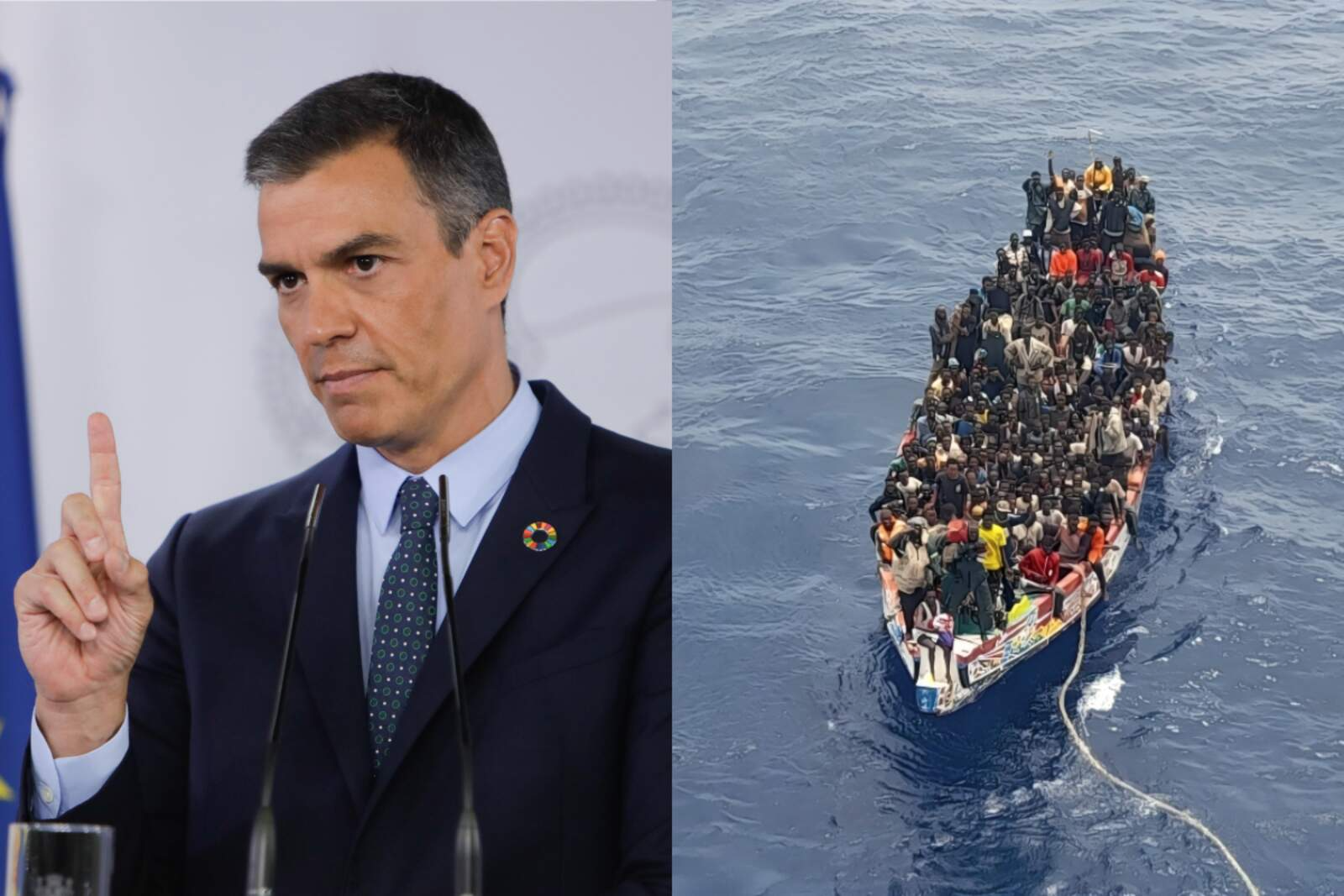
in Africa and Ibero-America. Pedro Sánchez
At the same time, the authorities detected an increase in other migratory routes, especially the one from Algeria, which has driven an 85% increase in arrivals to the Peninsula and 200% in the Balearic Islands.
Migratory pressure also intensified in the autonomous city of Ceuta, where 1,604 illegal entries were registered at the beginning of the year, a figure that is five times the figure of the previous year. This phenomenon is linked to the consolidation of mixed itineraries that combine land and sea routes from sub-Saharan Africa, routes that in thelast two years represent a third of all
illegal immigration that reaches Spain.
Added to this scenario is another fact that has set off the alarms of the European authorities. Information from FRONTEX reveals that more than 30,000 illegal immigrants from areas with a high jihadist presence entered Spain between 2020 and 2025. Countries of origin include Mali, Burkina Faso, Somalia, Sudan, Syria, Pakistan, Afghanistan, Yemen, Iran and Egypt
.
These figures correspond exclusively to the routes that directly affect Spain: the Western Mediterranean by sea and land —Andalusia, the Levant, the Balearic Islands, Ceuta and Melilla— and the western Atlantic route that leads to the Canary Islands. The relative weight of these profiles over the total number of illegal arrivals shows an increasing evolution in recent years. In 2020, they represented around 11% of the total, that is, 1 out of every 9 illegal immigrants entering Spain came from areas of high jihadist risk. The proportion remained low in 2021, but a sustained uptick began in 2022
.
In 2022, these profiles already accounted for approximately 18% of the total. The trend continued to rise until 2024, when they reached 30% of all detections, equivalent to 1 in 3 illegal immigrants from countries such as Mali, Somalia, Sudan, Syria, Pakistan or Afghanistan, among other Islamist sources. In 2025, although the global volume of illegal entries fell, the percentage stood at 24.8%, meaning that 1 in4 illegal immigrants continued to arrive from environments considered
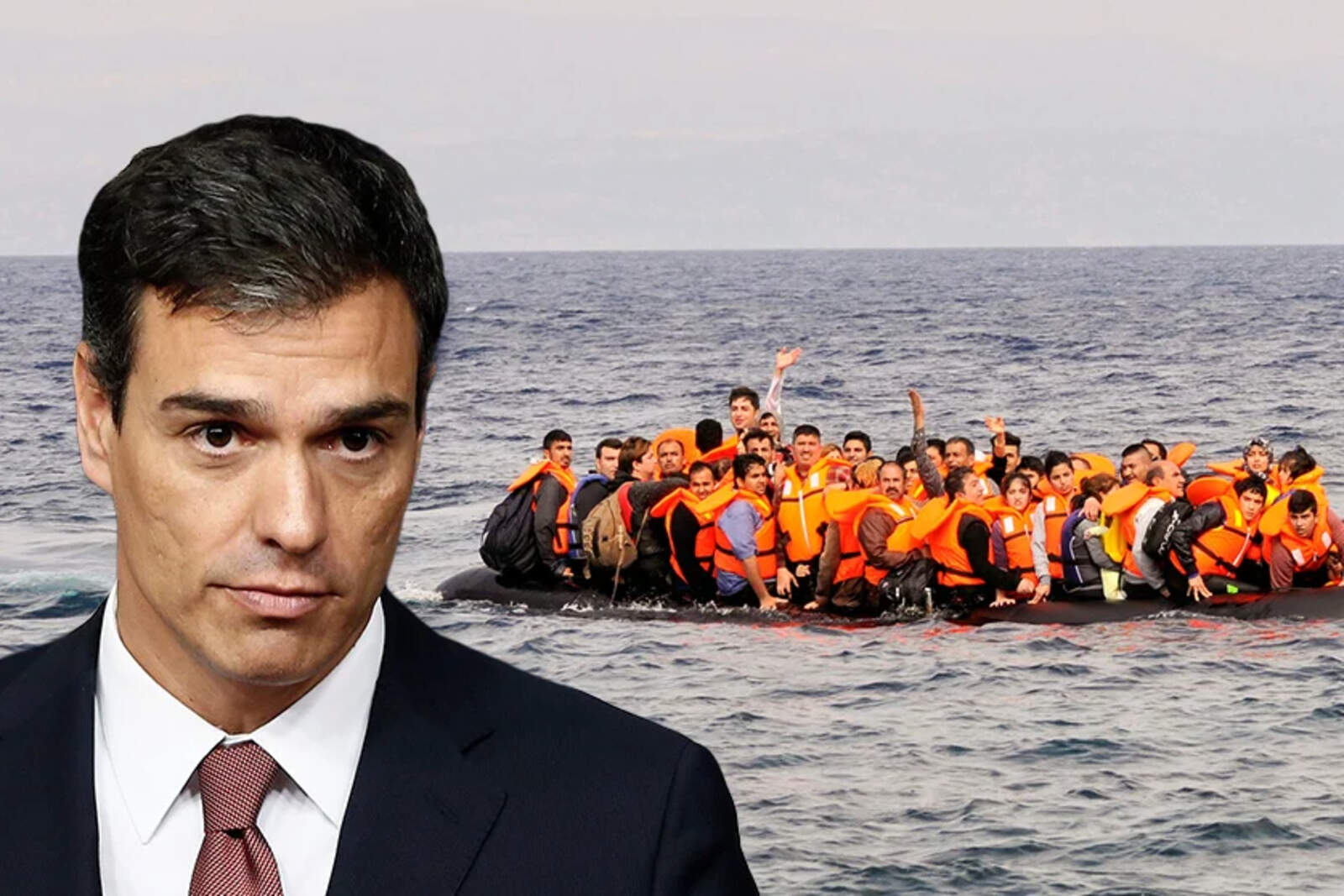
to be high-risk. Pedro Sánchez
Within this group, Mali is the country that contributes the most by far, with numbers that multiplied especially between 2022 and 2024. There were also notable increases in Somalia, where Al Shabaab is still active, Sudan and Burkina Faso, as well as significant volumes from Syria, Pakistan, Afghanistan, Yemen, Iran and Egypt. All of these areas share a common element indicated by the reports: the active presence of terrorist organizations such as Al Qaeda in the Islamic Maghreb, the Islamic State in the Sahel or Afghan and Pakistani cells, in addition to high levels of
radicalization among the young population.
The routes used for these trips are known to the authorities. The Canary Islands have become one of the main pressure points along the Atlantic route, while thecoasts of Andalusia, Levante and the Balearic Islands concentrate a large part of the arrivals by sea within the Western Mediterranean route. In turn, Ceuta and Melilla record significant flows by land. The human trafficking mafias that control these routes, according to reports, do not carry out any type of filter: whoever pays can pass, regardless of their profile or possible links with extremist environments that, in some cases, act as catalysts
for these movements to Spain.
Sources from the General Commissioner for Foreigners and Borders (CGEF) of the National Police explain that irregular routes in the SAHEL and the Maghreb are increasingly used by individuals with profiles that generate alerts of radicalization, taking advantage of the permeability of mass flows to infiltrate economic immigrants. These same sources add that “the coordination between the CGEF and the General Information Commissioner has made it possible to identify and neutralize several cases in which people arriving by boat or Cayuco had a history or links
with jihadist environments.
During these six years, the Government of Pedro Sánchez has implemented a migration policy that, according to the data and the analysis of different agents consulted, coincides with a strong increase in illegal arrivals.
Massive regularizations, massive transfers from the Canary Islands to the Peninsula and a general perception of permeable borders have generated, according to these interpretations, a so-called unprecedented effect. The
FRONTEX reports also point to a more complex reality: the risk of jihadist infiltration accumulates in Spanish territory in a context of minimal expulsions and security controls that, in too many cases, are insufficient or excessively slow. For the agents consulted by this medium, the evolution of the last six years is especially worrying. From the 11% recorded in 2020, there was a steady growth that culminated in 30% in 2024, remaining at 24.8% in