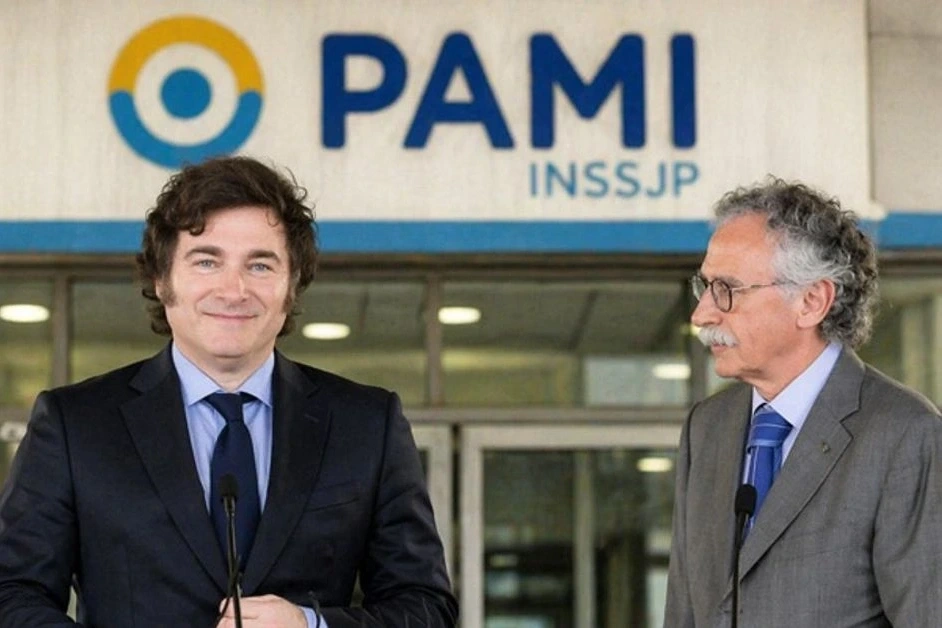
An internal audit of the PAMI, carried out as part of the sanitation process promoted by the government of Javier Milei, detected a million-dollar scheme of benefit fraud
ophthalmological diseases that uncover a new corruption inherited from Kirchnerism.
The report, based on data crosses from the Electronic Medical Orders (OME) system and benefit audits, identified a network of diversions that is replicated in different parts of the country, affecting retirees and the organization's coffers.
According to the auditors, these are not isolated events, but rather systematic patterns involving doctors, opticians and ophthalmic centers in provinces such as Santiago del Estero, Buenos Aires, Entre Ríos and La Rioja, as well as cities such as Concordia.
PAMI.
What the audit revealed Among the
main maneuvers detected, the most common is the overbilling of eyeglasses.
Providers prescribed low-grade lenses, corresponding to lower-value modules, but billed high-grade modules, up to five times more expensive.
While the affiliate received an economic product, the PAMI paid for a premium one.
The difference is significant: an actual module has a value of $4,941, while the billed modules came to $27,204.
Another of the irregularities identified are phantom benefits: appointments without a medical history, studies never performed and orders without medical support.
In some cases, up to 50% of audited practices lacked clinical documentation. Added to this is the manipulation of the query system, where first queries were billed as higher-value follow-ups, through the deliberate use of
codes.
The report also detected the existence of closed circuits with conflicts of interest. In these cases, doctors referred systematically to a single perspective, sometimes with direct family ties, configuring a targeted economic benefit scheme
. PAMI. The most damaging mechanism for members was undue collection.
“Better” lenses were offered out of coverage at apparently convenient prices, but patients ended up paying high amounts for benefits that should be free
.
At the same time, the lowest quality lens was billed to the PAMI, generating a double charge. There were cases of up to USD 1,500 plus $353,500 for products covered by social work
.
The audit documented specific cases. In Santiago del Estero, 606 cases of overbilling were detected, with a loss of $10.4 million in the sample analyzed and 95% of the prescriptions derived from the same perspective, related to the family member of
the referring physician.
In Mar del Plata, an ophthalmological center combined undue charges to members with 58 benefits without a medical history. In Entre Ríos, a professional recorded 613 cases of overbilling, 151 consultations without clinical support and 16 prescriptions without
diopters.
The scheme was also identified in La Rioja and Concordia, where 830 cases were recorded concentrated on a single doctor.
These irregularities are part of a larger investigation into the OME system, which has already resulted in at least six active judicial cases initiated by the agency and the Specialized Fiscal Unit (UFI-PAMI). The maneuvers include unsupported billing, document falsification, and misuse of affiliate data
.
The audits also revealed volumes of benefits incompatible with any real medical practice. In gastroenterology, 283 practices were declared in five hours, while in cardiology, 689 orders were registered in a single day, which would involve
working hours of up to 108 hours.
The survey is part of the comprehensive review process initiated by the current leadership of the PAMI, led by Esteban Leguízamo since December 2023, which seeks to dismantle fraud mechanisms and make the use of system resources transparent