The rest of the instruments were distributed among different medium and long-term options.
The CER TZXS8 bond (September 2028) received $1.04 trillion at a TIREA of 8.41%, while theTAMAR TMG28 bond (August 2028) raised $1.03 trillion with a margin of 6.90% over that reference rate.
In addition, the DUAL CER/TAMAR +3% bond (TXMJ9) due in June 2029was awarded for $0.95 billion at a TIREA of 7.31%.
In the shortest stretch, the linked dollar D30S6 (June 30, 2026) raised $0.16 trillion at a TIREA of 2.52%.
From the analysis of the market, Emilio Botto, head of Strategy at Mills Capital, had anticipated the bias of the transaction: “The menu of this tender shows a clear intention to extend duration and clear maturities of 2026 and 2027. There is a single short instrument and a strong presence of instruments in 2028 and 2029, including dual options that combine rate coverage and inflation
.”
Along the same lines, he added: “This type of strategy is only possible in a context of rate compression. In addition, the conversion scheme aims to exchange short-term maturities into longer tranches, which reinforces the signal that the Treasury is taking advantage of the current context to sort out the debt profile
In a key debt tender that once again sets the course of economic policy, Javier Milei's administration managed to raise another USD 700 million through the issuance of bonds in dollars, while ensuring a level of refinancing greater than 100% in pesos, consolidating its strategy of financial consolidation without monetary expansion. The Ministry of Finance awarded a total of $8.11 trillion after receiving bids for $9.19 trillion, implying a 102.15% rollover over the day's due dates. This result reflects market confidence in the official economic program and the Treasury's ability to renew and extend its commitments without resorting to monetary issuance.
The menu of instruments ranged from capitalizable letters in pesos to foreign currency bonds, with a special focus onhard dollar securities AO27 and AO28. Within this framework, Bonar 2027 (AO27), due on October 29, 2027, was awarded for USD 350 million at a TIREA of5.16% (equivalent to an annual nominal rate of 5.04%). For its part, Bonar 2028 (AO28), due on October 31, 2028, raised another USD 350 million at a higher rate: 8.77% of TIREA (8.44%TNA), reflecting the higher premium required by the market for the additional period of one year. In both cases, there was a slight increase in rates compared to the previous auction.
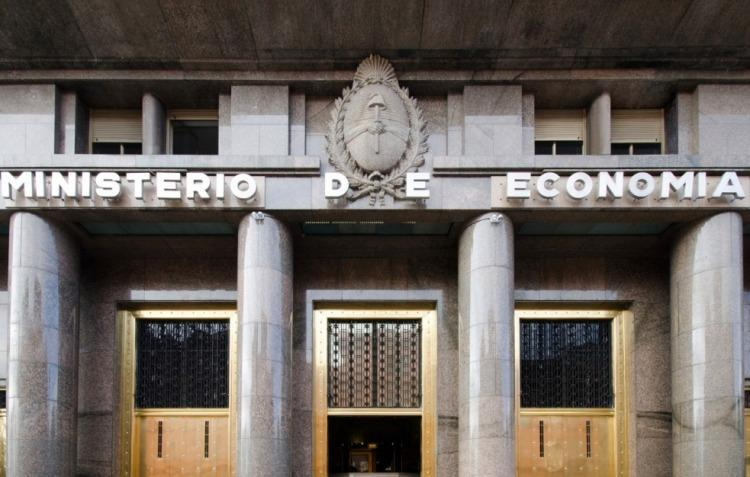
Ministry of Economy of the Nation
As a complement, the Ministry of Finance enabled a second exclusive round for these instruments —until 13:00 on Wednesday—at the fixed cutoff price, with an additional quota of USD 100 million per tranche, reinforcing
the foreign exchange raising strategy.
The measure is part of a broader decision by the economic team, which last week extended the issuance quota in foreign currency. The objective is to accelerate the accumulation of reserves ahead of a significant maturity of $4.3 billion expected in early July 2026. In this regard, the new scheme raises the ceiling for placing Bonares from USD 150 million to a potential maximum of USD 900 million per tender, provided that demand
accompanies.
In recent terms, the behavior of rates had shown a downward trend, something that was not replicated this time. The AO27 debuted with USD 250 million at 5.74% and then reduced its cost to 5.45% on the second wheel, maintaining the amount. In the third auction, it raised USD 247 million, while the AO28 appeared with USD 184 million. In the round prior to the current one, both instruments had been awarded for USD 250 million each, with rates of 5% and 8.20%, respectively
.
In parallel, the Government deepened its restrictive monetary policy by not injecting pesos into the market.
With the understanding that current rates are adequate, the Treasury absorbed liquidity, helping to sterilize part of the pesos issued by the Central Bank of the Argentine Republic (BCRA) when buying reserves, and strengthening control over inflation and the exchange rate.The president, Javier Milei and the minister, Luis Caputo
Within the local currency segment, LECAP S12J6 (due June 12, 2026) accounted for more than 60% ofthe award, with $4.94 trillion placed at an effective monthly rate of 2.10%, equivalent to a