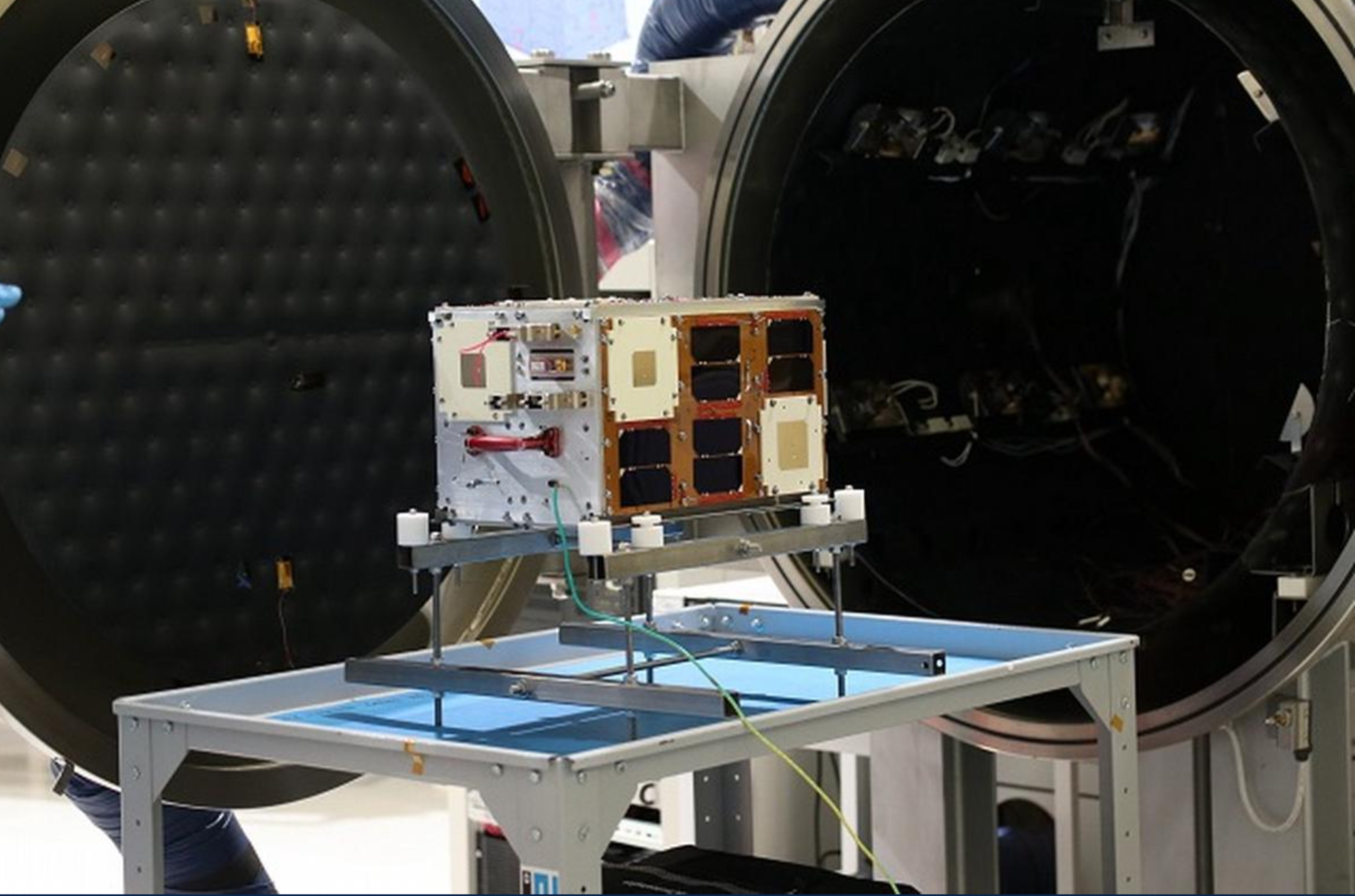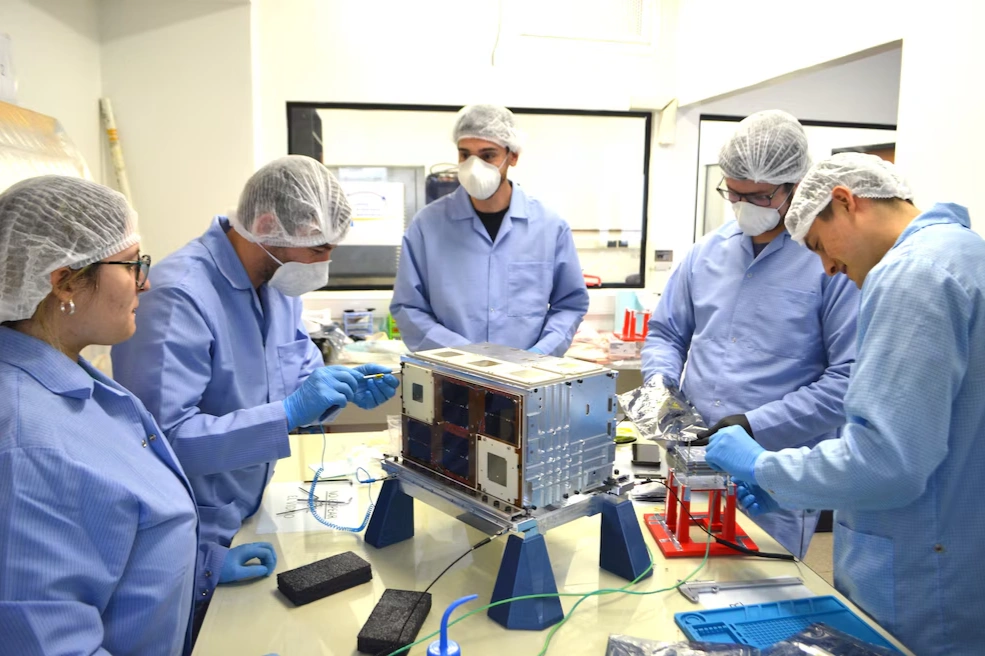

The official statement, issued in the early morning of April 2, highlights that this progress marks a turning point for the country's participation in global space projects, consolidating cooperation with the United States and with top-level international actors within the framework of NASA's Artemis II mission.
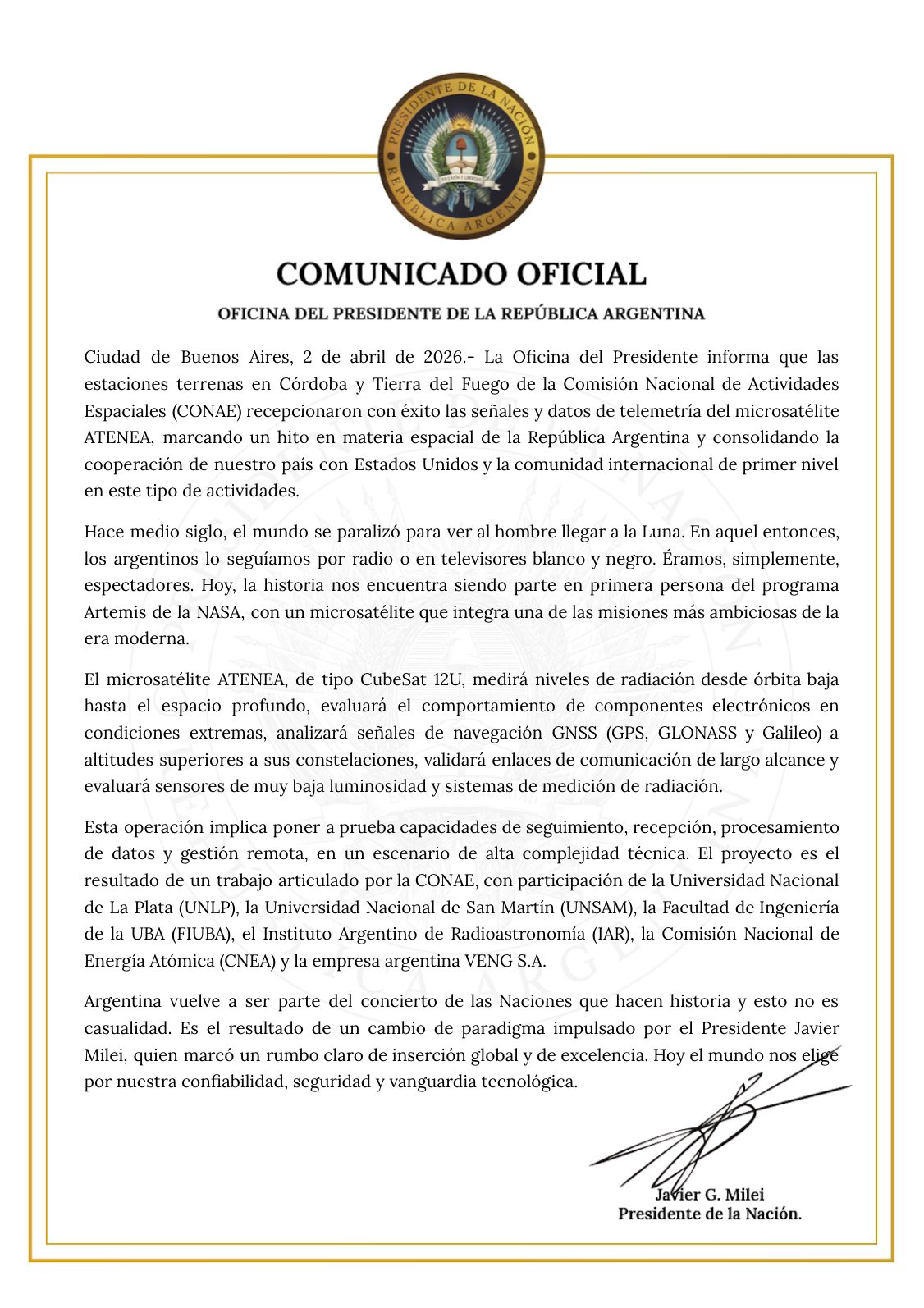
While decades ago Argentina was only a spectator of the arrival of man on the Moon, today the country is an active part of one of the most ambitious missions of the modern era, integrating its own technology into a
manned lunar exploration project.The ATENEA microsatelite, developed under the CubeSat 12U format, aims to measure radiation levels in different layers of space, evaluate the behavior of electronic components under extreme conditions and analyze GNSS navigation signals, including GPS, GLONASS and Galileo, at altitudes higher than their constellations. It will also validate long-range communication systems and very low light sensors