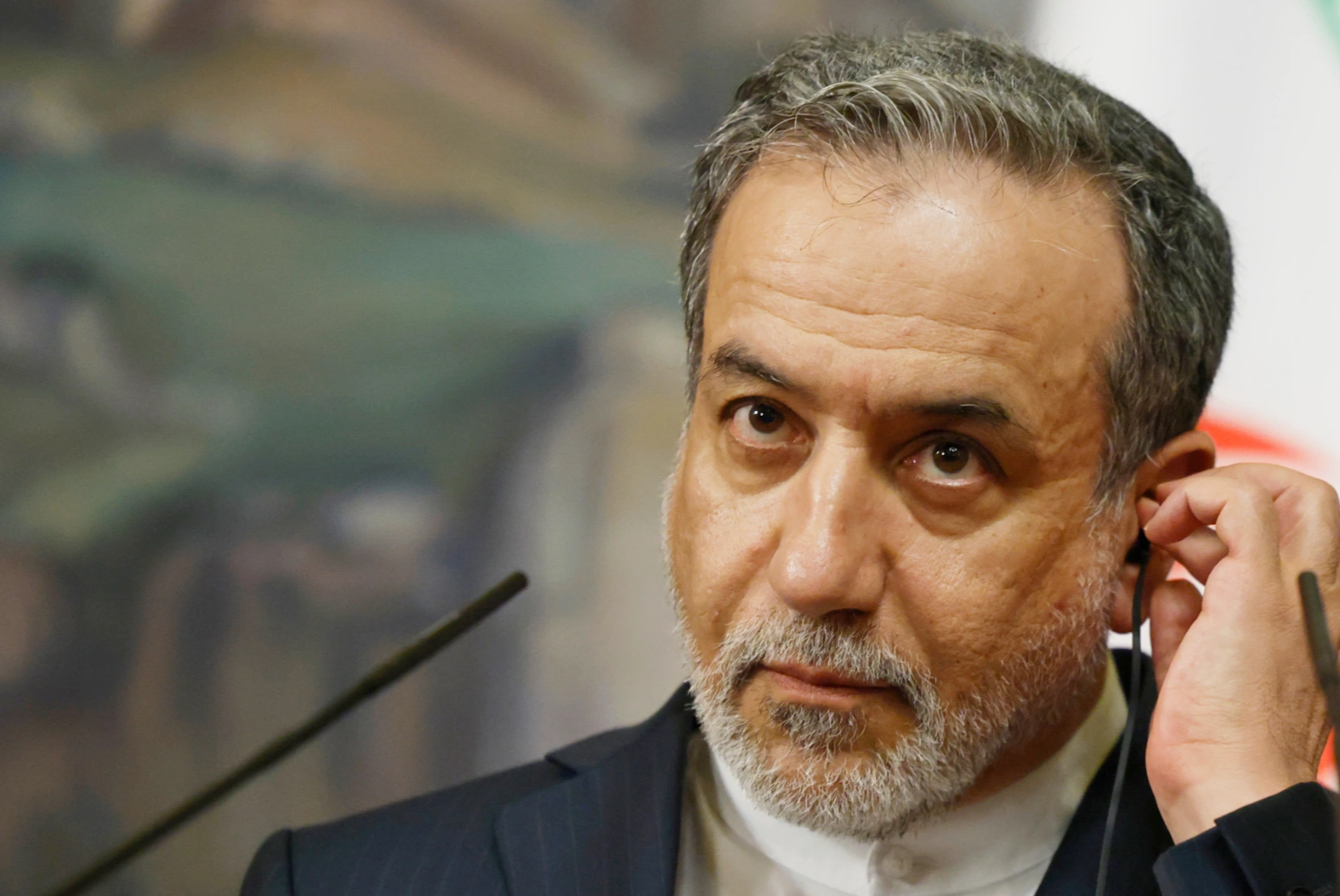
The Foreign Minister of the Islamic Republic of Iran, Abbas Araghchi, was forced on Saturday to confirm the version given by Donald Trump's special envoy, Steve Witkoff, about what happened in the nuclear negotiations prior to the outbreak of the armed conflict.
In an interview with MS NOW, Araghchi admitted that he actually mentioned to the American delegation that Iran has enough enriched material to make ten nuclear bombs, clarifying that the exact number he cited was ten, and not eleven, as Witkoff pointed out, but he maintained that with that mention he did not want to constitute a threat that would lead to war, but rather a demonstration of the magnitude of the concession that Tehran was willing to offer.
“I never said we were going to make the bombs,” Araghchi defended himself. “I said that we have 440 kilos of 60% enriched material, and that's no secret; it's in the IAEA reports. I said that this material, if it gets richer, may be enough for ten bombs, according to their own experts. And that we are willing to give it up, to dilute it, to lower it to lower levels
.”
The foreign minister's argument is not easily supported, since the process to go from 60% enriched to 95% (necessary to produce an atomic bomb) is extremely short if you already have the installed capacity and the technology to reach 60%, so his mention in a negotiation was interpreted as a warning that Iran was “on the verge” of ending the production of a dozen nuclear weapons.
Witkoff reported this situation to the president and later stated on Fox News that Iranian negotiators “boasted” that Iran had enough enriched uranium to make about eleven nuclear bombs, and that they were proud of it.
This information was processed by the Pentagon and they concluded that Iranians could bring enrichment to arms-grade levels in just a week or ten days. This analysis proved to be fundamental for Trump when he had to make the decision to approve the military attacks that led to the current Operation “Epic Fury
”.
The context that the Iranian foreign minister prefers not to remember
Araghchi's statement comes in the middle of the fifteenth day of Operation Epic Fury, with U.S. forces bombing targets on the strategic island of Kharg. The Iranian regime, which for months boasted to the world about its nuclear capacity, is now trying to reframe that same information as a gesture
of good diplomatic faith.
What the Iranian foreign minister doesn't explain is why, if the intention was to show their intention to achieve peace, Iranian negotiators chose that particular language. According to the American envoy, at that first meeting Iran insisted on its “inalienable right” to enrich uranium, rejected the American proposal for zero enrichment, and boasted that its 460 kilograms of 60% enriched uranium could produce 11 nuclear bombs. It's not exactly the language of someone who's going to negotiate in good faith.
The very chronology of events complicates Tehran's narrative. In June 2025, Israel and the United States destroyed the entire fleet of Iranian centrifuges, its weapons program and most of its three large nuclear facilities, in addition to killing most of its top nuclear scientists. After that devastating blow, Iran continued to get richer. It continued to accumulate. And when he sat down to negotiate, the first thing he did was to inform the American delegation exactly how many bombs he could manufacture
.
Araghchi's argument is that they were only “reporting” on their state of progress in their nuclear policy. The problem is that that logic requires a level of mutual trust that simply didn't exist in that negotiating room. The Iranian foreign minister himself, on another occasion, criticized Witkoff and Jared Kushner for “treating complex nuclear negotiations as a real estate transaction” — an accusation that reveals how
deteriorated communication was between the two delegations.
A regime used to threatening without measuring the consequences
A regime such as the Iranian one that for decades lied about its nuclear program to the IAEA, concealed installations and enriched uranium beyond any civil need, cannot be taken lightly by the White House, which set itself as its biggest red line to stop any attempt by Iran to arm itself
with nuclear weapons.
The Islamic Republic has been claiming that its nuclear program is peaceful for forty years, but it has also been building sophisticated centrifuges for forty years to bring uranium to a degree of enrichment that no power plant needs. And now, in the midst of a war that largely stems from that accumulation of mistrust, his foreign minister comes out to say that when he mentioned ten nuclear bombs to the Americans, he was actually negotiating to
achieve peace.
Meanwhile, the now deceased Ayatollah violently threatened in his public speeches that Allah was helping the Islamic Republic to build weapons to eradicate the State of Israel, whose small territory and high population density in its cities make it a natural target for a nuclear attack.