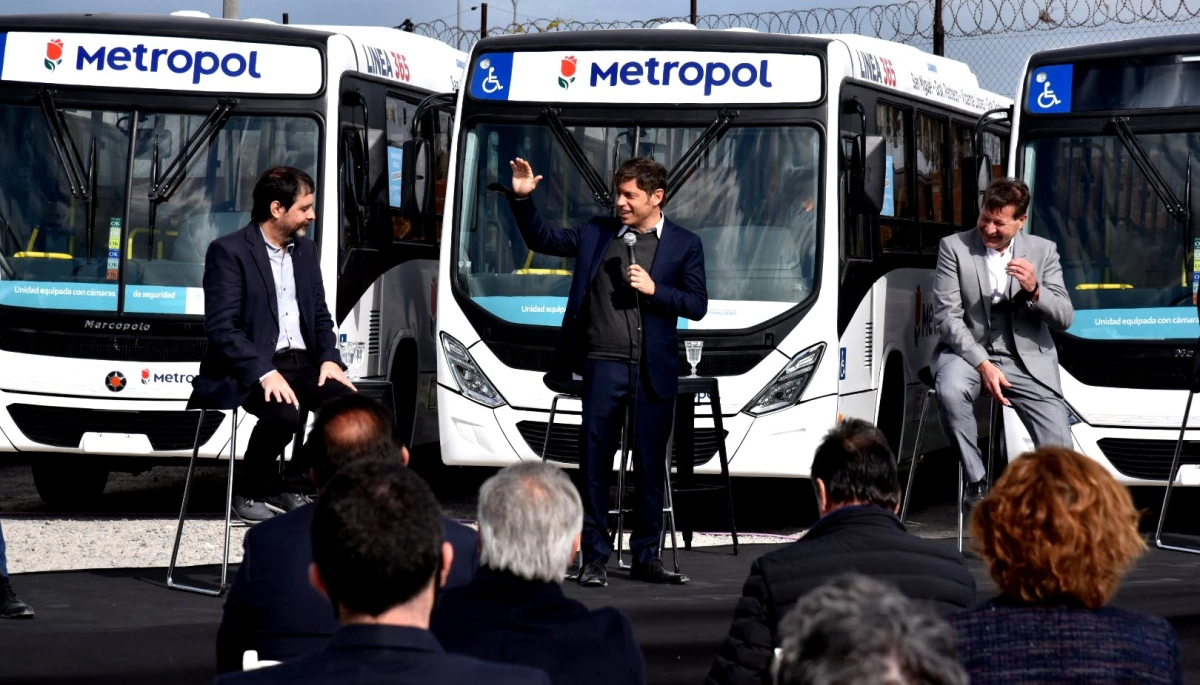
The Buenos Aires government of Axel Kicillof defined a new increase for public transport and buses under provincial jurisdiction will rise 11% starting tomorrow. The measure is once again hitting the pockets of Buenos Aires users, in the midst of provincial management that continues to transfer costs without solving the structural problems of the system
.
The increase comes just days after the Kirchner administration suspended the MESA plan, the food program that reached more than 2.1 million families with children in public schools. While Kicillof cuts food assistance in the Province, it is also moving forward with a new increase in transport
. Governor Axel Kicillof increases spending on hold while defunding social assistance.
As confirmed by the Buenos Aires Ministry of Transport, starting this Monday, an increase of 11.16% will be applied to provincial lines, ranging from 200 to 499, and to municipal lines, from 500 onwards, within the suburbs
.
With the new fare schedule, the minimum ticket for the Provincial Urban Services of Greater Buenos Aires will increase from $871.30 to $968.57, while for those who do not have a registered SUBE card it will reach $1,937.14. On longer routes, the fare will exceed $1,700, according to the reported values for trips of more than 27 kilometers
.
In Gran La Plata, the minimum ticket will increase from $948.91 to $1,054.87 starting this Monday, and will reach $2,109.70 for users without registered SUBE. The update is in addition to a series of sustained increases that the Province itself has been implementing since March 2025
.
While the Buenos Aires government justifies the increases and cuts because of the need to organize public accounts, the Kicillof administration continues to allocate millions of dollars to communication, officialadvertising and political structure. At the same time, Buenos Aires Peronism itself appears to be more focused on its internal reorganization and on Kicillof's national projection than on solving
the Province's specific problems. Axel Kicillof, governor of the province of Buenos Aires.
The MESA plan case exposed that contradiction. The program, created to assist vulnerable families, had already experienced a reduction in the amount of food delivered: the boxes went from having around 15 products to just 9. Now, in addition, he was suspended for 90 days, on the grounds of lack of funds and the fiscal system.
The decision generated tension even within Buenos Aires's own Peronism. Mayors and leaders of the PJ questioned the social impact of the measure, while the provincial government tries to hold the Nation responsible for the lack of transfers. However, the underlying problem is once again the same: the priorities of spending in Kirchnerism