The Minister of Economy defended structural reforms, questioned those who ask to devalue and confirmed advances in infrastructure, mortgage credit and negotiations with the IMF amid political and judicial resistance
The minister also firmly rejected the devaluation proposals promoted by some economists. For Caputo, true competitiveness does not come from the exchange rate but from tackling underlying problems: “To attack the Argentine cost is to attack the tax issue, to lower taxes and regulations, and to improve logistics. That's the way to lower it. In the past, Argentina always eluded the root of the problem.” In line with this vision, he insisted that the Government will maintain its strategy of tax reduction, deregulation and logistical improvement as the central axis of the economic model.
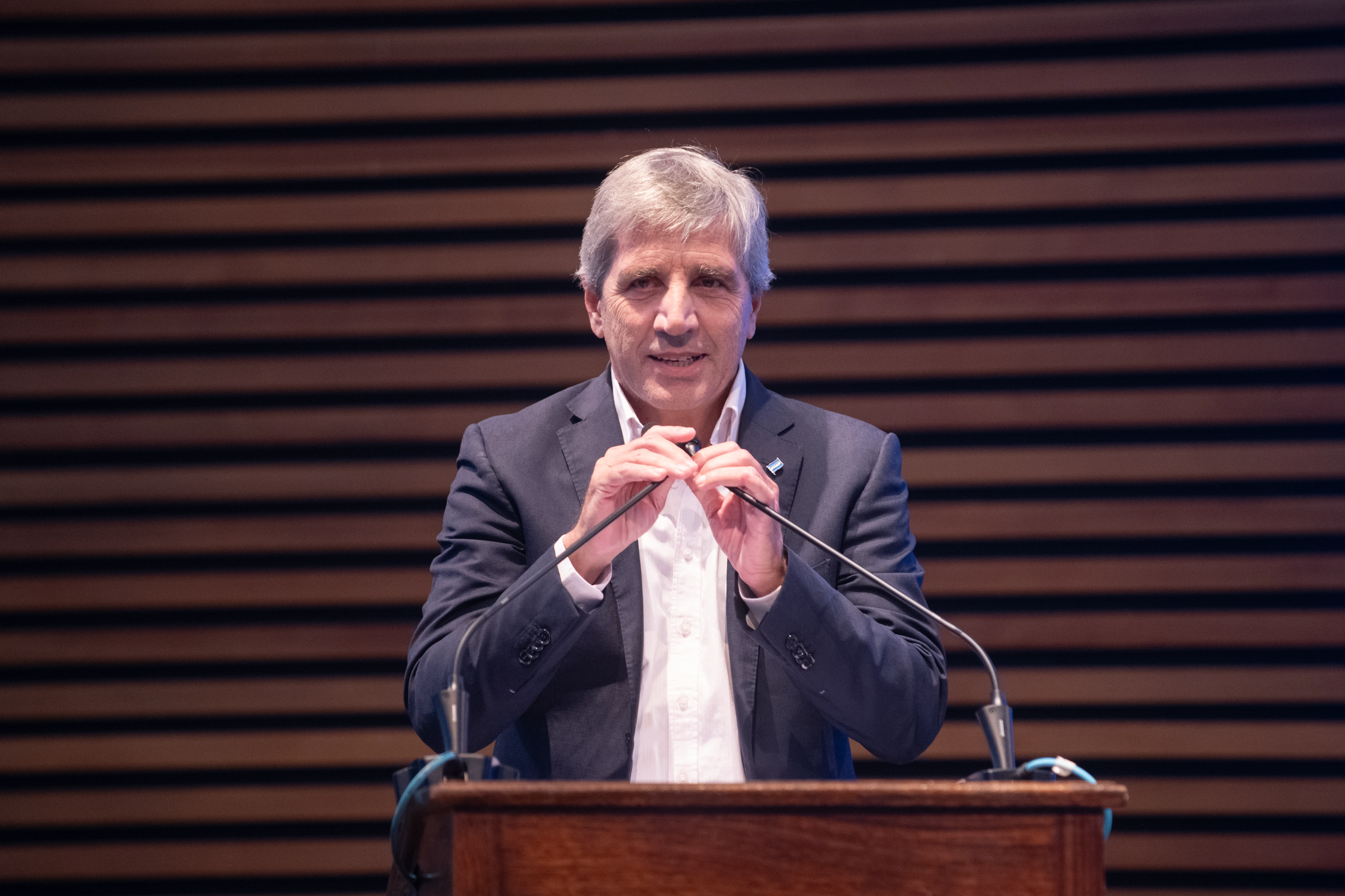
During his presentation at the close of a meeting organized by the Atlantic Council, held at the PalacioLibertad and with the participation of representatives from the public and private sectors, the head of the Treasury Palace, Luis Caputo, defended economic management and made it clear that there will be no setbacks. “The path of change is inexorable: it came to stay. There is no turning back. There is no way for us to correct the course. It doesn't matter what the press or the opposition says,” he said. Caputo began his speech with a strong criticism of media and political sectors that question the official program: “To believe that most people can vote to go back to hell is something crazy. We arrived with the mission of generating profound change and that generates resistance. Today we are seeing the resistance of a journalism sector that is trying to install a situation that has little to do with reality,” he said
.
With regard to structural reforms, the minister explained that the Government is making progress in regulating labor reform, despite the precautionary measure issued by the Justice and which stopped 83 articles, including the Labor Assistance Fund (FAL). As he explained, the central objective is to promote the formalization of employment: “What we are looking for is greater formalization. This will mean higher revenues, which will allow us to continue to lower taxes
.” Luis Caputo and Javier Milei
He also highlighted the submission of the Tax Innocence Act and the intention to develop the capital market oriented to the real economy. In this framework, labor reform and the initiative to encourage Argentines to take dollars off the mattress appear as key pillars for the recovery of activity. However, he acknowledged that the first front faces judicial obstacles — which the Government will appeal — and that the second has not yet achieved a significant increase in private sector dollar deposits after several months of
validity.
In terms of infrastructure, Caputo announced an ambitious plan that seeks to transform the country's road network. He assured that 9,000 kilometers of road corridors will be tendered by June, with works in progress, and that work is being done together with Federico Sturzenegger's team to grant an additional 12,000 kilometers of national routes. In addition, it confirmed the transfer of routes to the provinces, many of them with funding included. “Phenomenal changes are going to be seen in Argentina's road structure in the next two years,”
During the event, Caputo was accompanied by key figures from the economic team, including Deputy Minister José Luis Daza, Finance Secretary Federico Furiase, Director of the Central Bank Martín Vauthier and representative of the Investment and Foreign Trade Bank (BICE), Felipe Nuñez.
Caputo will participate in the spring meetings of the International Monetary Fund and the World Bank
In the past few hours, both Furiase and Núñez had received public support from the minister for having accessed mortgage loans from Banco Nación Argentina (BNA), a policy that Caputo actively promotes. “They took them on my recommendation. I suggest that everyone access mortgage loans because I consider it a unique opportunity. First, because it benefits the country: the development of mortgage credit has been a fundamental engine of reactivation, even the most important,” he said in an interview with LN+
.
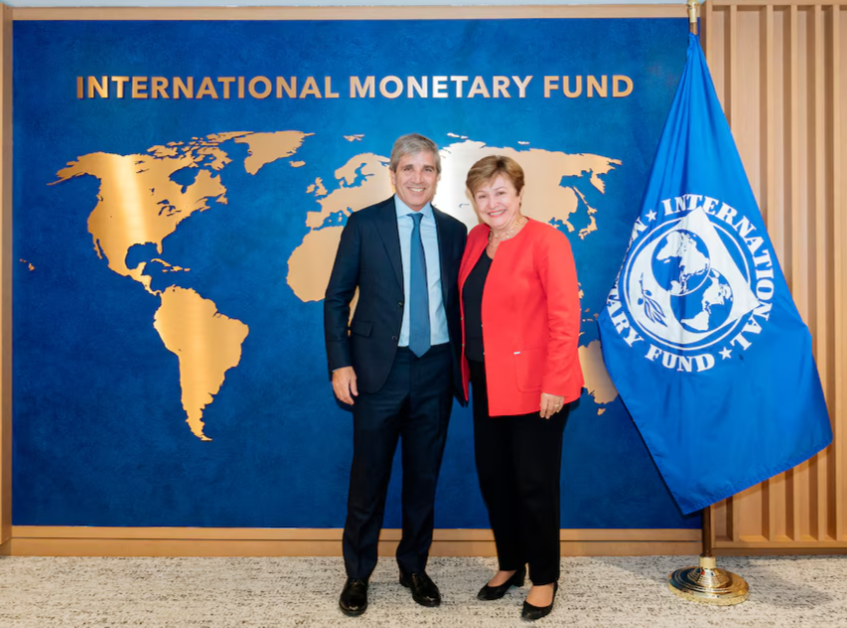
At the international level, it was confirmed that Caputo will travel next week to Washington, United States, to participate in the spring meetings of the International Monetary Fund and the World Bank, which will take place from April 13 to 18. The announcement was made by the vice-president of the Atlantic Council, Jason Marczak, and later ratified by official sources from the Ministry of Economy
.
This trip takes place within the framework of negotiations for the second revision of the agreement with the IMF. After the visit of the organization's mission to Buenos Aires in early February, and the subsequent trip of a delegation led by Daza at the end of that month, the Government hoped to close the discussions at the technical level before moving forward with the organization's bureaucratic process. Now, the expectation is that, after the spring meetings, the IMF will discuss the new agreement with Argentina. If approved, key details will be known, such as the reserve accumulation goal of the Central Bank of the Argentine Republic (BCRA) and possible additional requirements on the economic program.