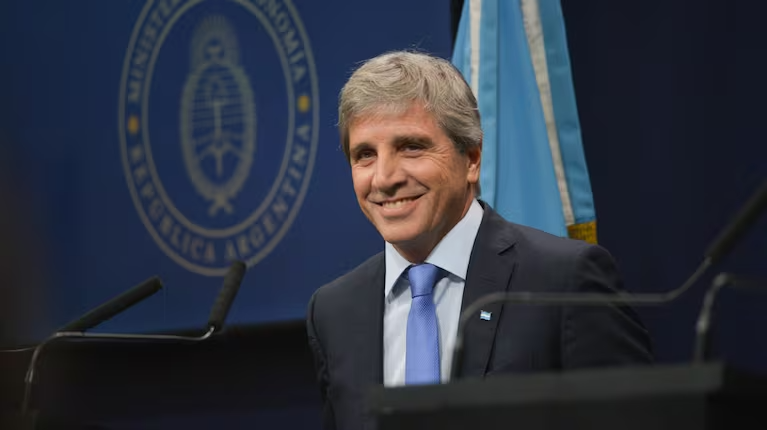

At the macroeconomic level, the minister flatly rejected the idea of stagflation. “There is no stagflation, the data shows the opposite. Data measures reality and reality is incontrovertible. We are practically at a record not in everything, but in a lot of things: GDP, economic activity, private consumption,” he said. In addition, he questioned the role of certain media sectors: “The media try to install what you don't notice, but you can clearly tell. They are trying to establish that there is a mega-recession at a time when consumption is at an historic peak
.”Although he admitted that in February there could be a slight slowdown in activity and a rise in inflation “due to the war”, he highlighted specific indicators of recovery, such as the 44% growth in motorcycle sales. “Before, people burned their money because of inflation. Today there is credit. Consumption changed. The data are unquestionable,” he emphasized.
In relation to the fall in tax revenues for eight consecutive months, Caputo relativised the fact: “We take out taxes; but some in their brutality do not take into account those effects,” he added, also pointing out that there is “a little more informality”.
As he deepened the discussion between data and perceptions, he again questioned part of journalism: “A large part of journalism ignores data,” he said, and critically recalled former minister Aníbal Fernández when he pointed out: “we had a minister who had the feeling that there were fewer poor people in Germany.”
Finally, the minister denied that there is an exchange rate backlog, supporting his position on the record trade surplus in January, and defended the taking of mortgage loans by State officials. As he explained, it was a policy driven by his portfolio: “I induced them,” he revealed, and stressed that these loans represent a minimum portion: “out of more than 27,000 mortgage loans, those taken by officials do not reach 0.2 percent.” In addition, he highlighted the role of credit as an economic engine: “Mortgage credit is a phenomenal engine of reactivation
.”