The MB.DRIVE ASSIST PRO system will guide the vehicle from end to end, even in heavy traffic, and will arrive first in Germany and the United States as level 2 technology
Mercedes-Benz explained that the development was carried out under the regulatory framework of the United Nations for driving assistants. The company believes that this regulation will facilitate the incorporation of the technology in other markets, although it has not yet announced new expansion dates.
When it will arrive in Germany and the United States
The first step will be an early access program that will begin in December 2026. In the United States, selected customers from California will participate, while in Germany, tests will be conducted in Stuttgart and Munich. In these latter cities, there will be a particular focus on the urban point-to-point assistant.
The general commercialization of MB.DRIVE ASSIST PRO for urban journeys is expected in the first half of 2027 in Germany and the United States. The function will be available for vehicles with different powertrains.
As for hands-free driving on highways, it will arrive in the United States during the spring of 2027. In Germany, this mode will be enabled by the end of 2026.
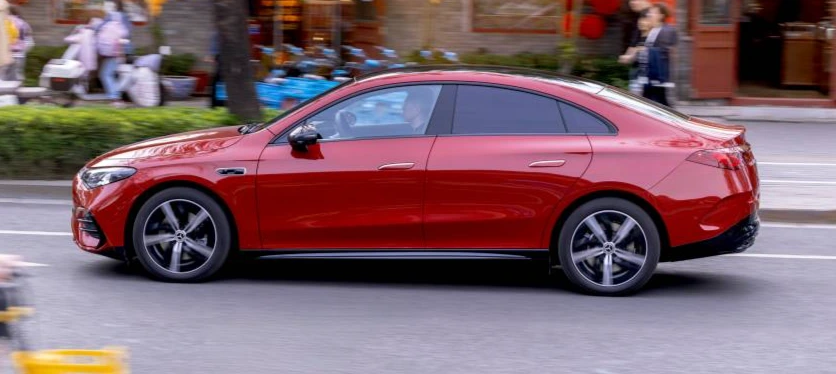
The company also highlighted its international strategy and stated that it will be the first manufacturer to offer technologies of this kind in the United States, Germany, and China. In the Chinese market, the function has already been available since the launch of the new CLA.
In the United States, some models for the year 2027 already include the necessary hardware from the factory. These include the electric CLA, the GLE, the GLS, and the S-Class. Starting with the 2028 model year, other vehicles from the brand will also be equipped with the technology. Owners of compatible units will be able to enable the functions through remote updates.
Prices and differences with Tesla
Mercedes-Benz has not yet established how much it will cost to use the new functions. The company anticipates that it will announce the compatible models and fees before the commercial launch.
Customers with the necessary equipment will have a one-month free trial. According to reports, they will then be able to subscribe to the service for one month, one year, or three years.
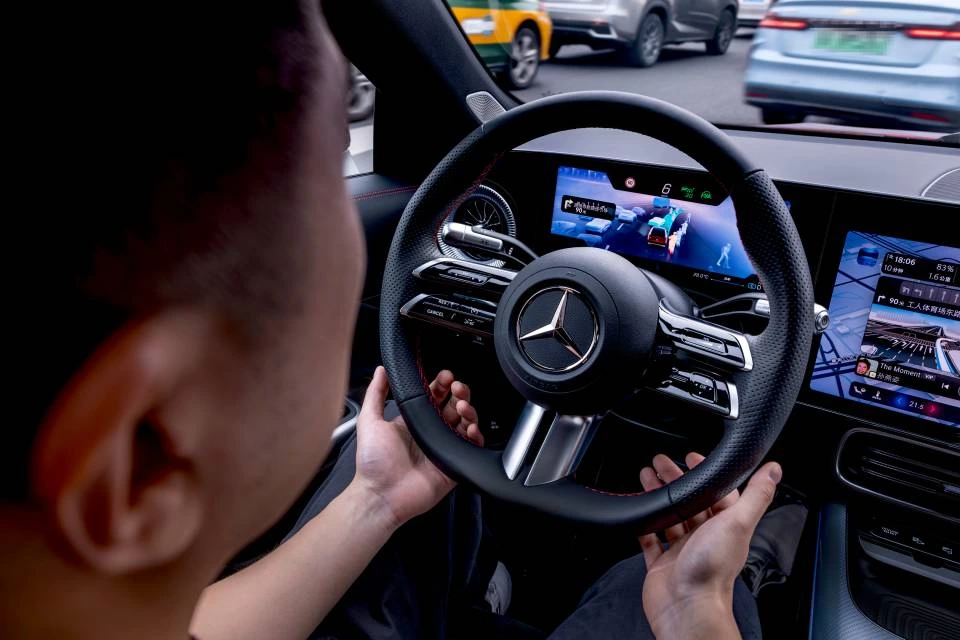
One of the main differences compared to Tesla's Full Self-Driving is that Mercedes-Benz requires keeping hands on the wheel during urban driving. On highways, however, it allows taking them off within the established limits for each market.
With this proposal, the German automaker aims to advance towards increasingly automated driving while still maintaining human supervision. The start of testing in December will be the first step before its commercial expansion in 2027.
Mercedes-Benz confirmed that in 2027 it will offer a new driving assistance system capable of managing almost an entire journey, from the starting point to the destination indicated in the navigation system. The technology, called MB.DRIVE ASSIST PRO, will be able to perform complex maneuvers in urban streets and navigate through congested areas, although it will require the driver to keep their hands on the wheel and pay constant attention.
The company presented the development on November 16 along with a second technology intended for highways, which will allow the driver to take their hands off the wheel under certain conditions. Both solutions correspond to level 2 automation, meaning the responsibility for driving remains solely with the person in the driver's seat.
How the new driving assistant works
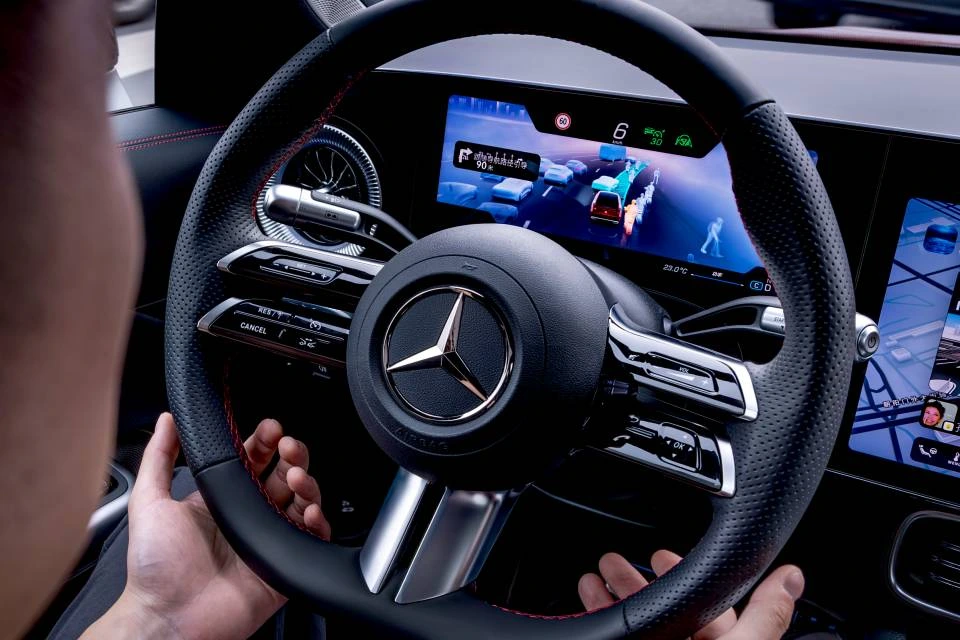
Once the user inputs the destination into the navigation system, they can activate MB.DRIVE ASSIST PRO using a button located on the steering wheel. From that moment on, the system manages different situations during the journey and performs maneuvers that typically require constant intervention.
Among its capabilities are exiting highways, changing lanes, merging onto the appropriate road, turning at intersections, and stopping or proceeding at traffic lights. It can also manage situations of intense urban traffic.
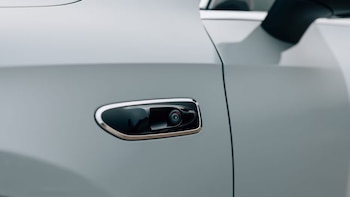
To interpret the environment, Mercedes-Benz incorporated a set of 27 detection elements: ten cameras, five radars, and twelve ultrasonic sensors. All this information is sent to a computer with processing capabilities of up to 254 TOPS.
The software combines proprietary developments from the German automaker with technology from Nvidia, whose involvement was announced by the company during October.
Two modes for streets and highways
The second technology presented is specifically designed for highways and offers an important difference: it allows the driver to take their hands off the wheel while the system controls the vehicle.
In Germany, this mode can operate at speeds of up to 130 kilometers per hour, while in the United States the limit will be 85 miles per hour, equivalent to approximately 137 kilometers per hour. Its use will be restricted to controlled-access highways and specific traffic conditions.
Additionally, the assistant will be able to initiate lane changes without the driver having to confirm them beforehand.
However, neither of the two technologies represents full autonomous driving. As level 2 systems, the driver must continuously supervise the operation and be prepared to intervene when necessary.