The Brazilian Senate rejected the candidacy of Jorge Messias, proposed by President Luiz Inácio Lula da Silva to serve on the Supreme Court, in a vote that marks a historic event unprecedented in more than 130 years.
The candidate, the current State Attorney General and a figure close to Lula, failed to gather the necessary votes in a session marked by strong political tensions. The result was overwhelming: 42 votes against and 34 in favor, far from the minimum required for approval
.
This is the first rejection of a presidential candidate for the highest court since 1894, turning the decision into an institutional and political coup of great magnitude for the government.
The defeat exposes Lula's difficulties in building majorities in Congress, where he faces an adverse balance of forces dominated by sectors of the center-right and opposition.
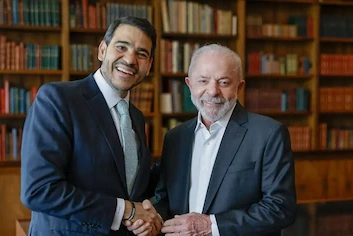
The candidate for the Brazilian Supreme Court, Jorge Messias
The lack of consensus around Messias reflected both political resistance and questions about his closeness to the Executive.
During the debate, opposition voices criticized that the appointment responded more to criteria of political loyalty than to judicial independence, an argument that ended up weighing on the final vote.
The electoral context also played a role. A few months before the presidential elections, several senators chose not to endorse a long-term appointment promoted by the current government, in a scenario of
increasing political polarization.
In addition, the maneuver exposed internal tensions within the political system itself. The president of the Senate, Davi Alcolumbre, played a key role in the rejection, promoting alternatives other than Lula's candidate, which further weakened
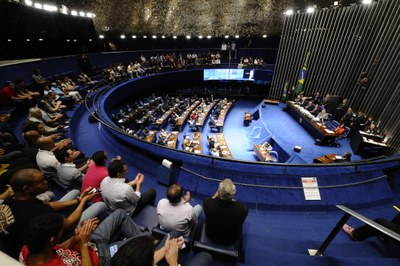
the chances of approval. The Brazilian Senate
The result not only delays the filling of a vacancy in the Supreme Court, but also limits the president's ability to influence the composition of the country's highest judicial body
.
In political terms, the episode represents a wake-up call for the government. The impossibility of securing the approval of one's own candidate shows a loss of room for maneuver in Congress and anticipates a more complex scenario for
future initiatives.
The vote leaves a clear signal: the balance of power in Brazil is going through a period of greater tension, where the Executive is no longer guaranteed the approval of its most strategic decisions.