The international market is supported by several factors. One of the most important is the increase in energy prices, with oil above US $105. This jump has a direct impact on fertilizers, diesel, transportation and production costs. In an input-intensive crop such as wheat, this increase is quickly transferred to quotations
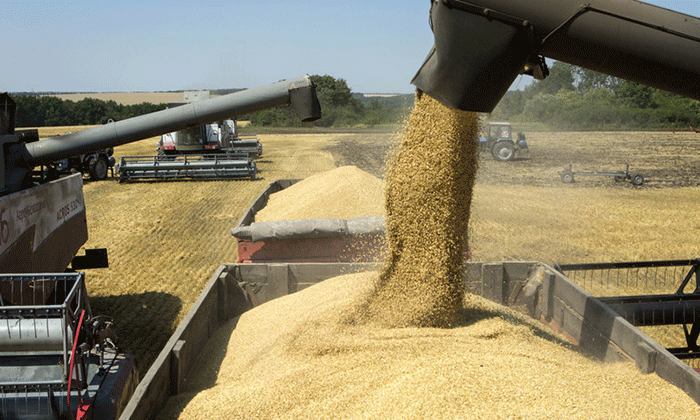
The international price of wheat once again showed a strong rise and reached more than US $240 per ton, a level that had not been seen for almost two years. The improvement occurred in the midst of a global scenario marked by production problems in the United States, higher energy costs and signs of a lower supply for the new campaign
.
The price movement ignited a clear signal for the market: wheat regained international prominence in a context of productive uncertainty. For Argentina, which is coming off a record harvest and maintaining an active export, the new scenario opens a window of opportunity.
The rise comes just as Argentine producers define plans for the 2026/27 campaign. According to the Buenos Aires Grain Exchange, the national harvest would be 6.5 million hectares, with a year-on-year drop of 3%. However, the best prices have already begun to be seen in local operations. There are already new wheat businesses totaling US$230 per ton, which implies an improvement
.
The other focus is on the United States harvest. According to USDA data cited by market analysts, only 30% of winter wheat lots are in good to excellent condition, while nearly 70% of productive areas have some degree of drought. At the same time, spring wheat planting is also progressing below the pace of last year and the historical average.
Uncertainty also affects Europe, Ukraine and Russia, where winter wheat is entering a key phase. Although there is no serious damage yet, the drought in Eastern Europe and the influx of cold air into productive areas add pressure on prices
.
In this context, Argentina appears to be in a competitive position, especially against Brazil. Argentine wheat reaches the Brazilian market with an advantage over other origins due to lower freight costs and tariff benefits. This condition makes it possible to sell at better FOB prices and to transfer part of that improvement to the domestic market