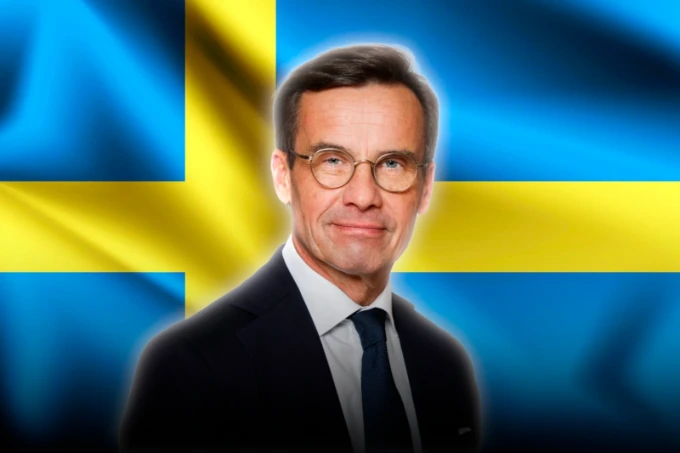
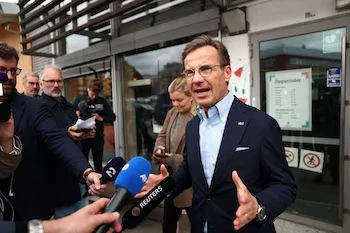
The Prime Minister of Sweden, Ulf Kristersson, submitted his resignation letter to the President of Parliament on Thursday, after electoral authorities announced the final count of the legislative elections held on Sunday. The result left the center-left bloc led by the Social Democrats with a narrow parliamentary majority and paved the way for Magdalena Andersson to attempt to form a new government.
According to the Swedish electoral authority, the center-left parties obtained 176 seats, compared to the 173 secured by the center-right bloc that supported Kristersson's government. The result still needs formal certification, but the opposition's advantage places Andersson in a position to begin negotiations to form a new administration.
Andersson, who in 2021 became the first woman to hold the office of Prime Minister of Sweden, stated that the result represents a change of direction for the country after four years of government policies focused particularly on tightening measures against immigration and crime.
''Recently, there are those who have not felt welcome in our country,'' Andersson said during a speech broadcasted via X. ''To you, I want to say: a new era begins now. That is what the Swedish people have voted for''.
The Prime Minister of Sweden submitted his resignation after the victory of the left coalition in the elections
However, the electoral victory does not guarantee a quick formation of the next government. Andersson will need to negotiate with several opposition forces to gain sufficient parliamentary support. One of the main obstacles is the Center Party, which has indicated that it is not willing to form a coalition that includes the Left Party. The Greens also appear as a possible member of a future center-left government.
The Social Democrats have already begun contacts with other opposition parties. Swedish media reported that Andersson's party invited other opposition forces to hold talks, although no details about potential agreements were disclosed.
Meanwhile, if Andersson fails to gather the necessary support, the right-wing bloc could attempt to negotiate with the Center Party to form an alternative. Analysts cited in the electoral context consider it unlikely that this party will change its position, although the scenario will remain open in the coming weeks.
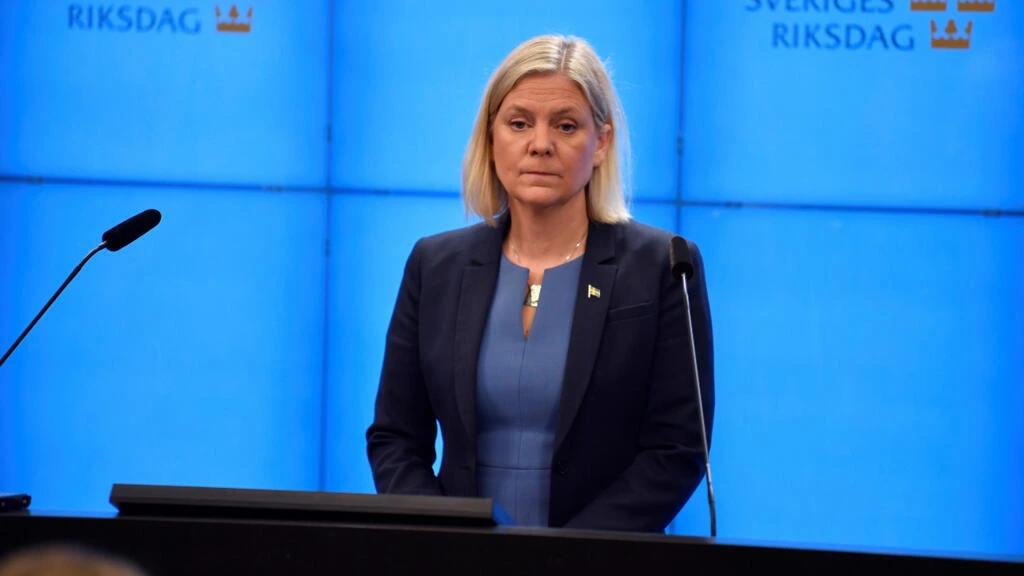
Magdalena Andersson, the left-wing candidate to assume the role of prime minister, faces a complex landscape, as there are parties that are unwilling to be part of a space with left-wing groups
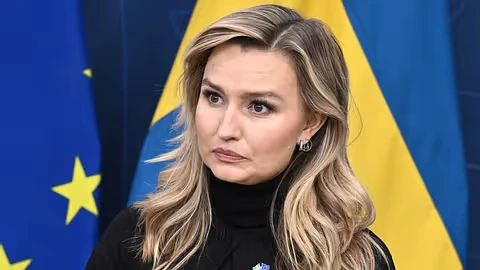
The leader of the Christian Democrats and outgoing Deputy Prime Minister, Ebba Busch, summarized the uncertainty by stating that it is still ''to be seen'' what will happen next.
The result also represents a setback for the Sweden Democrats, a right-wing party that had been a key partner in Kristersson's bloc. The Prime Minister had planned to incorporate this force into a future coalition to ensure a parliamentary majority, but the Sweden Democrats recorded a drop in their percentage of votes for the first time since entering Parliament in 2010.
With Kristersson's resignation, Sweden now enters a phase of parliamentary negotiations. If Parliament rejects four consecutive candidates for the position of Prime Minister, legislation stipulates that new elections must be held. For now, Andersson will need to try to convert the electoral majority of 176 seats into a parliamentary majority capable of sustaining a new Executive.
The outgoing Deputy Prime Minister of Sweden left the door open for a possible return of the right-wing coalition to government if the left fails to reach a consensus