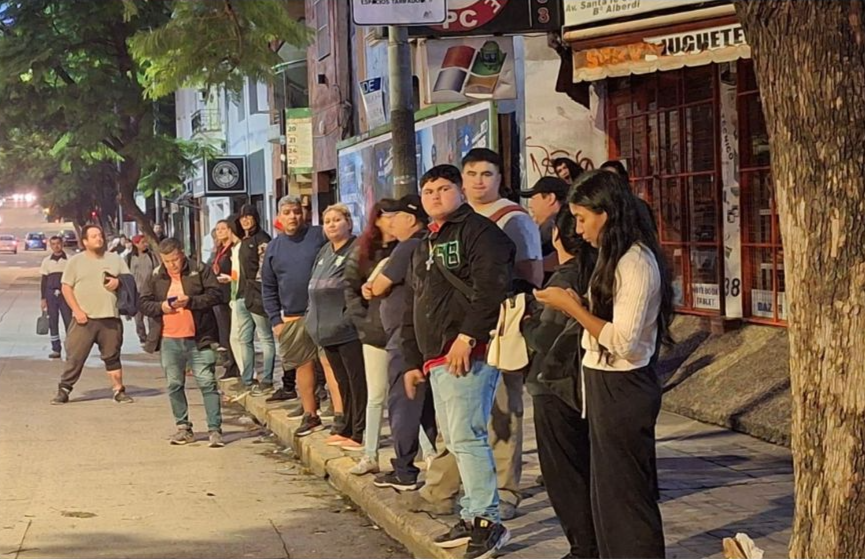

While officials of the Municipality of Córdoba reject the 50% discounts offered by private companies, the bus system remains in “contingency” until April.
Compartir:
The Municipality of Córdoba announced that the public transport contingency plan will be extended, at least, until April 1. Under a management marked by improvisation, Undersecretary Eduardo Ramírez confirmed that the service will operate at reduced frequencies throughout March. The abrupt departure of the company FAM left key corridors without service, forcing a last-minute restructuring
.
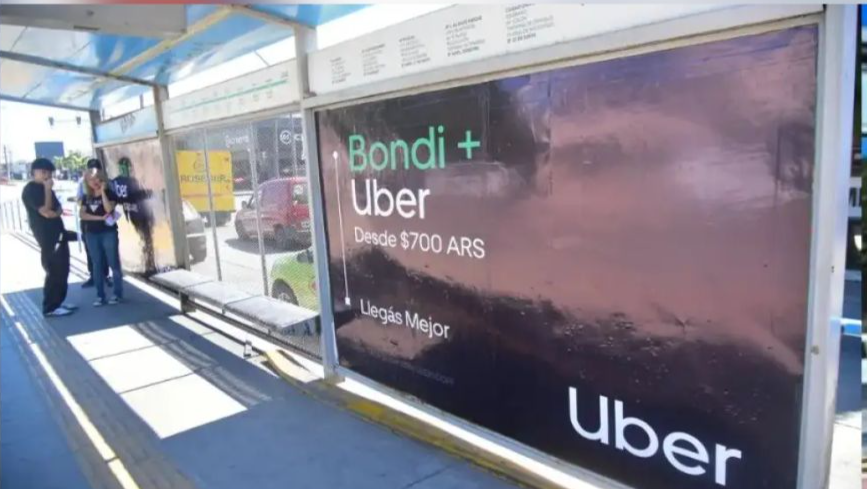
In this crisis scenario, the company Uber launched the “Uber + Bondi” campaign with discounts of 50%. The private initiative seeks to resolve the short sections of up to 4 kilometers that the municipality does not cover. However, the Secretary of Government, Rodrigo Fernández, rejected any integration with technological applications. The official defended an autonomous state model that today does not meet the user's basic needs
.
The municipality argues that the system “is stable”, despite the interruptions suffered by thousands of people from Córdoba. DanielPasserini's management refuses to recognize legitimate market solutions that already benefit the citizen's pocket. This dogmatic position ignores the fact that Uber operates under a current ordinance and municipal authorization. While the public sector is hampering, the private sector offers immediate savings and efficiency

. Uber launched the “Uber + Bondi” campaign with discounts of 50%.
New operators and the cost of statism
Starting in April, the Puntana-based company SolBus will take over corridor 7 with 80 units, of which 62 are new.
For its part, SIBus will cover corridor 5, adding 22 zero-kilometer buses to the system.Despite this supposed normalization, corridor 2 will remain under the management of the state company Tamsau. The municipality maintains this public structure waiting for private offers that guarantee real profitability
.
The local administration imposed a regulatory framework that prohibits apps from charging less than a city ticket. Currently, a ticket in Córdoba costs 1,720 pesos, limiting price competition in the market. The ruling party insists that there will be no add-ons other than “more collective and more frequencies”. This statist vision clashes with the reality of a city that demands intelligent and economic mobility
.
The institutionality of transport should not be an excuse to block private innovation. Uber's promotion is temporary, but it highlights the lack of modern alternatives in current management. The people of Córdoba continue to pay the costs of a system that prioritizes bureaucratic control over passenger well-being. The challenge for April will be to demonstrate if the new contracts end the permanent emergency cycle.
Under the management of Passerini, Córdoba capital is living in a state of crisis and permanent improvisation