For more than five years, the Justice intervened on several occasions to determine that the child should be left under the care of his father, Claude Staicos, after verifying a systematic impediment of contact on the part of the mother.
The civil resolution, ratified by higher authorities, concluded that the child should be left in the care of his father after years of obstructions to the parent-child bond and repeated breaches documented in the file.
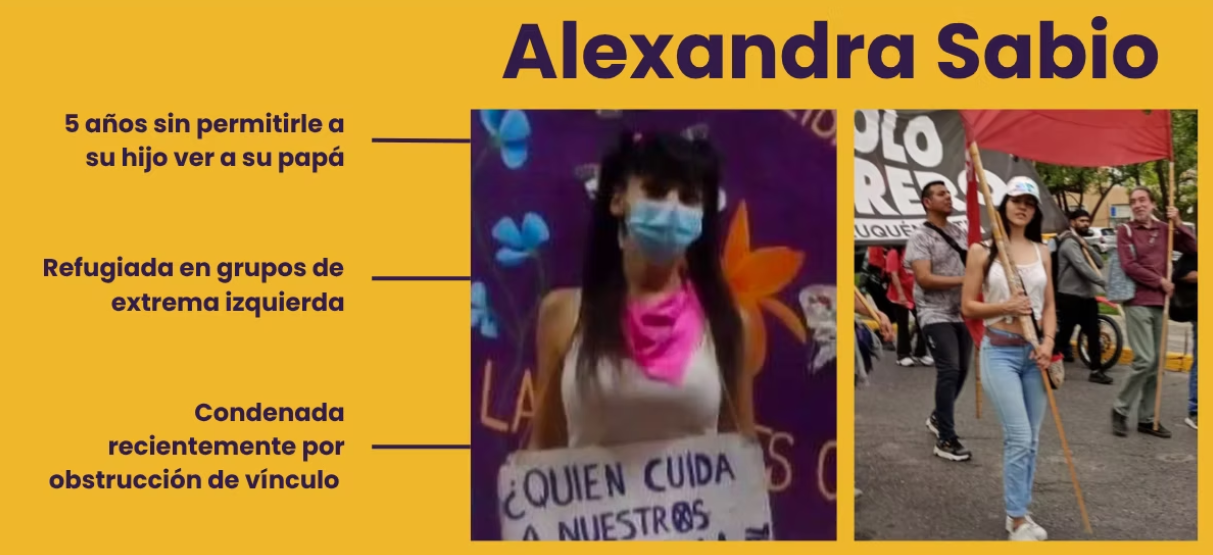
The M case returned to the public agenda in the midst of a strong controversy generated on social networks, where left-wing political sectors and ideological leaders promoted a public campaign in support of the child's mother.
However, the content of the judicial files shows a different scenario from the one described: the Civil Justice decided to grant unilateral care of the child to his father, Claude Staicos, through a ruling later ratified by higher authorities and now final.
Five years without contact with his father or with the entire parental family
One of the most important aspects that emerges from the judicial proceedings is that for more than five years the minor remained completely separated not only from his father, but also from his entire
paternal family.
During that period, according to the file, the boy had no contact with his sister, grandmother, uncles or paternal cousins, despite the existence of judicial decisions ordering the connection to be allowed.
Even on special dates such as Father's Day, birthdays or Children's Day, video calls or minimal communications could not take place between the child and their parental environment.
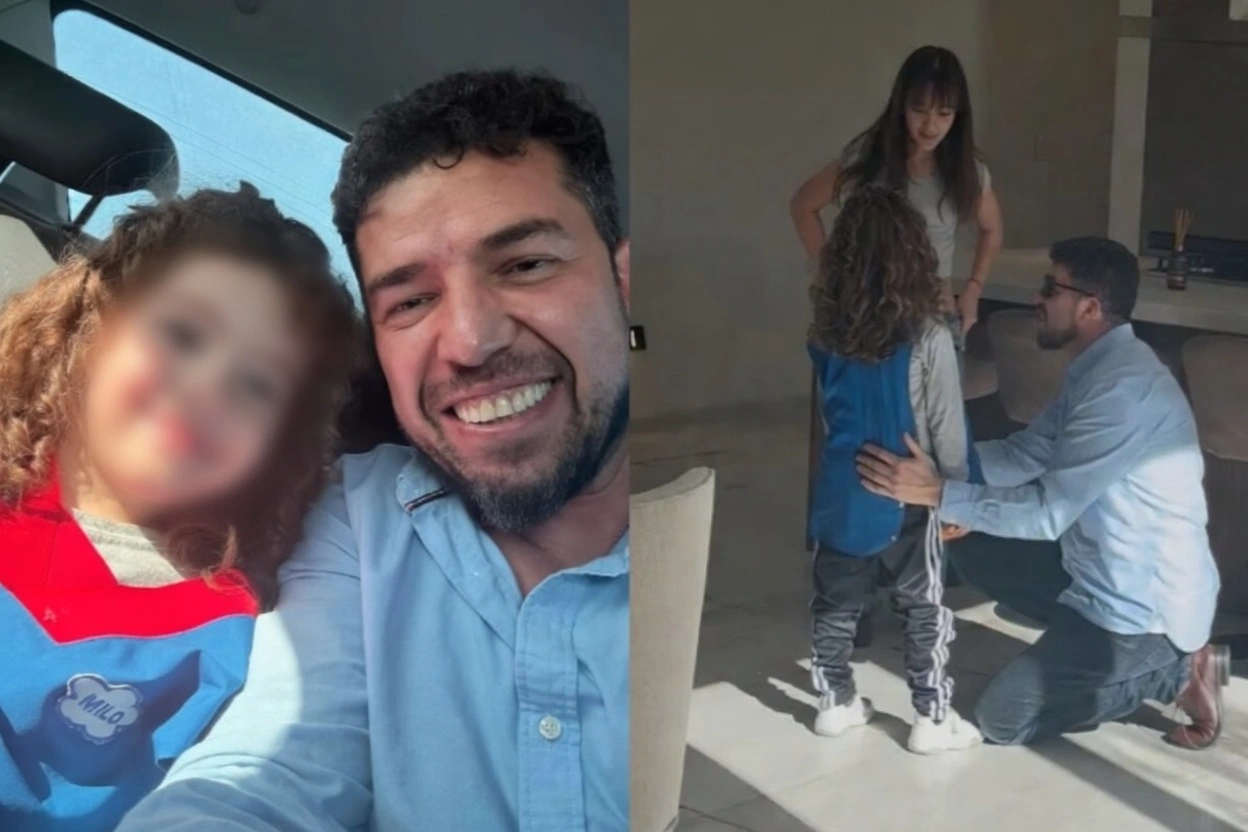
Image taken from social networks
The father was only able to see his son 62 hours in court for years
In the midst of the prolonged conflict, Claude Staicos was barely able to see his son for 62 hours in total over several years, under extreme criminal judicial pressure and only within judicial headquarters, with strict controls due to the permanent disturbance and harassment of the mother to
try to prevent or frustrate these encounters.
This institutional oversight was carried out through the presence of child defenders, psychologists, social workers, security personnel and judicial oversight.
According to those close to the file, after several of these encounters, subsequent complaints were filed against the father, which were finally dismissed due to the lack of sufficient evidence.
They denounce extreme maneuvers to prevent the parental bond
. In the
most delicate situations ventilated in the context of the conflict, those close to the case maintain that there were various maneuvers aimed at hindering
or preventing the reconnection between the child and his father.
Among them, they point out episodes in which the minor would have been hospitalized and also his declaration as a person with disabilities without a justifying condition, measures that would have been used to hinder judicially ordered encounters.
Political leaders and left-wing militants promoted the public campaign in support of the mother. The campaign of public support for the mother of the child was not limited to spontaneous publications on
social networks, but was actively accompanied by various political, trade union and militant leaders mainly linked to left-wing sectors and trade union groups in
the region.
Among those who participated in the demonstrations and public actions in support of the mother are leaders and militants such as the provincial deputy for the Socialist Left Julieta “Mechón” Ocampo, the union leader Angélica Lagunas, the legislator Gabriela Suppicich, members of ATE and ATEN, as well as militants linked to theWorkers' Party, Socialist Left, Trotskyist groups and regional feminist groups The boy did not even know his real surname until he was 5 years
old Another fact that
It had a strong impact on those who followed the file because, as it transpired in the case, the minor only became aware of his real surname at five years of age, when the process of rapprochement with his father began
.
Until then, according to sources linked to the file, the boy was completely unaware of part of his parental identity.
The psychologist who publicly supported the mother's version was suspended for three years
.
Parallel to the main file, one of the most visible professionals supporting the maternal position was also at the center of the controversy
.
This is the psychologist Claudio Marín, who was suspended for three years by the Ethics Court of the College of Psychologists Alto Valle Zona Oeste after it was determined that he engaged in multiple behaviors incompatible with proper professional practice
.
The grounds for the sanction included public statements about the case, media exposure of the judicial process, comments on social networks about the parties involved, breach of the duty of confidentiality and actions considered contrary to the professional framework. It was also questioned that the psychologist had taken actions aimed at preventing contact between father
and child.
Despite the reconnection process, they denounce the mother's unwillingness to resume contact.
Currently, while the minor remains under the care of his father, the Justice would have launched a formal process to gradually rebuild
the mother-child bond.
However, according to sources close to the file, the mother would not be showing an active will to comply with the conditions set within this reconnection process.
Instead, they maintain that he maintains a presence at marches, public demonstrations and social media campaigns focused on questioning the judicial decision and publicly discrediting the father.
The case reopens the debate on false complaints and manipulation in parental conflicts
Specialists in family conflicts have been warning for years about the recurrent use of cross-complaints, unfounded accusations and smear campaigns as tools in litigation for personal care and obstruction of connection
.
Several experts argue that this type of practice often ends up directly harming the child, by deepening the conflict and hindering the reconstruction of healthy family ties.