
La Derecha Diario logo
ESX logoInstagram logoYouTube logoTikTok logo
ARGENTINABOLIVIAECUADORISRAELMEXICOURUGUAY
  • ESXInstagramYouTubeTikTok
  • Secciones
  • ARGENTINA
  • BOLIVIA
  • ECUADOR
  • ISRAEL
  • MEXICO
  • URUGUAY
  • Países
  • La Derecha Diario logoLA DERECHA DIARIO
  • La Derecha Diario México logoLA DERECHA DIARIO MÉXICO
  • La Derecha Diario Uruguay logoLA DERECHA DIARIO URUGUAY
  • La Derecha Diario Ecuador logoLA DERECHA DIARIO ECUADOR
  • La Derecha Diario Bolívia logoLA DERECHA DIARIO BOLÍVIA
  • La Derechadiario República Dominicana logoLA DERECHADIARIO REPÚBLICA DOMINICANA
  • La Derecha Diario Israel logoLA DERECHA DIARIO ISRAEL
  • La Derecha Diario Estados Unidos logoLA DERECHA DIARIO ESTADOS UNIDOS
  • Temas
  • GUERRA EN IRÁN
  • El Diario
  • QUIENES SOMOS
  • AUTORES
  • PUBLICIDAD
  • DONAR

The United States destroyed Iranian missile bases in the Strait of Hormuz

The United States destroyed Iranian missile bases in the Strait of Hormuz
porEditorial Team
Argentina

U.S. forces attacked strategic installations of the Iranian regime in the Strait of Hormuz with high-penetrating munitions.


The United States launched an air offensive against Iranian regime missile positions located near the strategic Strait of Hormuz.

The operation aimed at fortified facilities where anti-ship missiles capable of attacking commercial and oil tankers were stored.

According to the U.S. Central Command, whites posed a direct threat to one of the world's most important shipping lanes.

Anti-bunker bombs to destroy buried targets

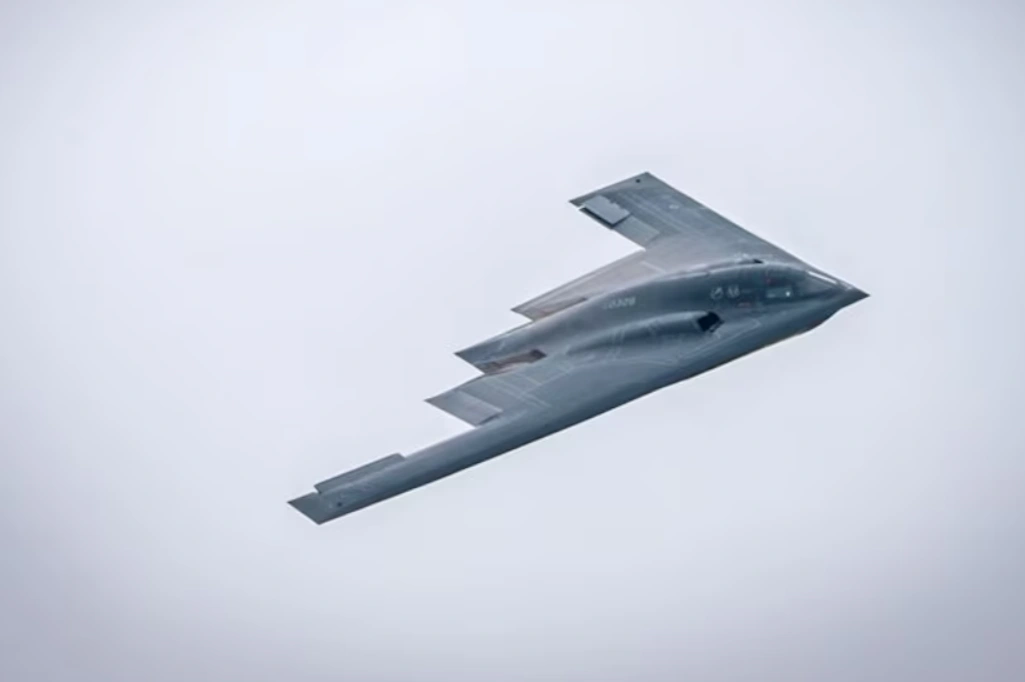
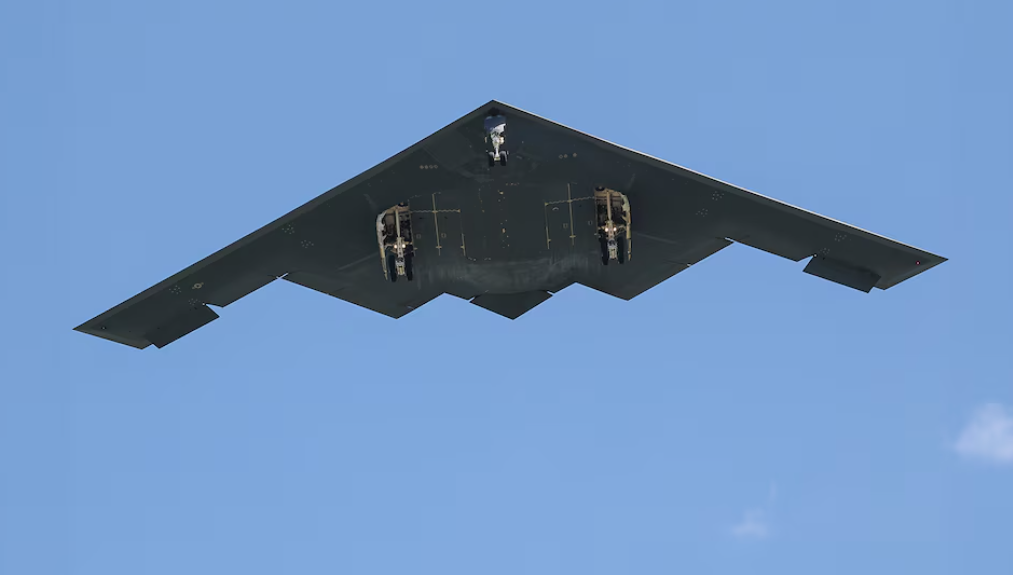
U.S. forces used 5,000-pound anti-bunker munitions, designed to penetrate reinforced

structures and destroy underground facilities.

These weapons made it possible to eliminate cruise missile depots and other strategic systems used by Iran to control maritime passage.

The military command confirmed that the operation was successful and succeeded in neutralizing objectives considered critical.

A direct blow to the Iranian blockade capacity The attack is part of

a broader strategy to prevent Iran from using missiles and naval mines to close the Strait

of Hormuz.

About 20% of world oil trade circulates through this route, making it a key point for the global economy.

Military sources pointed out that the destruction of these bases significantly reduces the Iranian regime's ability to interfere with international energy flow.
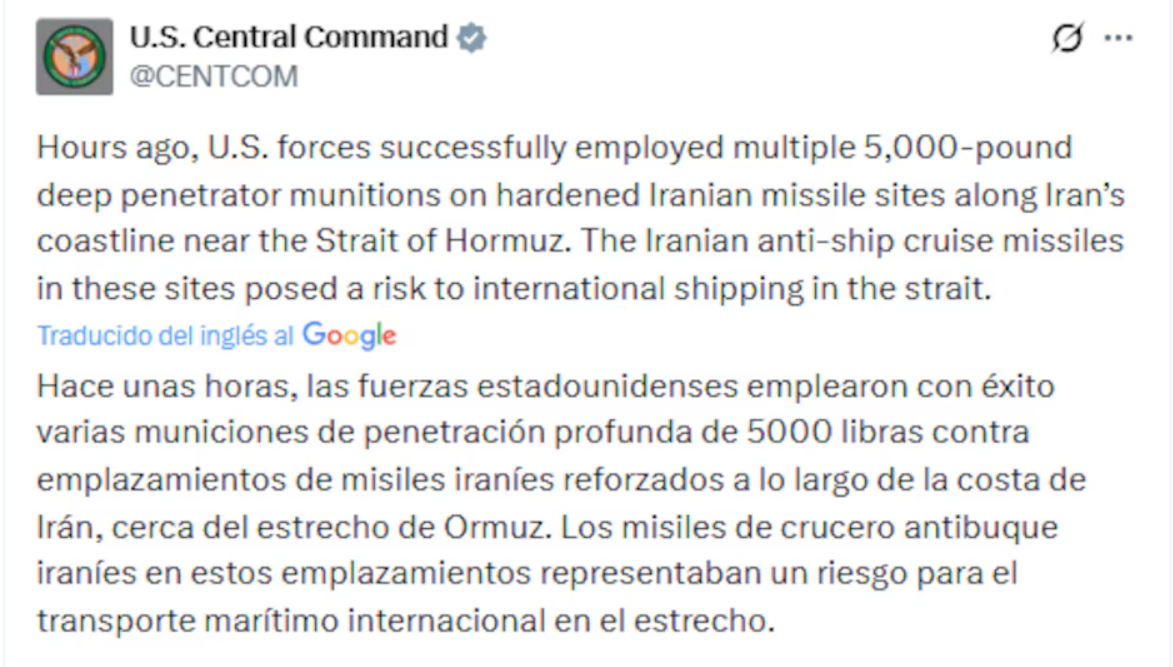
Imagen 1382707

Trump reinforces the position of unilateral action

President Donald Trump had anticipated that the United States would act even without the

support of its allies.

The offensive came after the refusal of several NATO countries to participate in a joint operation to protect navigation in the area.

“We don't need anyone's help,” Trump said, reaffirming Washington's ability to ensure security in the Persian Gulf.

Escalation after the closure of the Strait of Hormuz

The military action comes in the midst of a strong regional escalation, after Iran ordered the closure of the strait on March 15

.

The measure raised global concern over its impact on oil prices and international economic stability.

The United States believes that Iran's militarization of the area constitutes a direct threat to global trade.

Previous attacks and sustained strategy in the region

The bombing is part of a larger campaign by Washington to neutralize Iranian military infrastructure

.

Days ago, U.S. forces had already attacked targets on the island of Kharg, destroying dozens of military positions without affecting oil installations.

The strategy aims to hit military capabilities without interrupting energy production, avoiding an even greater impact on markets.

Growing tension in the Persian Gulf

Imagen 1382708

In recent weeks, there have been attacks against commercial vessels and oil tankers in the region, several of them attributed

to Iran or allied groups.

This led the United States to intensify its military presence and reinforce maritime security operations.

Meanwhile, Tehran warned that traffic in the strait will not return to normal as long as the conflict continues.

A conflict with a global impact

The situation in the Persian Gulf remains one of the main sources of international tension

.

The control of the Strait of Hormuz has not only military implications, but also economic ones, due to its central role in the global energy supply.

The US offensive marks a new chapter in the confrontation with Iran, with consequences that could extend far beyond the region.


Noticias relacionadas

It's official: the Argentine National Team will face Guatemala in La Bombonera

It's official: the Argentine National Team will face Guatemala in La Bombonera

Lautaro Martínez dreams of playing again in Racing: 'At least for a year'

Lautaro Martínez dreams of playing again in Racing: 'At least for a year'

Israel threatens Mojtabá Khamenei and declares him a military objective: “We will find him and neutralize him”

Israel threatens Mojtabá Khamenei and declares him a military objective: “We will find him and neutralize him”

Argentina began efforts to host the Rugby World Cup 2035

Argentina began efforts to host the Rugby World Cup 2035

Kim Jong Un's party, the only one in the country, 'won' the legislative elections with 99.93% of the votes

Kim Jong Un's party, the only one in the country, 'won' the legislative elections with 99.93% of the votes

Scandal in Africa: CAF named Morocco champion of the African Cup of Nations by desk

Scandal in Africa: CAF named Morocco champion of the African Cup of Nations by desk

La Derecha Diario logo
TwitterInstagramYouTubeTikTok

Nosotros

  • Quienes Somos
  • Autores
  • Donar

Privacidad

  • Protección de datos
  • Canales
  • Sitemap

Contacto

  • info@derechadiario.com.ar
PUBLICIDAD