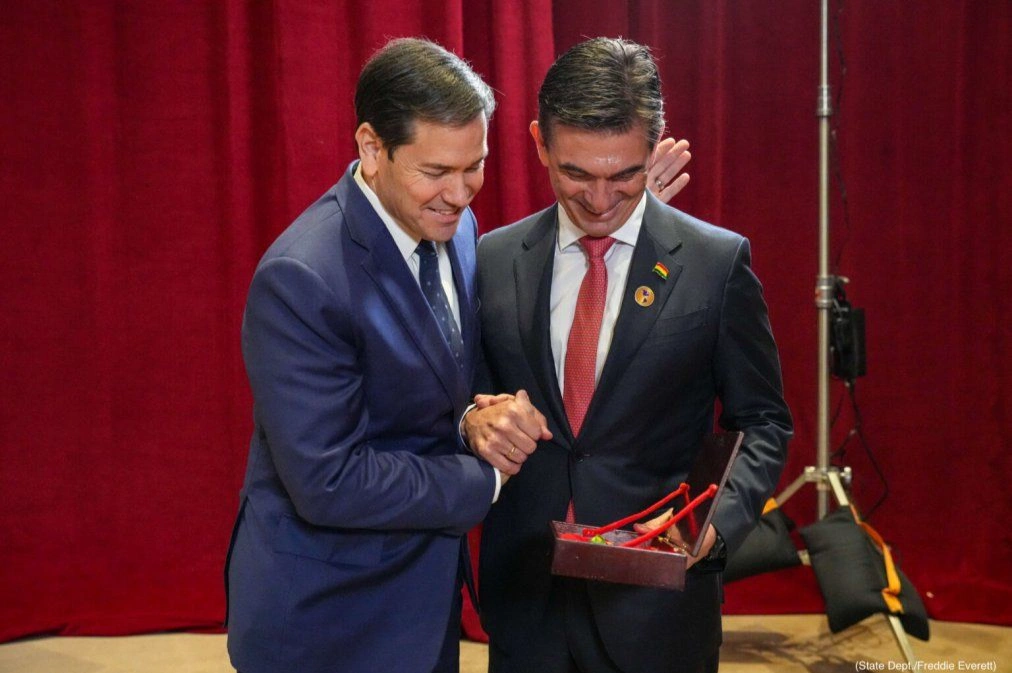
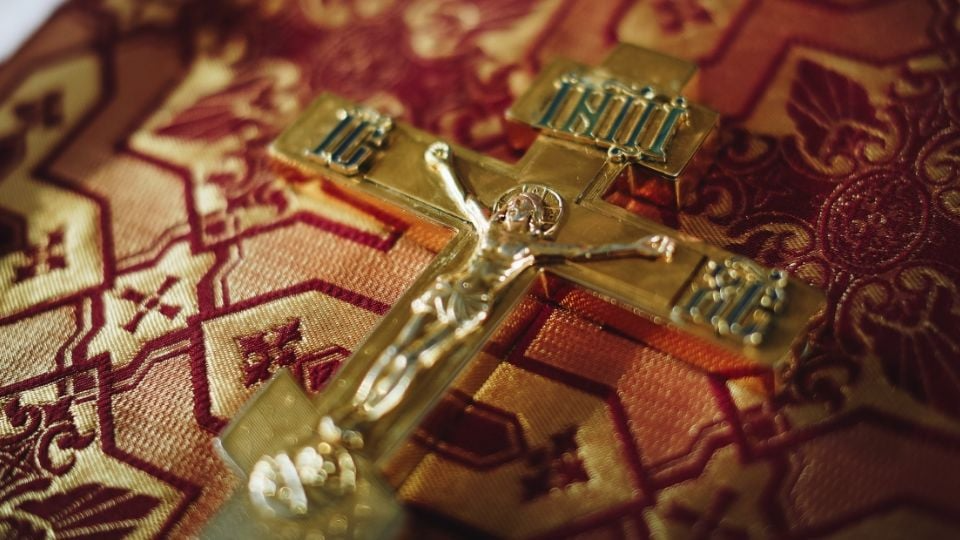
In a gesture full of political, historical and diplomatic symbolism, the U.S. Secretary of State, Marco Rubio, returned to Bolivia a crucifix that had been in the hands of former President George H. W. Bush for 35 years. The delivery not only closes a unique story between two families linked to power, but it also reflects a change of climate in the relationship between the two countries
.
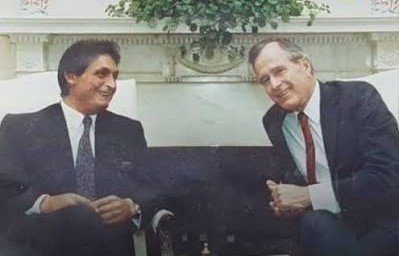
The origin of this episode dates back to 1990, when the then Bolivian president, Jaime Paz Zamora, presented the crucifix, a piece of deep family value, to Bush during an official visit to Washington. However, the gesture was far from definitive: the American president accepted the object under a condition that would eventually acquire a special meaning. He promised that it would be returned when one of Paz's sons became president of Bolivia
. Former Bolivian President Jaime Paz with former US President George H.W. Bush
Thirty-five years later, that promise materialized. The current Bolivian president, Rodrigo Paz, received the relic from Rubio in an act that was interpreted as much more than a simple protocol return. It was a sign of historical continuity, but also of institutional respect and of the fulfillment of commitments between two nations.
The crucifix, beyond its material value, represents a family tradition and a personal bond between political leaders of different periods. Their return also symbolizes the importance of the word committed to diplomacy, an element that is often left behind in the face of contemporary geopolitical
tensions.
This gesture also occurs in a context of recomposition of relations between Bolivia and the United States. After years of distancing marked by ideological differences and political decisions that cooled the bilateral bond, the Paz government has promoted a strategy aimed at rebuilding bridges
with the West. The Crucifix of the Paz Family
In this framework, the restoration of the crucifix takes on an additional dimension. Not only does it close a pending story, but it also functions as a symbol of the new direction that Bolivia seeks to adopt on the international stage: greater openness, dialogue and cooperation with the main democratic powers
.
Finally, the crucifix will be kept by the Paz family at their residence in Tarija, where it will regain its place as an object of historical and spiritual value. But its meaning transcends the private: it becomes a reminder that, even in international politics, promises can be fulfilled and symbols can carry as important a weight as strategic decisions