The right-wing party reaches 27% nationally and leads the CDU of Friedrich Merz, while also topping the polls in states that will hold elections on September 20
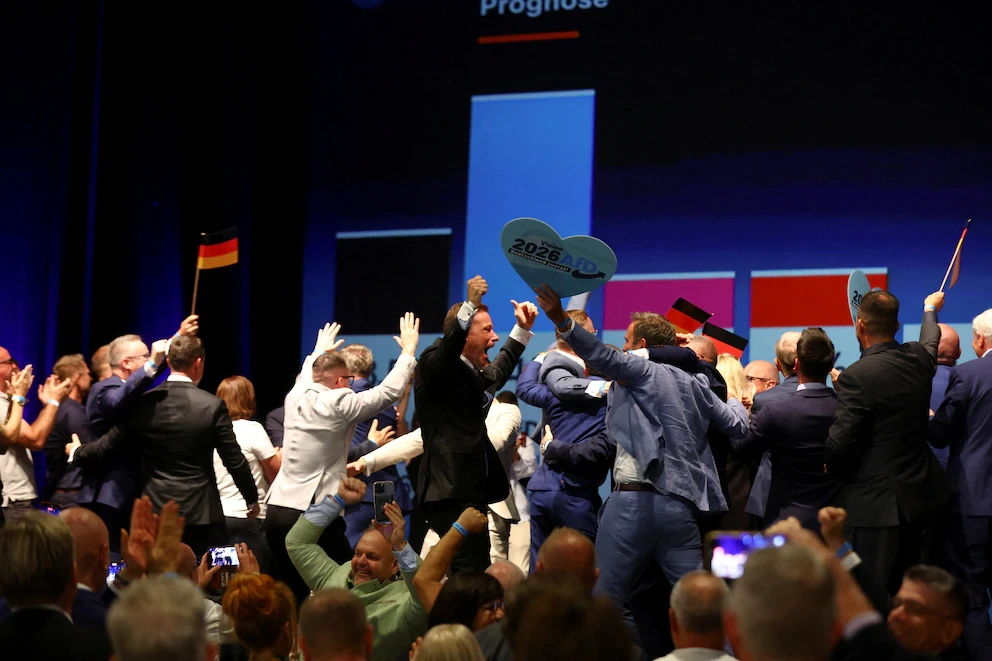
The Alternative for Germany (AfD) is experiencing one of its best electoral moments since its creation and remains the party with the highest voter intention in Germany, according to the latest polls. This fact becomes even more relevant after the victory achieved by the party in the regional elections of Saxony-Anhalt, where it reached 43.8% of the votes.
The latest ARD-DeutschlandTrend, conducted by infratest dimap between August 31 and September 2, places the AfD at 27% if federal elections were held currently. Although this represents one point less than in the previous measurement, the party continues to hold the first place. The CDU/CSU of Chancellor Friedrich Merz comes in second, with 21%. The Greens obtain 15%, the SPD 13%, and The Left 12%.
The German Chancellor Friedrich Merz
The gap between AfD and the Union now reaches six percentage points, consolidating a trend that began to manifest during the first months of 2026. In May, the AfD had surpassed the CDU/CSU for the first time in the DeutschlandTrend and in August reached a record of 28%.
The growth is also reflected in the regional elections. In Saxony-Anhalt, the AfD obtained 43.8% on September 6 and secured 39 of the 83 seats in the regional Parliament. However, it fell three seats short of an absolute majority and now needs support to form a government.
The next challenge will be on September 20, when elections will be held in Mecklenburg-Western Pomerania and Berlin. In Mecklenburg-Western Pomerania, an ARD poll again places the AfD in first place, five points ahead of the SPD. In Berlin, however, the CDU appears slightly ahead of The Left, while AfD is positioned around 18%.
AfD members celebrating the electoral victory in Saxony
The electoral advance of AfD is increasing pressure on Merz's government. The CDU suffered a significant setback in Saxony-Anhalt, and the result raised internal questions about the Chancellor's strategy. Merz, however, maintains that he will continue to lead the Executive and with his reform program.
The regional results and national polls thus show a scenario in which AfD no longer appears solely as a protest force, but as the party with the highest voter intention in several measurements.