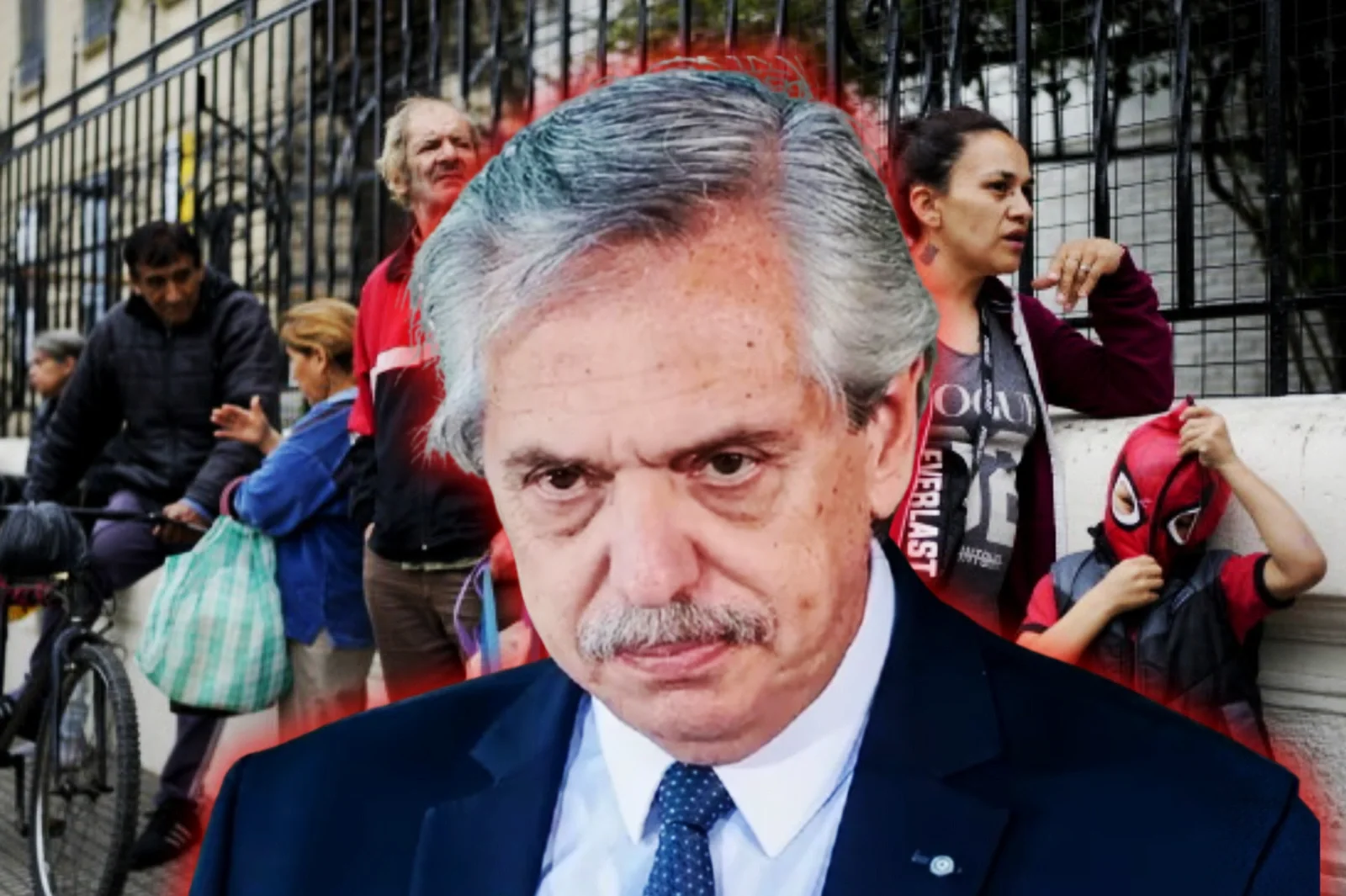
“And it went wrong for us because the middle class, when it is middle class, starts to feel upper class, and begins to think like the upper class. They aspire to be upper class, and they start to vote and think like the upper class,” he affirmed.






The former Kirchnerist president targeted the middle sectors and the business community by stating that "they end up thinking like the upper class."
“And it went wrong for us because the middle class, when it is middle class, starts to feel upper class, and begins to think like the upper class. They aspire to be upper class, and they start to vote and think like the upper class,” he affirmed.





The former Kirchnerist president Alberto Fernández sparked controversy again after a series of statements in which he attacked and criticized the relationship between Peronism, the middle class, and the Argentine business sector, with claims that generated strong repercussions.
In an interview, the former president stated that one of the supposed historical objectives of Peronism was to promote the social and economic development of broad sectors of the population, although he considered that this process ultimately turned out to be harmful to the political space itself.
“I believe that Peronism did something, for the good of the people, but it cost a lot, which is trying to form a middle class and trying to form a national business sector,” Fernández expressed while reviewing that social and economic dynamic.

In this context, the former president suggested that this "growth" of the middle class would have led to a change in political and cultural behavior.
Fernández extended his analysis to the business sector, which he described as conditioned by aspirations for international expansion.

“And Argentine entrepreneurs, when they start to do well, and begin to export a couple of shoes, start to believe they are multinationals, and begin to think like multinationals. And they are not going to be multinationals. They are going to be Argentine companies that export,” he stated.
The former head of state added that this dynamic represents a structural difficulty for Peronism over time. “I believe that this is something that Peronism struggles with a lot,” he concluded.
The statements quickly drew criticism for the strong attack on the middle class and productive sectors, in a context where political discourse is once again putting the relationship between Peronism and those who aspire to grow economically or consolidate their ventures under tension.