
At the beginning of 1811, the Junta Grande prepared three small vessels, under the command of the Maltese sailor Juan Bautista Azopardo, to deliver aid and supplies to General Manuel Belgrano, who was engaged in his Campaign to Paraguay.
Informed of this maneuver, a royalist squadron set out from Montevideo to intercept the patriot flotilla, commanded by the frigate captain Jacinto de Romarate Salamanca; a 36-year-old Basque; who had participated in Europe in naval actions against the French Revolution in the Mediterranean; and had been a hero in the fight against the English.
He was a skilled sailor; who was only defeated by Admiral William Brown, with the fall of Montevideo, three years later.
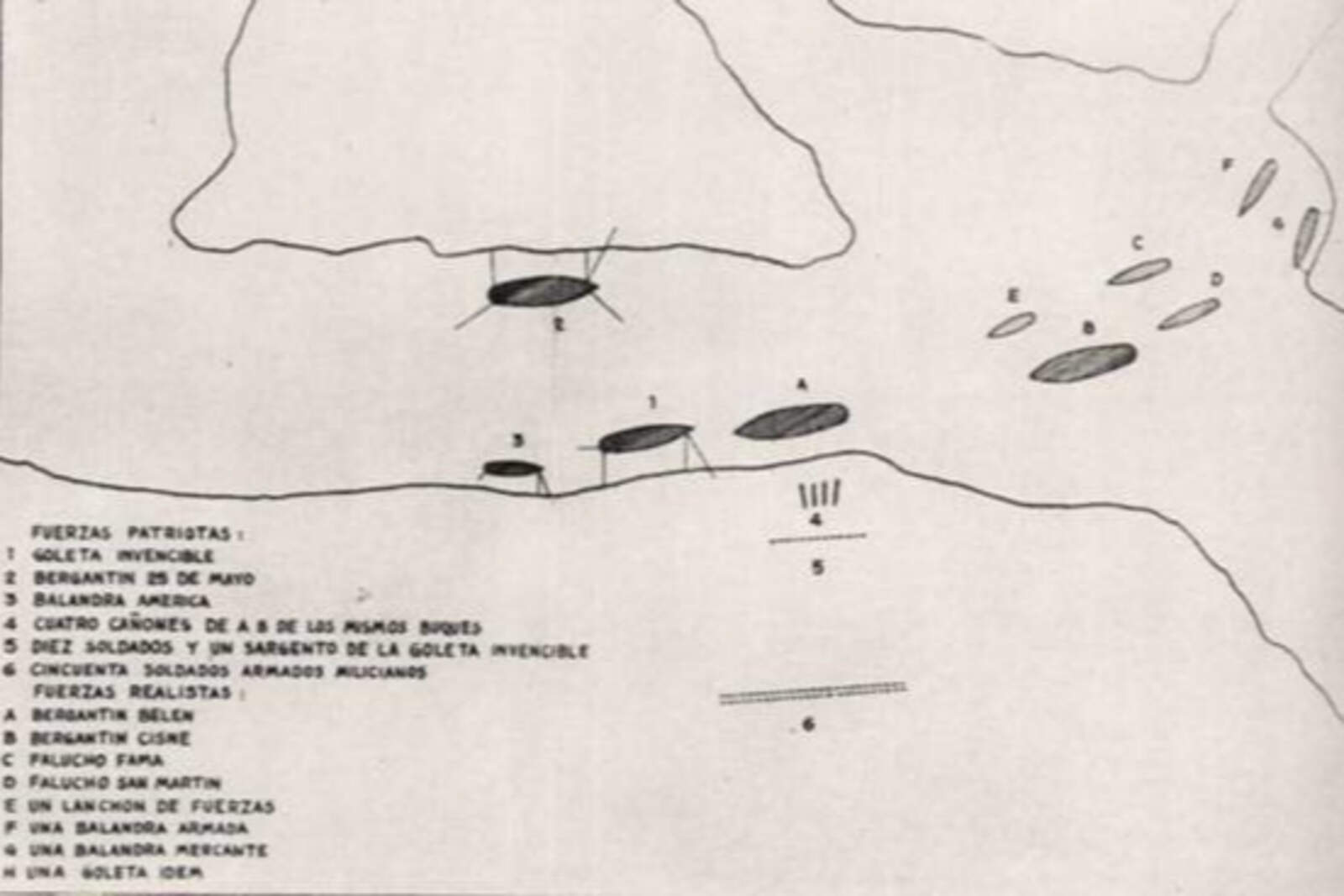
Romarate commanded two brigs: the "Cisne," with 12 cannons, under the command of frigate lieutenant Manuel de Clemente, which was his flagship, and where his pennant flew; the "Belén," with 14 cannons, led by frigate lieutenant José María Rubión, the sloop "San Martín," led by ensign José Aldana, the sloop "Fama," captained by ensign Joaquín Tosquella; the sumaca "Aranzazú," and two more smaller ships. Each sloop had one cannon.
Both fleets sight each other: Romarate's plan
With the dawn of February 28, 1811, both squadrons were spotted in the Paraná, a few kilometers downstream from the town of San Nicolás. Romarate then summoned his officers to a War Council. In it, they decided to enter the channel formed between the coast of San Nicolás and the island opposite.
On both sides, Azopardo had placed his ships, with their cannons ready to face the enemy in crossfire. The problem was that the royalists would be forced to sail against the current, which at that point has a lot of flow and speed.
This meant slow navigation between the patriot cannons. But it also represented an advantage: since the royalist ships were better armed. Additionally, their crew was better trained to fire more quickly than the patriots, and their cannons worked well; unlike Azopardo's.
Consequently, they decided to attack against the current, advance slowly, and take advantage of the slowness to subject the patriots to more cannon fire from both sides of their brigs, passing between the patriot ships. As the wind was not blowing, at noon, Romarate anchored about "two cannon shots" (between 1.5 km to 2 km) from Azopardo's positions.
Romarate's ultimatum
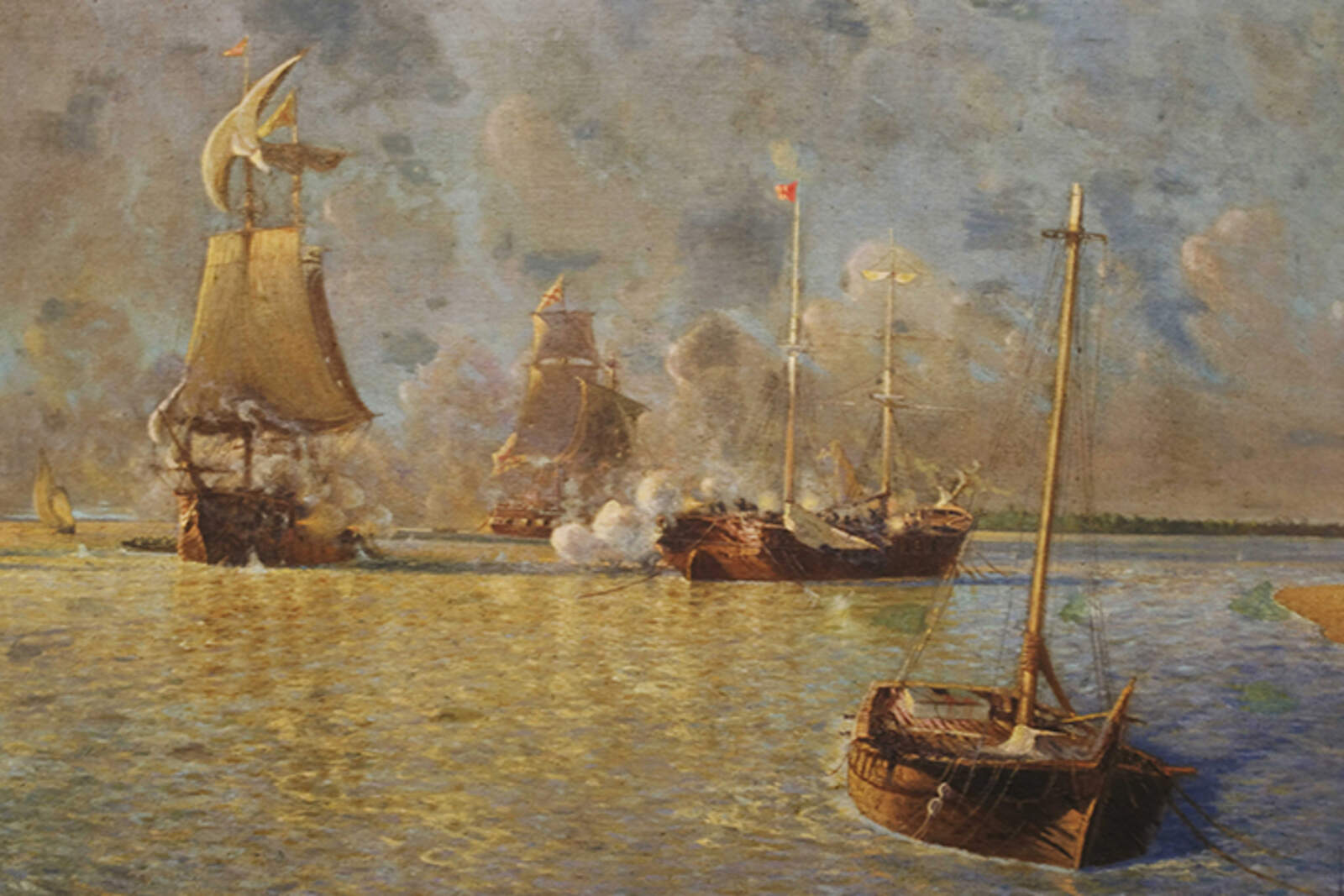
With both squadrons facing each other, Romarate, from the "Cisne," fired a cannon salute and sent a boat with a parliamentarian (the commander of the "Fama") toward the patriot corvette "Invencible"; where Azopardo was located. The boat did not reach its destination, as the patriots threatened to sink it.
Then, the boat returned to the "Cisne" without being able to deliver a document issued by the royalist leader Javier Francisco de Elío, in which he labeled the revolutionaries as "rebels... part of a sedition... enemies of order"; and declared traitors those who obeyed the "subversive" Junta.
Along with this decree, Romarate joined an ultimatum to Azopardo, to surrender within 2 hours, for reasons of humanity.
As absolute calm reigned, the contenders remained so until dawn. Then, Azopardo hoisted a red flag on his foremast, a sign that he would neither give nor ask for quarter; while Romarate sent a boat to scout the patriot positions; which suffered some shots. Due to lack of winds, everything remained so until the dawn of Saturday, March 2, 1811, which dawned with a south wind.
The first phase of the Combat
Knowing they were ready for combat, both flotillas activated preparations. At 8 in the morning, the brigs, followed by the two royalist sloops, began to enter the channel, between the corvette "Invencible" on one side, and the brig "25 de Mayo" on the other side. Thus began the heavy fire, both from the shore, by the 4 cannons stationed there, and between the ships.
As the channel was very narrow, to avoid being dragged to the shore, the royalists furled some sails. Despite this, both brigs ran aground on a bank near the island; from which the "Belén" managed to free itself, due to the skill of its crew.
The "Cisne," meanwhile, remained stranded, enduring the fire from the patriot coastal battery, which opened 4 holes in its hull, and others in its sails (rigging). Desperately maneuvering, in the end, the "Cisne" also managed to free itself.