
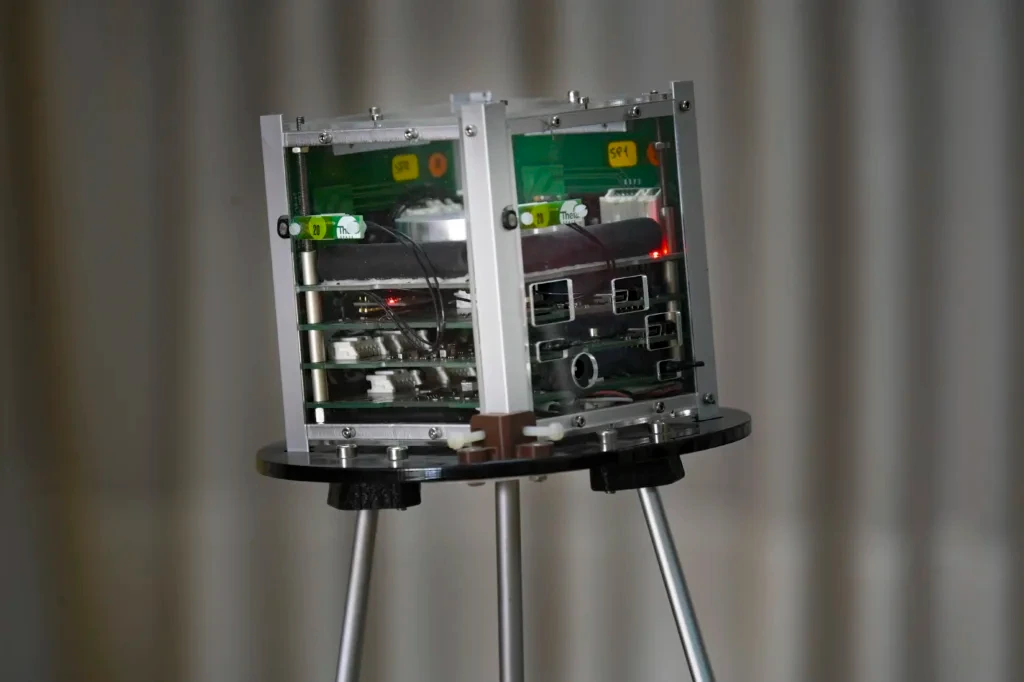
The Argentina of Javier Milei consolidates a historic milestone in its national defense and independent space development. The engineers of the Institute of Scientific and Technical Research for Defense (CITEDEF, historically known as CITEFA) have successfully completed the development and testing of the first nanosatellite intended for the Argentine Army.
This device, named ETNS (satellite technology evaluator), awaits its imminent launch into outer space scheduled for the end of October aboard a Falcon 9 rocket from the renowned private corporation SpaceX, as part of the Transponder Mission 18.
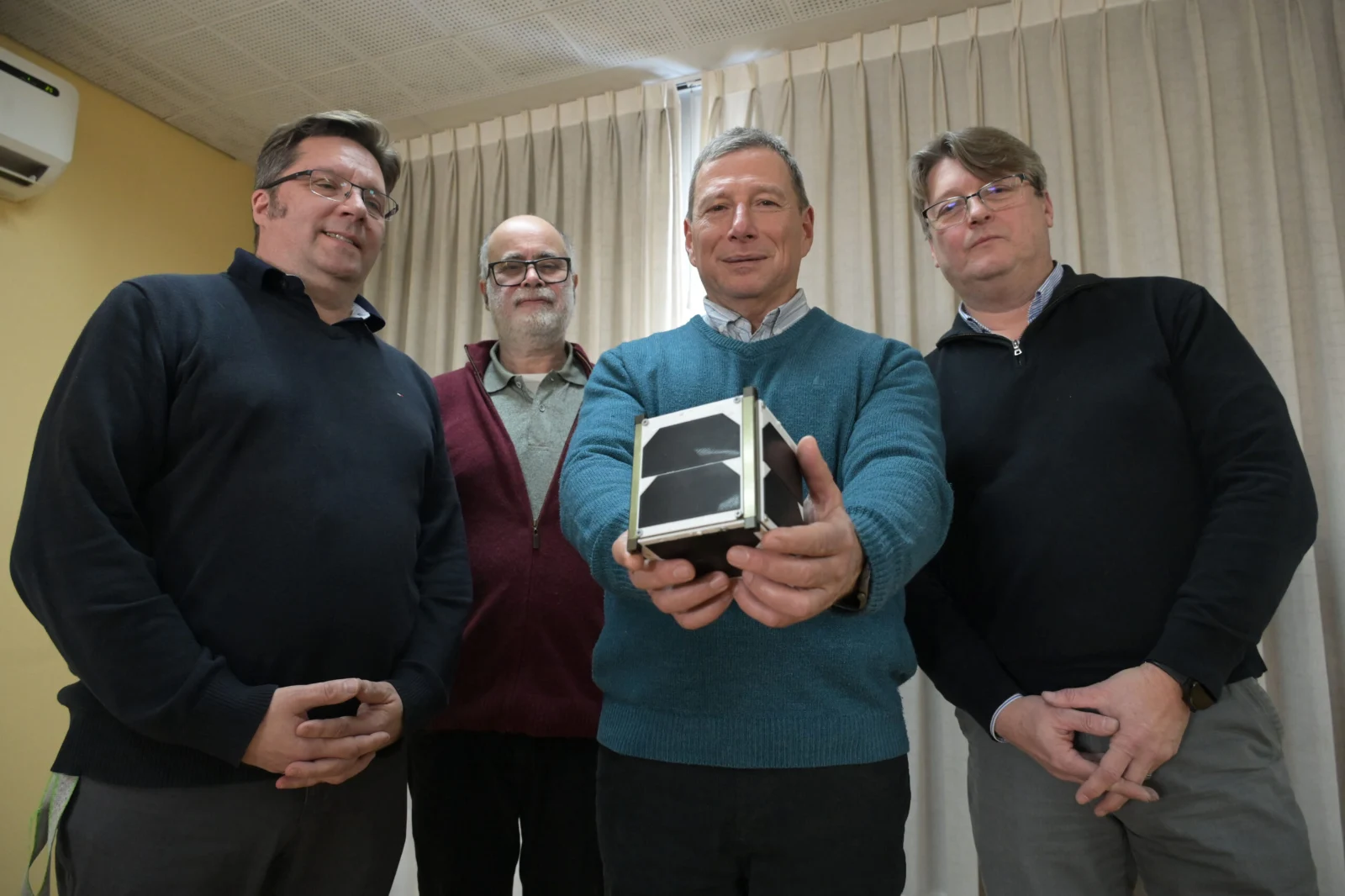
This bold private and state initiative demonstrates that, under the new era of the government of Javier Milei, the Armed Forces are modernizing with an agile, pragmatic, and fiscally efficient approach, far from the pharaonic and unproductive state projects.
Far from the commercial and industrial waste that characterized previous administrations, this satellite was designed under a premise of strict austerity and market innovation.
According to engineer Cristian Bruña, “it makes no sense to put something expensive from a commercial point of view into orbit for it to be in orbit for just a few years. These CUBESAT technologies use COTS components that are commonly found in electronics stores”.
The ETNS is not simply a device in space; it is defined by its creators as a key technology demonstrator. The central objective is to affirm that Argentina has the sovereign capabilities to design, build, integrate, and operate its own space systems, laying the foundations for future dual-use (civil and military) developments for the Armed Forces without compromising public funds.
The project, which managed to survive state bureaucracy since its inception in 2016 under the Research and Development Program for Defense (PIDDEF) of the Ministry of Defense, was developed completely independently of the guidelines of the traditional state corporation CONAE, which was simultaneously coordinating the 2021-2023 space plan.
The definitive push for the project occurred thanks to a direct financing agreement with the Argentine Army. Engineer Carlos Longo recounts how, after a forced interval due to the pandemic, the Force learned about the project and “agreed to finance the launch”.
In this regard, the General Directorate of Communications, Informatics, and Cyber Defense of the Army intervened and financed the final stage of the initiative.
To place the payload in orbit, a specialized firm based in Spain was pragmatically contracted, providing a deployer (container for satellites of the CubeSat standard of 10 by 10 centimeters) that reserved the spot on the Falcon 9 vector from SpaceX.
The mission encompasses a series of subsystems that reflect a constellation of advanced scientific disciplines converging at CITEDEF: electronics, algorithms, and software. Engineer Alejandro Turel details that the overall program includes:
A ground station for communication.