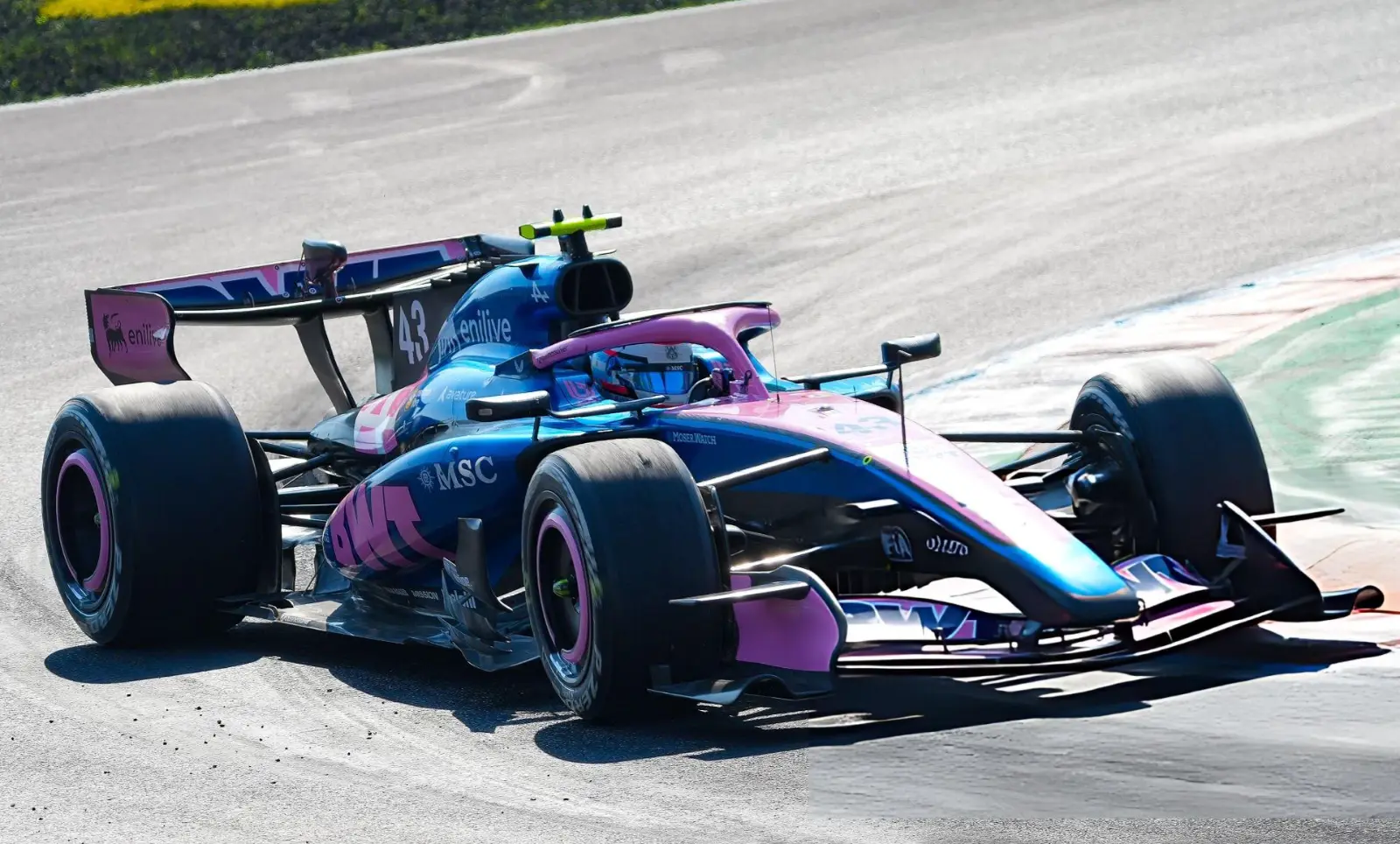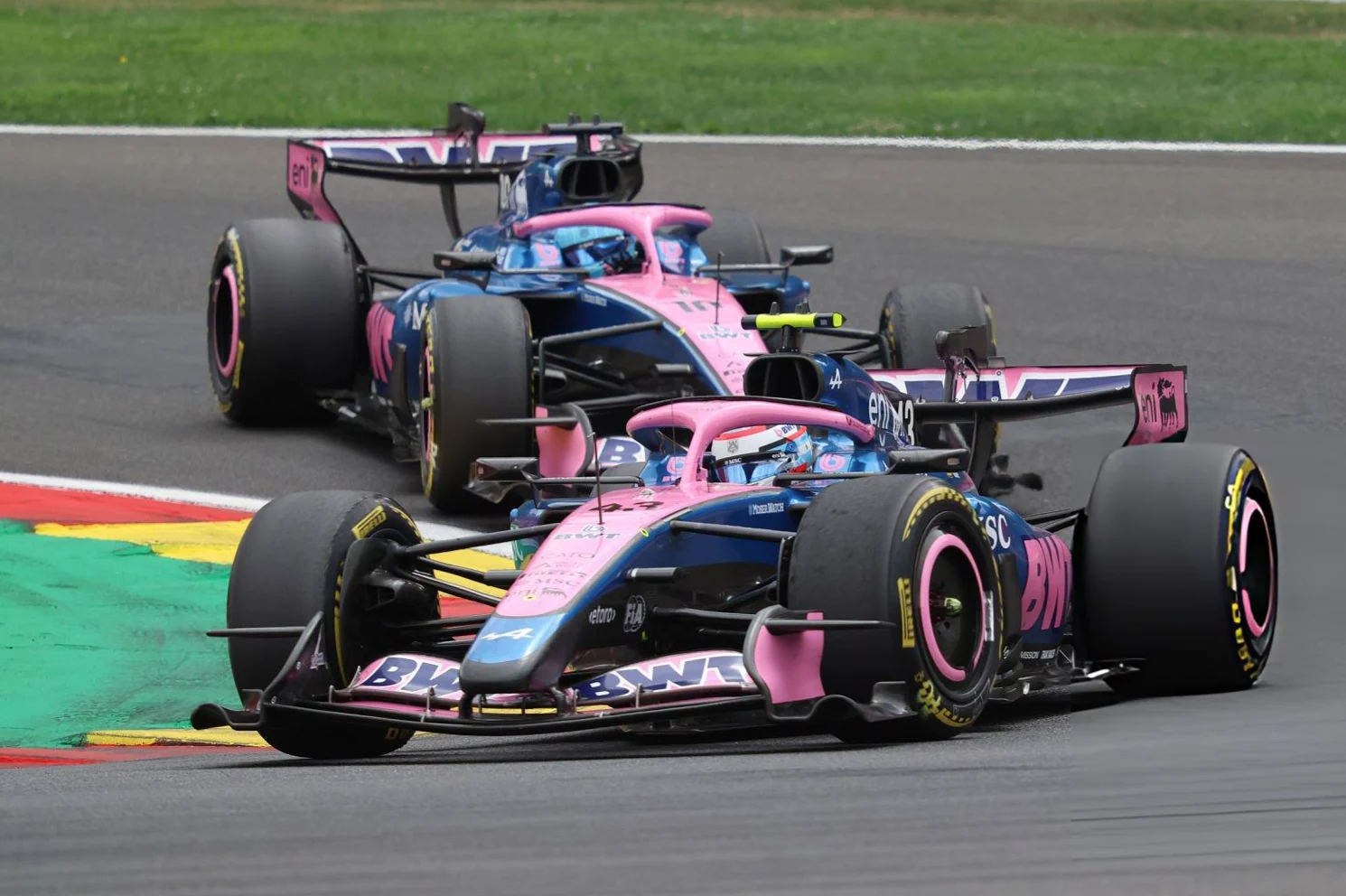

The team expanded its alliance with SEALSQ and added ColibriTD technology to evaluate hybrid quantum-classical simulations. The project aims to optimize engineering processes under the constraints of the category
The Formula 1 is not only evolving on the asphalt. While teams are searching for every millisecond in their cars, Alpinedecided to deepen its investment in a technology that is still in an experimental stage, but could change the way it processes its data: quantum computing.
The team that includes Franco Colapintoexpanded its collaboration withSEALSQ, a company specialized in security and solutions for this technology, with the aim of incorporating hybrid quantum-classical simulation tools into its engineering processes. The initiative will also involve the technology of ColibriTD, a company linked to SEALSQ and specialized in this type of development.
Alpine expanded its collaboration with SEALSQ to incorporate quantum-classical hybrid simulation tools into its engineering processes
The alliance represents a continuation of the agreement that both companies began in November 2025, although now the focus is expanding. Alpine aims to analyze the potential of these tools in computational fluid dynamics (CFD), thermal and structural studies, as well as various multiphysics problems.
What Alpine seeks with quantum computing
More than replacing the systems it already uses, the goal is to obtain more information from the available calculations. In a category where every design decision can depend on huge amounts of data, the ability to process them more efficiently could provide an advantage in car development.
The project takes on special relevance in the context of Formula 1 in 2026, marked by a new generation of cars and power units. While teams face regulatory limits on their development and simulation resources, any tool capable of improving the utilization of that capacity can become a differentiating factor.
The first step has already been taken in Enstone
The project made its first concrete advance in July 2026, when representatives from Alpine, SEALSQ, and ColibriTD met in Enstone to define a roadmap and identify priority areas where the technology will be evaluated. The next objective will be to develop a proof of concept that allows testing its utility within the team's working environment and determining if it can be effectively incorporated into its engineering processes.
Alpine defined the roadmap to implement quantum computing in its activities
David Sanchez, executive technical director of Alpine, emphasized the importance of exploring new tools to interpret the data obtained during development. "We are in a constant search for a better understanding in all areas and we always analyze how emerging technologies can help us extract information from data and simulations to support our engineering decisions. Working with SEALSQ and ColibriTD gives us an interesting opportunity to explore the potential of quantum technology within our current environment," he explained.
A technology adapted to current limitations
ColibriTD's proposal aims to overcome some of the difficulties that quantum computing still presents. Its H-DES solution combines currently available quantum processors with traditional high-performance computing systems, known as HPC, instead of relying solely on the development of fully fault-tolerant quantum machines.
The approach presents a parallelism with Formula 1 itself. While current quantum systems are conditioned by factors such as the number of qubits, coherence time, and connectivity, teams must also work with regulatory restrictions on their simulation and development tools.
No results on performance yet
At the moment, Alpine has not reported results that allow establishing a concrete improvement in the performance of its car. The agreement is in a phase of evaluation and the proof of concept will be the instance that determines whether the technology can offer real benefits in engineering processes.
The challenge, then, is not yet about bringing a quantum component to the car, but about discovering whether this technology can help the team better interpret its simulations and make the most of the resources available in a Formula 1 increasingly constrained by technical and regulatory limits.