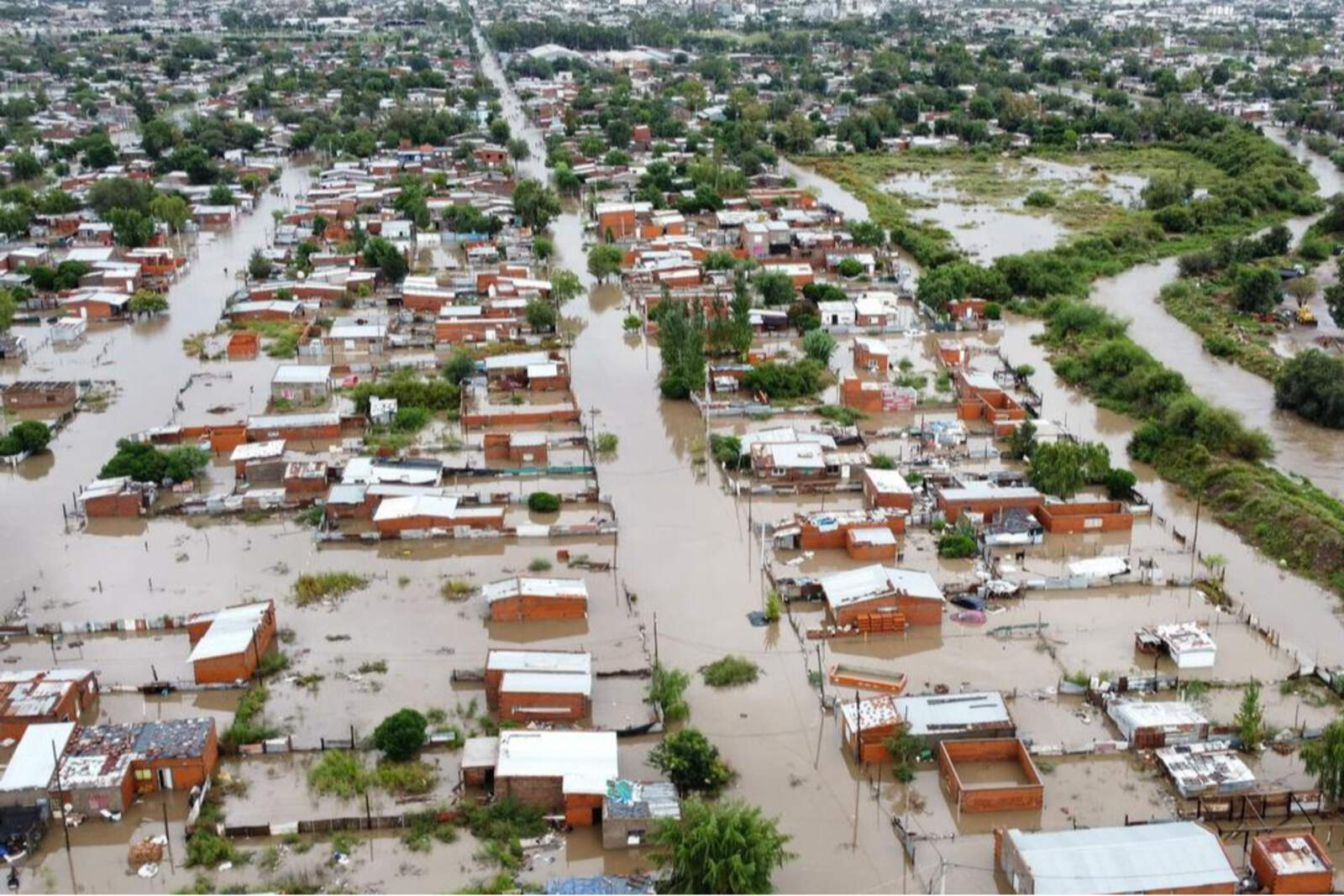
With at least 16 dead, more than 100 missing, and 1,450 evacuated, the city of Bahía Blanca faces a major crisis that has caused incalculable damage.
Three days after the disaster, although the water has receded in much of the urban area, zones like Ingeniero White continue with flooded sectors and the emergency remains in effect.
After the storm, images captured by the media reflect a desolate scene: streets turned into rivers of mud, destroyed homes, and vehicles swept away by the current.
In response to this situation, President Javier Milei will decree three days of national mourning for the death of compatriots in the storm in the city of Bahia Blanca and its surroundings.
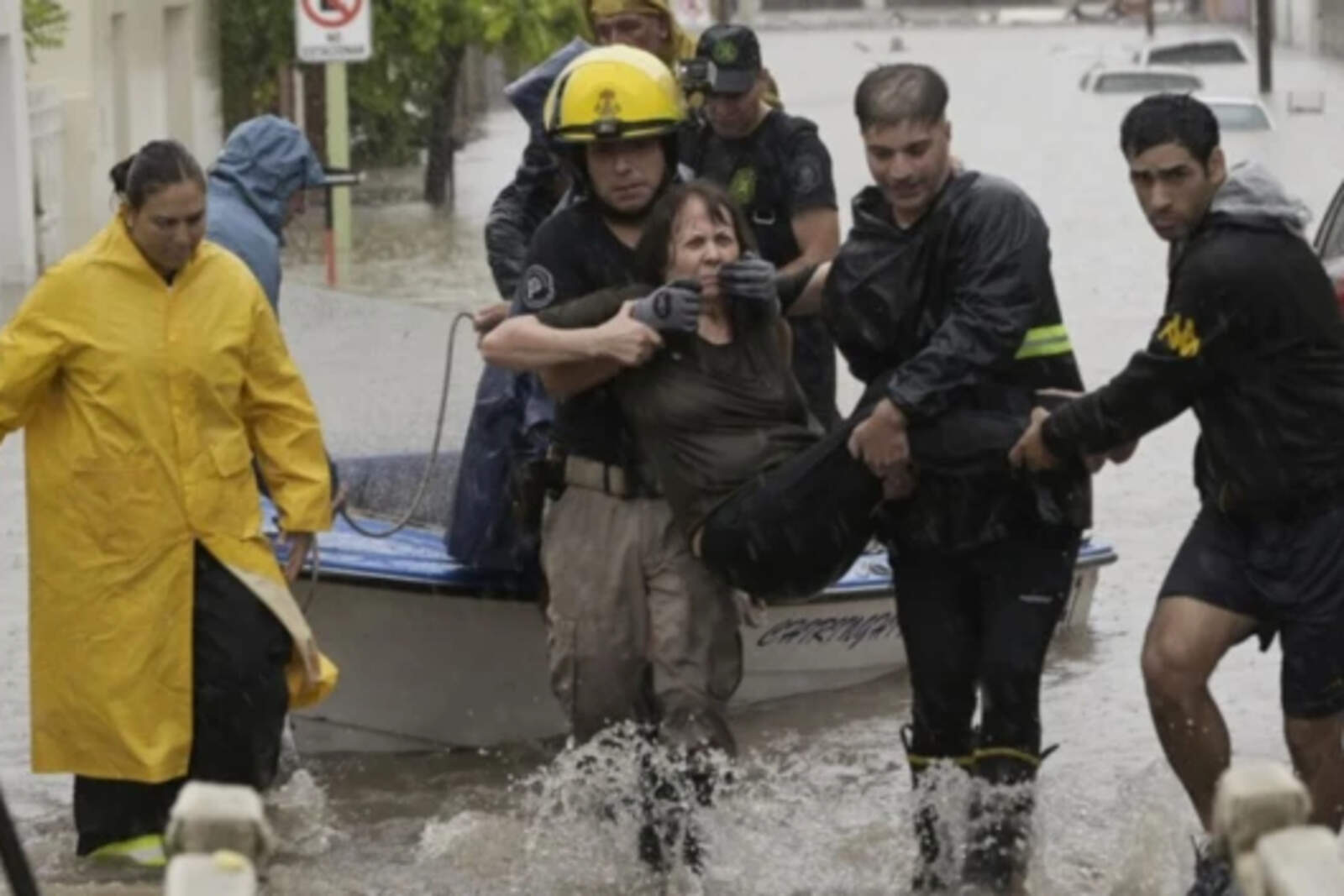
The impact of the flood affects entire neighborhoods, where many families lost everything. Rescue teams and volunteers continue to assist those affected, while reconstruction efforts are complex given the magnitude of the damage.
Bomberos rescatando a los afectados.
The torrential rains, which exceeded 350 millimeters in a few hours, severely affected the city's infrastructure. For example, the offices of the Federal Criminal Oral Court were completely underwater, with thousands of files damaged. In response to this situation, a judicial recess was declared for the entire following week.
Meanwhile, the National University of the South decided to close its donation center due to the "possible alteration of chemical substances" in its laboratories after the flood. The measure was adopted in conjunction with the Fire Department for safety reasons.
Health risk is another concern. According to specialists, the main threats are gastrointestinal diseases and infections from contact with contaminated waters.
Amid this crisis, one of the most distressing cases is the disappearance of sisters Delfina and Pilar Hecker, aged 1 and 5 years, swept away by the current on Friday while their family was trying to escape the storm.
According to their mother's testimony, the truck they were traveling in got trapped in the water, and while trying to move to another vehicle, a strong current separated them. Despite the deployment of rescuers in the Cerri area, the girls have not yet been located.
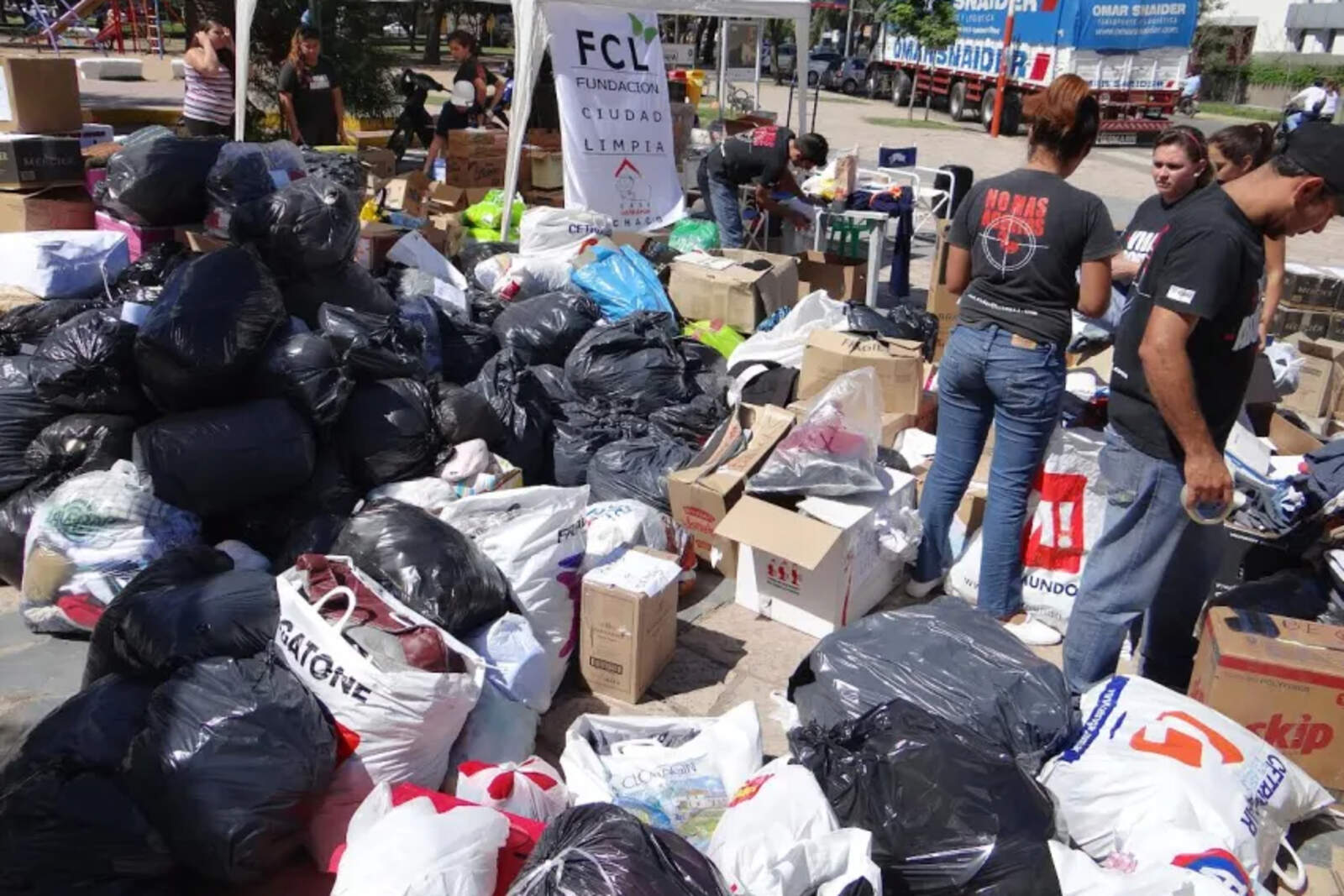
Las donaciones para Bahía Blanca.
In response to the crisis, various sectors mobilized to assist those affected. Caritas, football clubs, and various organizations launched campaigns to collect food, clothing, and essential items.
Boca Juniors opened La Bombonera to receive donations until Wednesday, while River Plate, Independiente, and Racing also opened their facilities to collaborate.
The Government's Statement
Before the crisis in Bahía Blanca, President Javier Milei will decree three days of national mourning for the death of compatriots in the storm in the city and its surroundings.
"In record time since the alerts about this catastrophe were triggered, the National Government made all its resources available for rescue, evacuation, medical treatment, accommodation, and more," they explained in an official statement.
"The opening of the barracks of the 181st Communications Battalion and the Puerto Belgrano Naval Base as evacuation centers was ordered," they detailed, regarding the assistance provided by the Government.
They added: "Furthermore, the forces involved continue working with local and provincial authorities in locating those still being searched for by their families."
In addition to the aid provided by the Armed Forces and the sending of 10 billion pesos by the national Government, the Ministry of Defense reported that a second plane took off with mattresses and blankets heading to the affected area.
"All areas of the National Government will remain focused, along with the municipality of Bahía Blanca and the Province of Buenos Aires, on assisting those affected in this moment of grief for all Argentines," the statement concluded.