









The consolidation of the new macroeconomic order driven by the libertarian government has reached an emblematic mark that ratifies international confidence in the direction of the country.
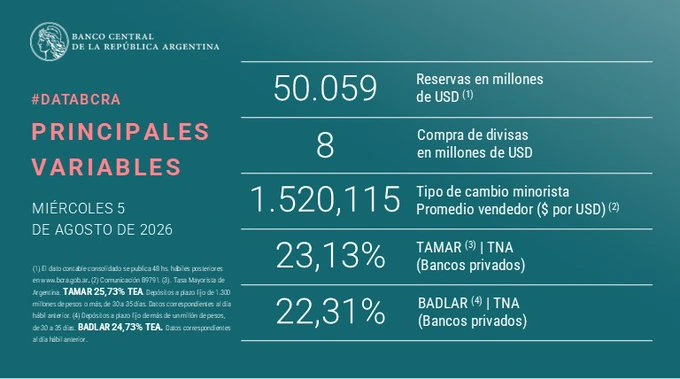
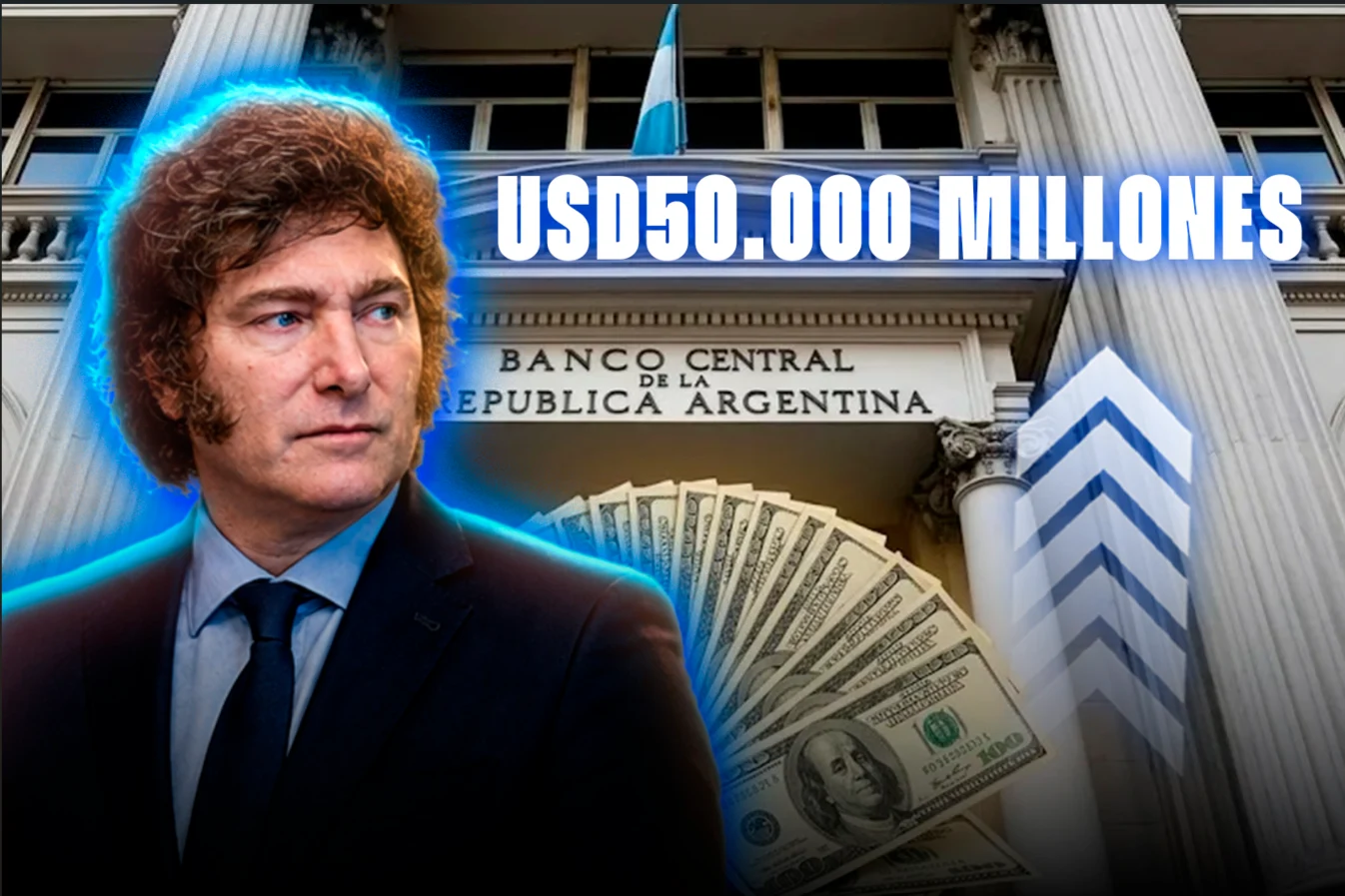
In what constitutes a resounding victory for the official economic plan, the international reserves of the Central Bank of the Argentine Republic (BCRA) broke the barrier of USD 50 billion this Wednesday, positioning itself at its highest level since September 13, 2019.
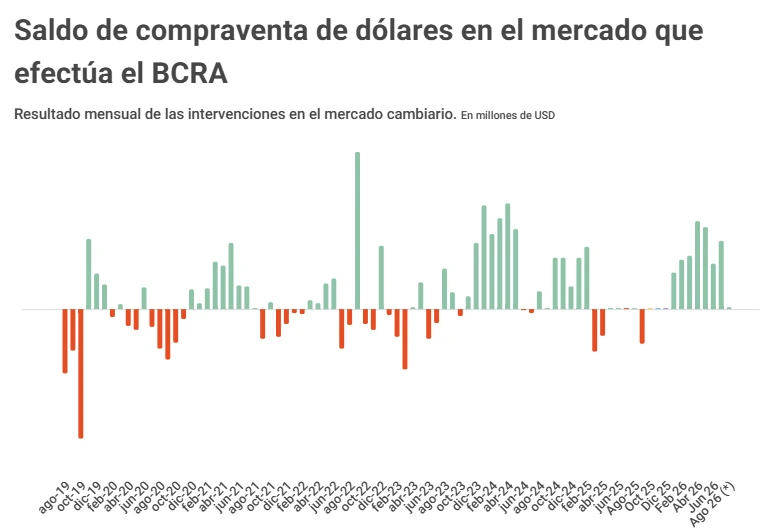
This mark represents not only the absolute maximum reached during the Milei era, but also a recovery of monetary sovereignty unthinkable in the previous years of systematic decapitalization.
The authority on Reconquista Street acquired a total of USD 8 million this Wednesday, which consolidated the gross reserves at the final figure of USD 50.059 billion.
This mark shatters records from nearly seven years, approaching the historical record from mid-September 2019, when under the management of Mauricio Macri, USD 50.085 billion were recorded.
The net daily growth for the day stood at USD 417, a daily increase that was significantly boosted by the strong upward rebalancing in the price of gold, the high-quality precious metal that makes up the assets of the Central Bank.
The sustained reconstruction of public coffers directly responds to the rigorous implementation of the fourth stage of the monetary program, which began in January 2026.
Since the launch of this phase, the BCRA has accumulated USD 13.381 billion through various operations both inside and outside the exchange market, including interventions in the Free Exchange Market (MLC) and wholesale purchases.
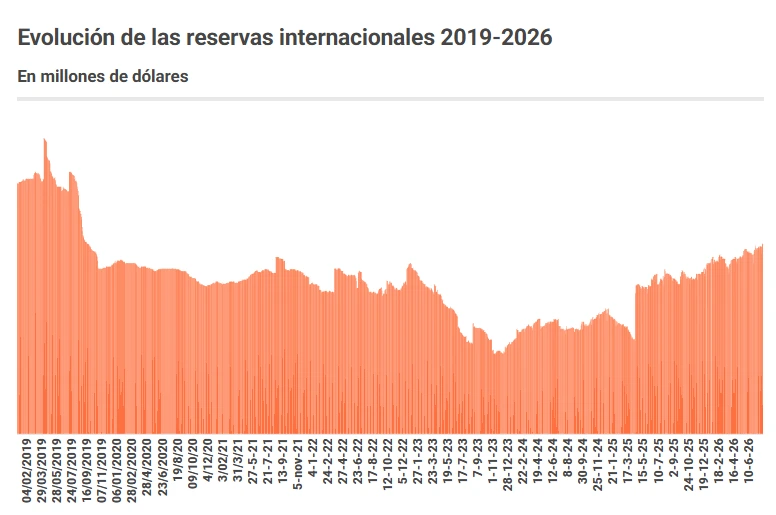
With this impeccable performance, the economic team of the libertarian administration has prematurely met the rigorous reserve accumulation target for 2026, which was originally set in a range of 10 billion to 17 billion dollars.
This consolidation was achieved after successfully surpassing the financing requirements of the Ministry of Economy during the first quarter of this year.
Unlike past models based on suffocating controls, the inflow of foreign currency is genuinely sustained by the dynamism of the private productive sectors. During the past month of July, public sector purchases totaled USD 2.162 billion, representing the third-best monthly performance of the entire year, far exceeding the purchases of June, which reached USD 1.418 billion.