In this context, right-wing Belgian deputy Filip Dewinter referred publicly to these data and spoke of a "population replacement." According to the legislator, this is not a conspiracy theory, but a situation that "is clearly demonstrated by the data." His statements reignited the political debate in Belgium about mass illegal immigration and the country's demographic future, especially in Brussels.
StatBel's statistics also show marked regional differences within Belgian territory. At the national level, approximately two-thirds of the population were of Belgian origin as of January 1, 2025. However, that proportion varies significantly depending on the region. In the Brussels-Capital Region, only 22.0% of inhabitants are of Belgian origin. In contrast, the figure rises to 63.6% in the Walloon Region and to 71.9% in the Flemish Region.
In general terms, Belgium presents a diverse population composition. Of the total population, 64% are of Belgian origin, 22.1% are Belgians of foreign origin, and 13.8% are foreigners who do not hold Belgian citizenship. In absolute numbers, this means that, as of January 1, 2025, the country had 7,571,338 Belgians of Belgian origin, 2,619,289 Belgians of foreign origin, and 1,634,924 non-Belgian people, according to BelStat.
In the specific case of Brussels, the data reflect an even more pronounced reality. In addition to the low proportion of Belgians of exclusively Belgian origin, the region has 40.8% Belgians of "foreign origin." When this group is added to residents who do not have Belgian citizenship, it follows that 78% of the population of the Brussels-Capital Region is of non-Belgian origin.
The official figures highlight the magnitude of the demographic changes that Belgium, and in particular its capital, is undergoing. These data have become the axis of a political and social debate that continues to grow, in a European context marked by deep migratory transformations.
The most recent official data on demographics in Belgium reveal a deep change in the ethnic composition of the population, especially in the country's capital.
According to statistics published by StatBel, the official statistics body of the Belgian government, only 10.56% of children and adolescents between 0 and 17 years old who live in Brussels are of exclusively Belgian origin. The rest are minors born outside the European Union or who have foreign parents.
According to the figures, 72.9% of children and young people in that age group in Brussels have migratory backgrounds from countries that do not belong to the European Union or were born directly outside the community bloc. This figure is key to understanding the magnitude of the demographic change in the Belgian capital, a situation that is repeated in many European cities.
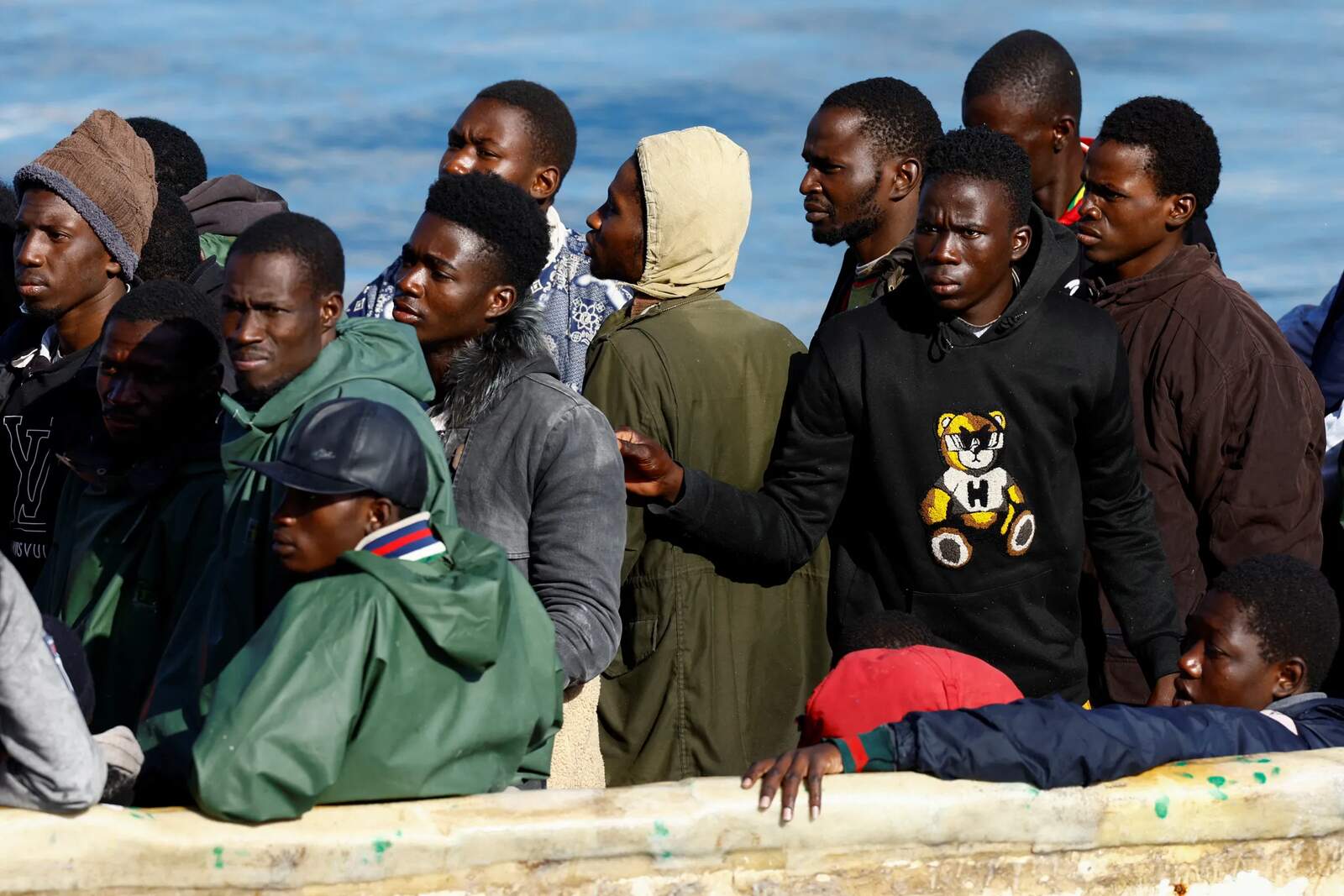
Inmigrantes ilegales africanos.
The report also disproves one of the arguments most frequently used to explain this population composition. For years, various analysts argued that the high proportion of foreign youths in Brussels was mainly due to the arrival of citizens from other European Union countries, attracted by the city's institutional role as community capital.
However, the official figures indicate that almost all minors who are not of Belgian origin come from countries that are not part of the regional bloc, which reinforces the relevance of the extra-European migratory phenomenon.