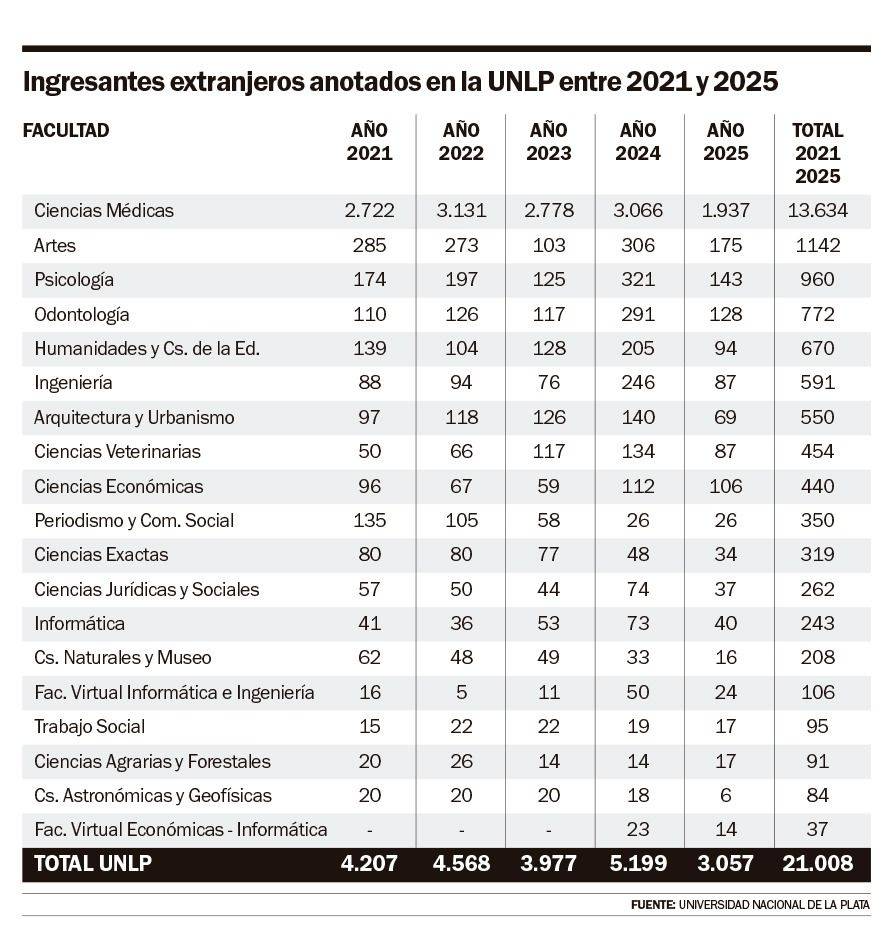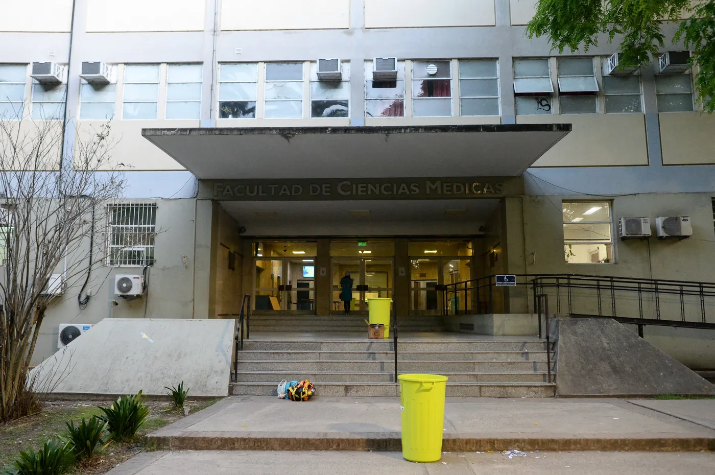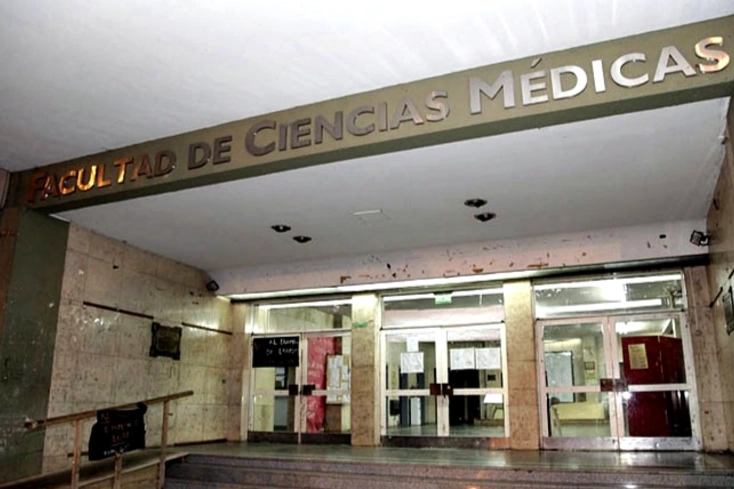

The Argentine Republic is undergoing a historic paradigm shift under the leadership of Javier Milei, where every taxpayer peso is defended with firmness. However, this effort to achieve fiscal balance clashes head-on with the "holding pattern" in education that faculties have transformed into under Kirchnerism. The most alarming case is recorded in the Medicine program at the National University of La Plata (UNLP), where the influx of foreign citizens taking advantage of the absence of restrictive exams and unrestricted access has created a situation deemed unsustainable.
A case that perfectly illustrates this mentality is that of Reinaldo Franks, a 35-year-old Brazilian who, already being an administrator in his country, decided to move to La Plata because the income in Argentina is "more relaxed" and the cost of living is cheaper. Despite being a privileged member of the system, Franks leads calls for "empathy", complaining that exams have "a timer" and asking that teachers have "a little more patience", "speak more slowly", and consider his "difficulties with the language".

The most serious aspect is the future outlook: Franks himself admits that half of his compatriots plan to return to Brazil as soon as they obtain their degree, confirming that Argentina is giving away human capital and millions in resources to regional powers.
The figures supporting this complaint are compelling and expose the magnitude of the exploitation of the national system. In the Medicine faculty at UNLP, 60% of foreign students come from Brazil. According to projected data for 2026, this community represents nearly 14% of the total number of foreign enrollees, consolidating a trend of "academic tourism" where Brazilians flee from prohibitive costs and the high demands of their own universities to study for free at the expense of Argentines.
The reality in the classrooms is that, today, 1 in 4 students is Brazilian, a proportion that saturates the resources of a university funded by a people struggling against poverty.