The March indicators showed improvements and anticipate a recovery in the sector, with notable differences between the dynamics of public (30%) and private (70%) works.
Within the framework of the macroeconomic stabilization process promoted by the national Government, the Minister of Economy, Luis Caputo, outlined the main axes with which The libertarian administration is committed to reactivating the construction sector, one of the key thermometers of economic activity. With signs of improvement in recent indicators, the ruling party projects a stronger momentum towards the middle of the year, supported by an ambitious road concession scheme
.
After a slight drop of 2.6% in February, the head of the Treasury Palace highlighted that in March, “good indicators” began to be observed in sectors that were lagging behind, including industry and construction. In this regard, he stressed that the upturn will be consolidated with the launch of strategic
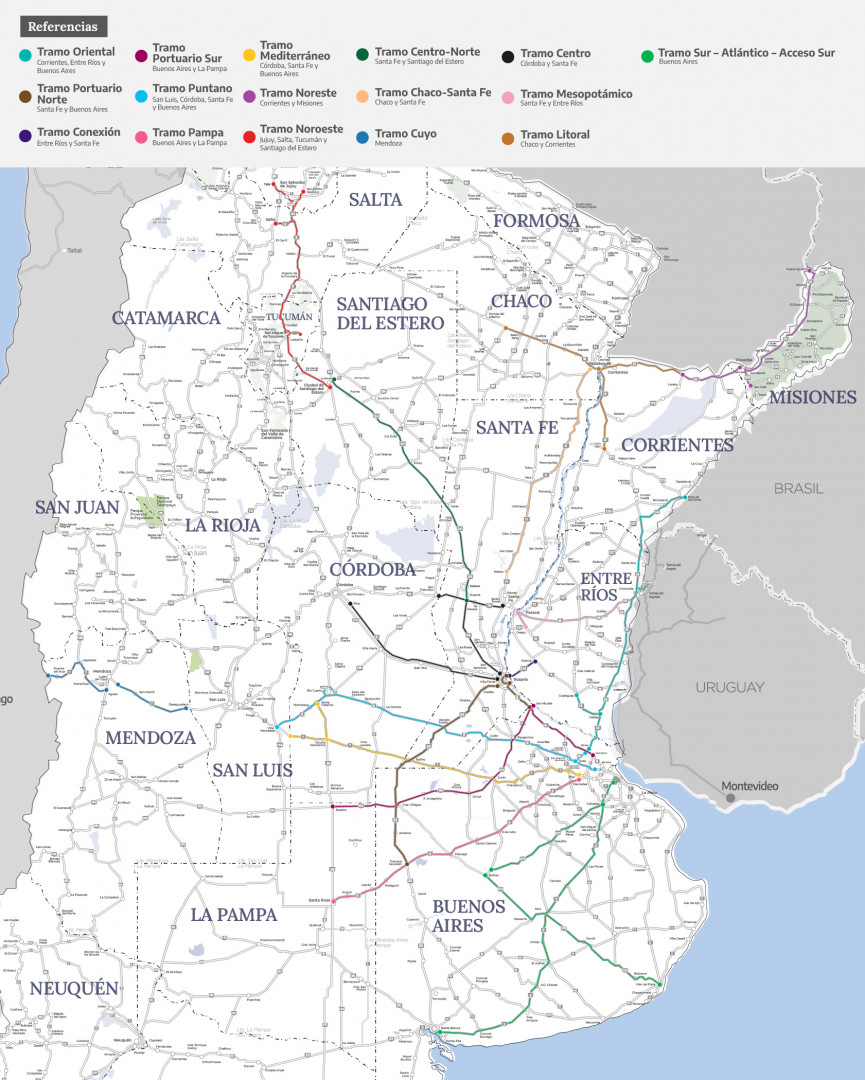
works. Federal concession network
During his participation in Expo EFI, Caputo was categorical in drawing the immediate horizon: “If we think about construction, by June or July the 9,000 kilometers of road corridors will be under construction, that will give it a further boost. We are also going to be starting the tender process for another 12,000 kilometers of national routes,” he said.
The official also remarked that the Government is moving forward with a decentralized and efficient scheme: “We are delivering national routes to the provinces that are starting to do the works themselves, with their own funding or that we are getting from the IDB, the World Bank, CAF.” As he explained, this policy not only seeks to reactivate activity, but also to improve productivity through more efficient logistics
.
From the private sector, while recognizing the dynamic potential of road works, some actors raised nuances regarding its scope. A source consulted pointed out that “the sector cannot show positive signs with road concessions because 70% of the sector is private works. Concessions impact 30% of public works
.”
However, the development of the official plan itself shows concrete progress. In relation to the 9,000 kilometers announced, it was confirmed that there are already two contracts in progress and another two are about to be awarded, while new sections could be defined in the middle of the year. Even within the sector, they recognize that these initiatives “will generate movement”, although they remain cautious about their relative magnitude compared to the total road network, which reaches 40,000 kilometers
. The sector registered a recovery in 2025 and the beginning of 2026
In parallel, official INDEC data show that construction began to leave behind its most critical phase, in line with the “zero public works” policy promoted by the Milei administration, aimed at organizing public accounts. During 2025, the sector showed signs of a year-on-year recovery, with increases of 2.5% in January, 4.5% inFebruary, 10.8% inMarch and 16.1% in April.
In the following months, the trend continued with increases such as 6.1% in May, 9.1% inJune, and positive variations —although more moderate— of 1.2% in July, 0.7% in August and 2.4% in September.
Already in 2026, the records show a more stable evolution, with an increase of 0.3% in January and a slight variation of 0.6% in February, evidencing a process of normalization after the macroeconomic adjustment.
The differences in interpretation between the Government and some private representatives are explained, to a large extent, by the composition of the sector, where private works predominate. However, from the official perspective, the new scheme based on concessions, international financing and fiscal discipline lays the foundations for a stronger and more sustainable recovery