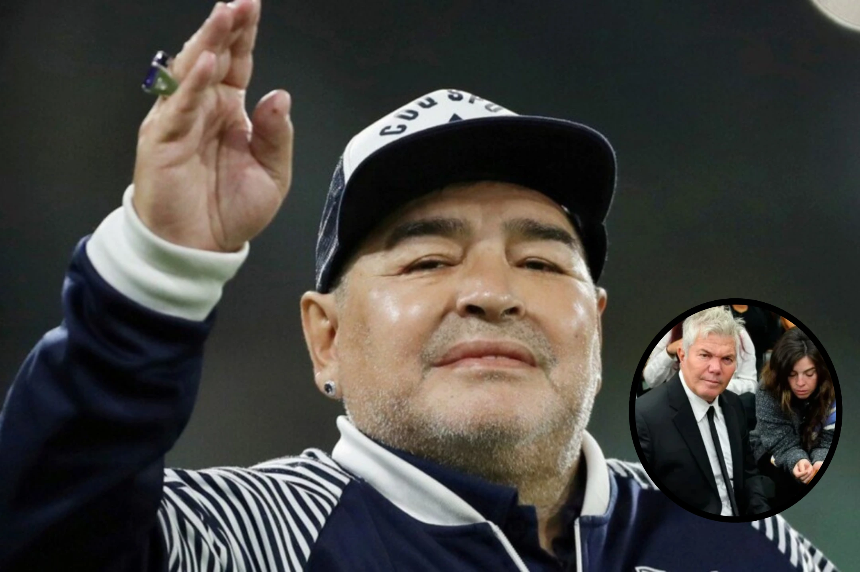
On May 12, 2026, cardiologist Óscar Alberto Franco provided key testimony in the San Isidro Courts as part of the trial investigating the responsibilities for the death of Diego Armando Maradona. The specialist, who treated the Ten in September 2020, provided details about the health status he observed and the limitations of that evaluation.
Franco, a doctor at the Ipensa Sanatorium in La Plata, stated that he quickly examined Maradona due to time constraints and that he did so in the presence of an electrocardiogram and some prior data. As he explained, he did not have the complete medical history, which is relevant in a debate questioning the medical checks performed.
The professional was summoned by traumatologist Flavio Tunessi, linked to Gimnasia y Esgrima La Plata, for a cardiological assessment. He then maintained contact with Leopoldo Luque, whom he identified as the doctor responsible for the general follow-up of the former footballer.
During the consultation, an electrocardiogram and other complementary tests, such as echocardiogram and chest studies, were performed to rule out coronary problems. The electrocardiogram was within normal parameters, there was no murmur, and the blood pressure was at acceptable levels.
Concerning findings and recommendations
However, Franco detected signs compatible with hypertension, such as thickening of the heart muscle. Therefore, he suggested conducting a more complex study, a SPECT or myocardial perfusion with a gamma camera, to rule out potential coronary disease in a high-risk patient.
The cardiologist insisted before the court that a person can be asymptomatic and still present a high cardiac risk that justifies more in-depth evaluations. Additionally, he mentioned the presence of diastolic dysfunction in the left ventricle, an alteration that can lead to manifest heart failure.
Franco also noted that Maradona was medicated for hypertension at the time of the consultation, but later there was talk of a possible suspension of those medications. For the specialist, interrupting that treatment could lead to changes at the arterial level and in the myocardium, increasing the risk of heart failure over time.
Franco's testimony adds to the statements that seek to reconstruct how medical care was provided during the last weeks of Maradona's life at the San Andrés country house in Tigre. His perspective reinforces the idea that, beyond an initial evaluation without immediate signs of severity, there were indications that warranted more thorough checks.
This Tuesday's hearing once again focused on the clinical decisions made regarding the idol, in a process that seeks to determine whether there was negligence in his home care. The cardiologist provided precise technical data that helps to understand the clinical picture of September 2020, two months before his death on November 25.